Better, But Not Well: Changes in Oregon Nurse Well-Being and Workplace Conditions from 2022 to 2025
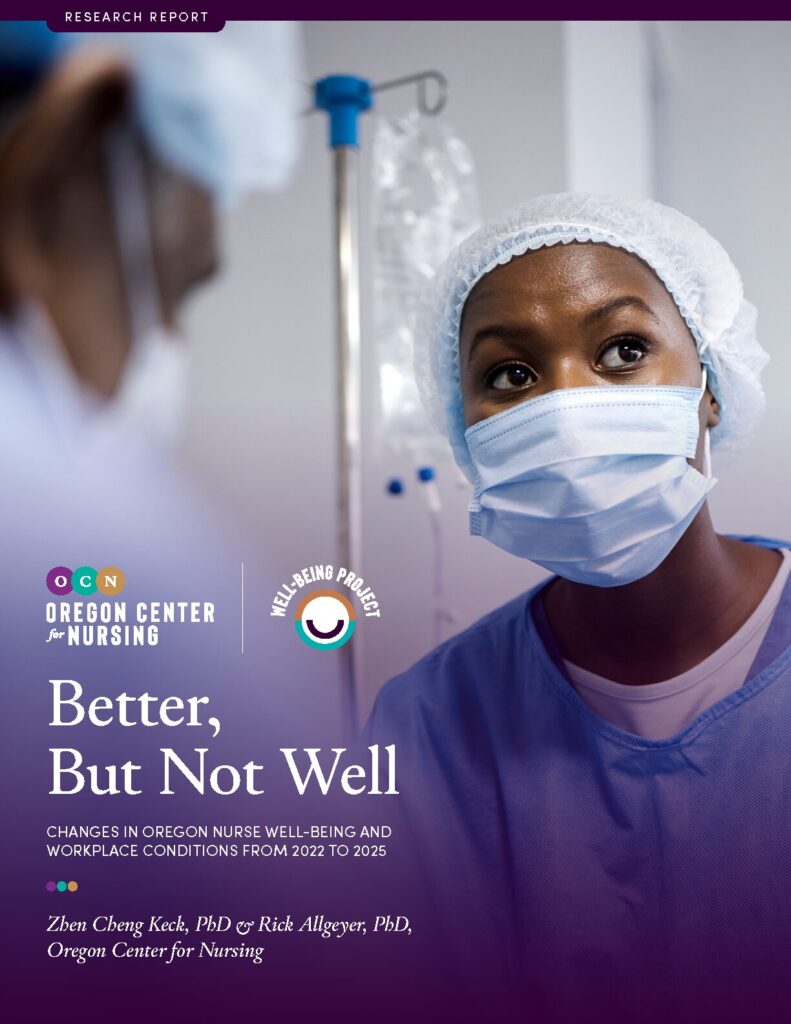
Recovery across Oregon’s nursing workforce has begun, yet many workplace challenges continue to shape nurses’ daily experiences. Comparing survey findings across two time points, the report explores how emotional well-being, workplace conditions, and perceived support have changed while identifying areas where progress remains incomplete. The findings offer guidance for leaders seeking long-term strategies to strengthen workforce well-being and retention.
Understanding Oregon’s Nursing Workforce Supply, Demand and Distribution
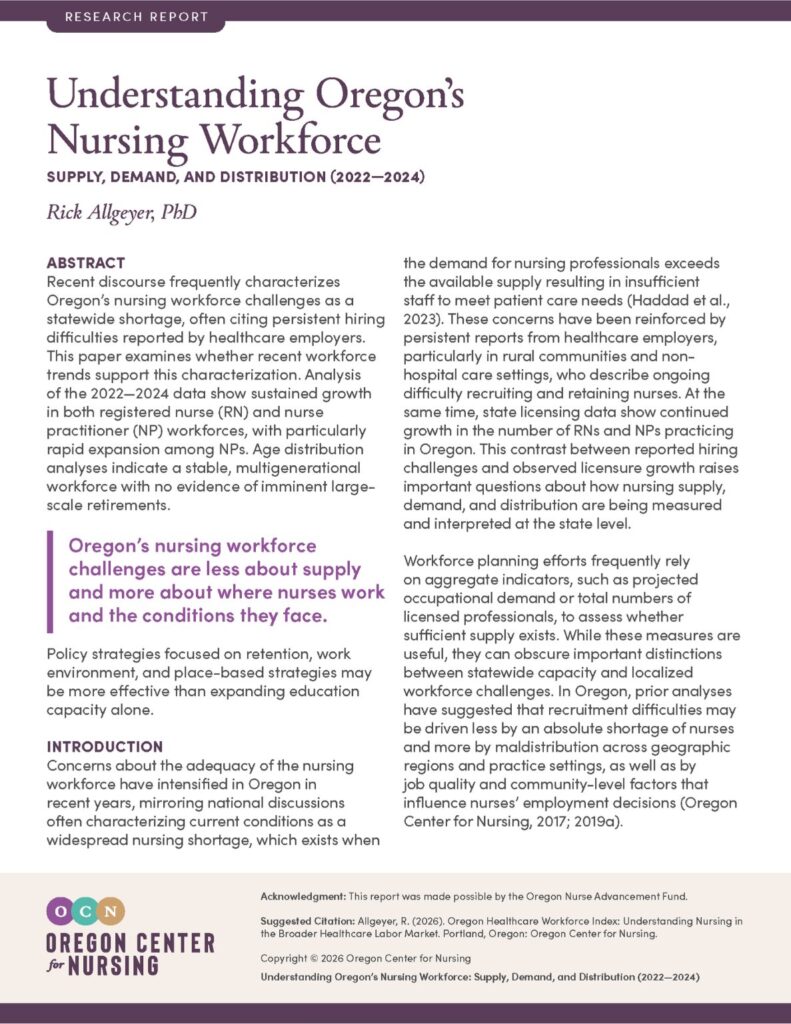
Examine workforce trends across Oregon, including nurse supply, regional demand, and access to care throughout the state.
2025 Oregon’s Nurse Well-Being
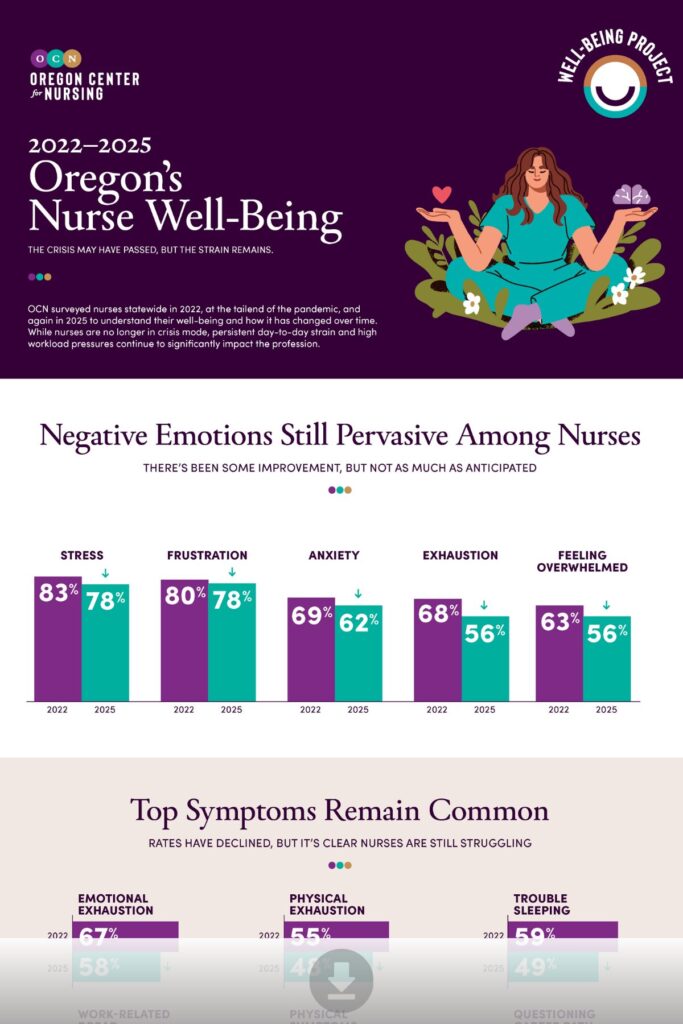
See how nurse well-being, workplace stressors, and support needs have changed between 2022 and 2025.
From Burnout to Belonging: Nurse-Designed Approaches to Workforce Well-Being in Oregon
Learn how Oregon nurses are addressing burnout, strengthening workplace well-being, and creating more supportive practice environments.
BRIEF: Oregon’s Nurse Vacancy Crisis
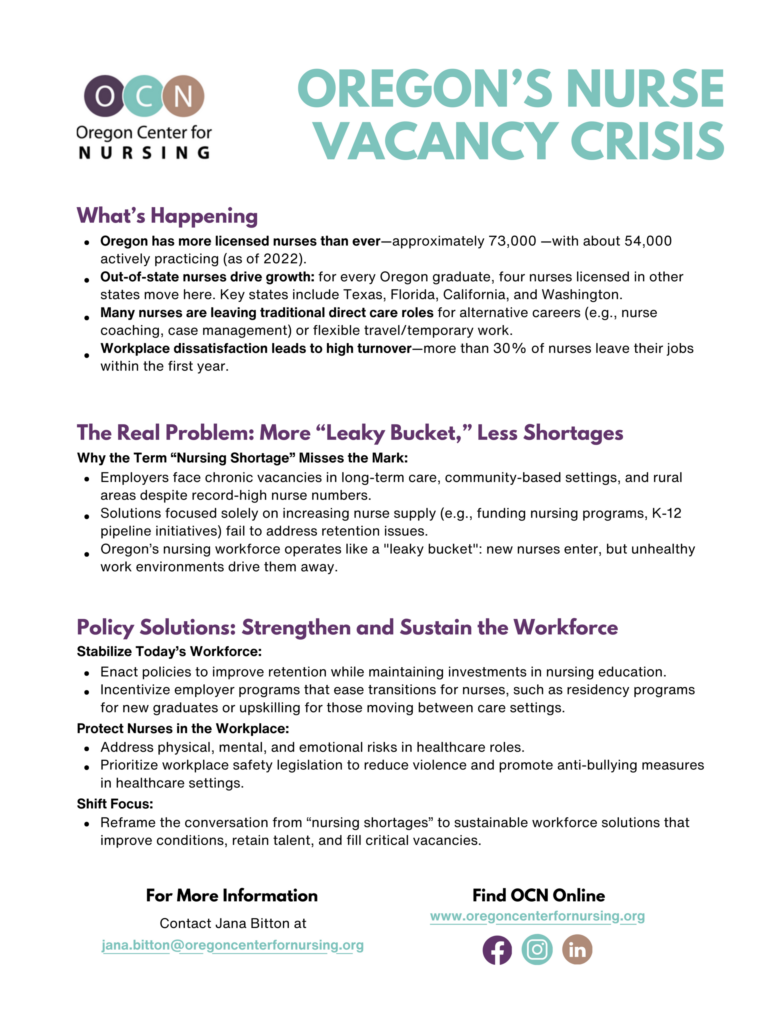
Oregon’s nursing workforce is growing, yet critical care roles remain unfilled. Traditional shortage narratives fail to capture deeper retention challenges affecting direct care. This brief reframes the problem and outlines urgent strategies to stabilize and support the profession.
How Much Do Oregon’s Registered Nurses Earn? 2023 Oregon Wage Study
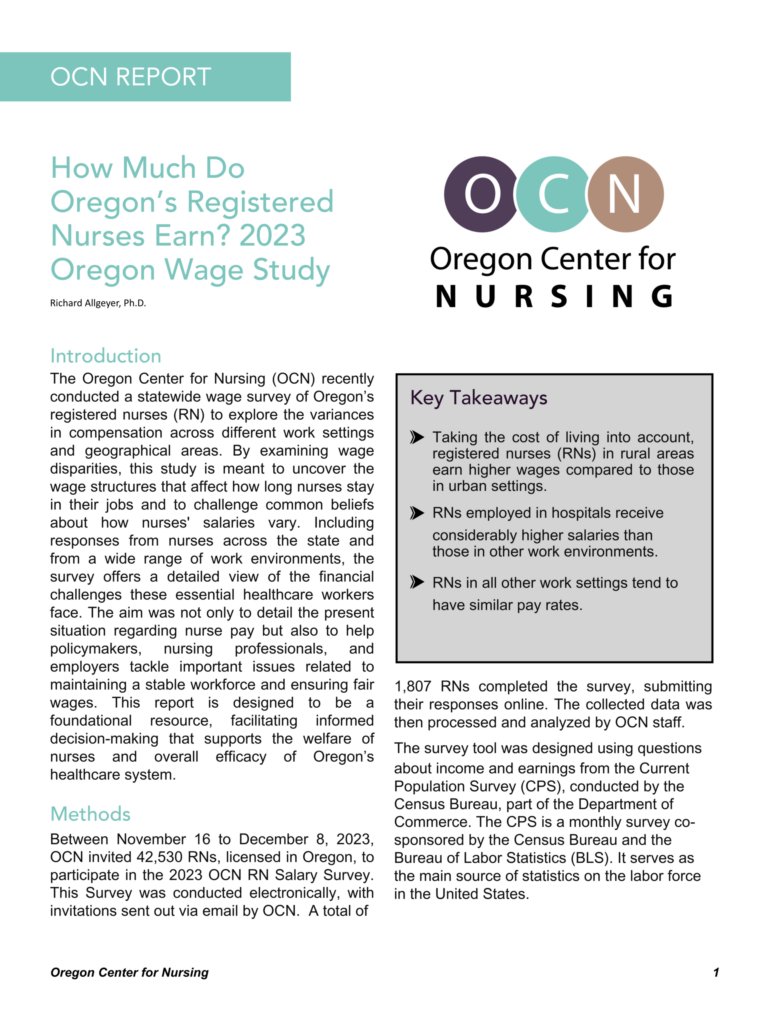
Compensation insights from more than 1,800 Oregon nurses uncover striking wage disparities by setting, role, and geography. From public health to hospital work, the findings offer a deep dive into how pay structures impact equity and sustainability in the nursing workforce. The report empowers leaders with data to guide retention and workforce planning.
Comparison of the Perception of Clinical Instruction: In-Facility, Face-to-Face Simulation, and Virtual Simulation Experiences in Oregon’s Nursing Programs
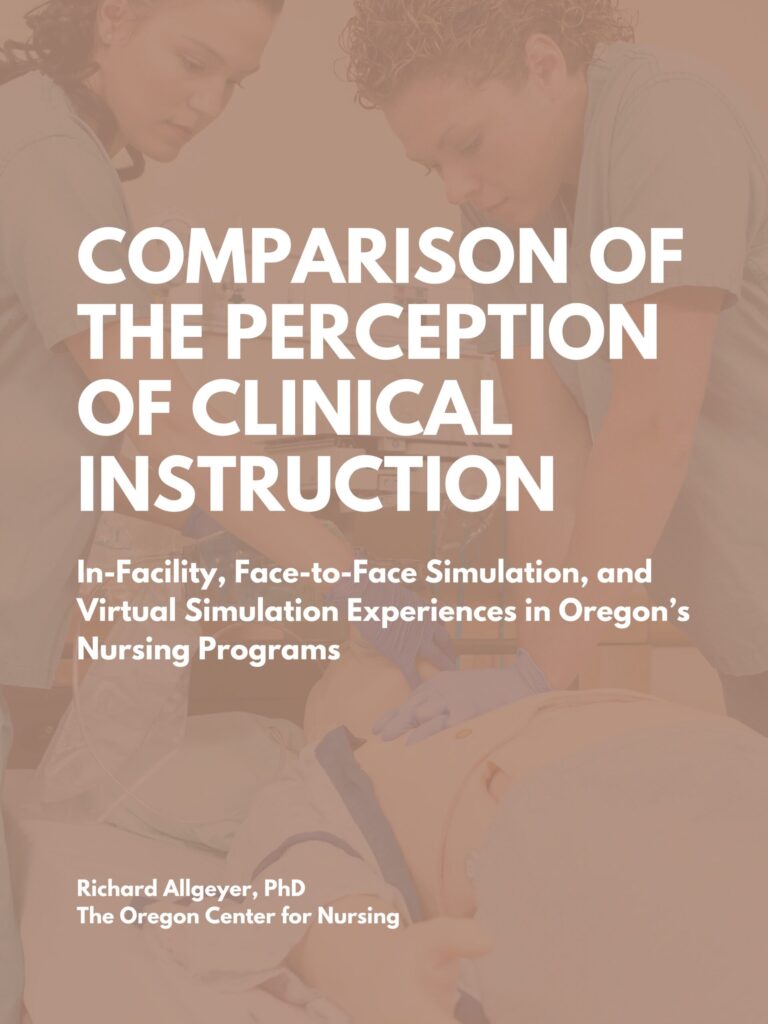
Simulation-based instruction has become a key tool in Oregon’s nursing education, especially during pandemic-era disruptions. This study explores how students and faculty perceive in-facility, face-to-face, and virtual simulation methods. Findings reveal notable differences between student and faculty viewpoints across instructional environments.
The Future of Oregon’s Nursing Workforce: Analysis and Recommendations
Oregon’s nursing workforce is shaped by more than staffing numbers. This collaborative study was commissioned to uncover what’s driving instability—and what to do about it. Grounded in data and statewide input, the report surfaces actionable insights on retention, preparation, and the evolving realities of nursing practice.
A New View on Nurse Turnover: How the COVID-19 Pandemic Shocked the System
High nurse turnover rates were already a concern before COVID-19, but the pandemic introduced an unprecedented disruption to workforce stability. This publication explores how pandemic-related shocks altered nurses’ perceptions of job fit, community ties, and the value of staying. Understanding these shifts helps leaders better support retention and workforce cohesion.
Not Working Well: Clinical Placement for Nursing Students in an Era of Pandemic
Faced with the urgency of a global health crisis, nursing education programs and healthcare agencies in Oregon scrambled to adapt clinical placement strategies. This publication captures the resulting stress, innovation, and breakdowns that surfaced as traditional education pipelines were upended. Interviews across sectors reveal a critical moment of reckoning for how students are prepared for practice.