
From Burnout to Belonging: Nurse-Designed Approaches to Workforce Well-Being in Oregon

What happens when nurses design the solutions to their own workplace stress? Across Oregon, 18 nurse-led initiatives did just that, reshaping care environments and reframing well-being from the inside out. Discover how voice, equity, and system-level design replaced quick fixes and built lasting change.
Nurse-led systemic solutions

From Burnout to Belonging: Nurse-Designed Approaches to Workforce Well-Being in Oregon

The Oregon Center for Nursing’s Nurse Well-Being Project emerged during a period of profound strain on the state’s nursing workforce. Drawing on input from more than 5,000 nurses, the project recognized that lasting improvements in well-being must come from within the profession. Rather than applying top-down solutions, the initiative funded projects designed and led by nurses themselves; anchored in real-world conditions and frontline experience.

Each funded project addressed workplace stressors through structural and cultural reforms, ranging from leadership development to trauma-informed practices to administrative process redesign. Interventions were required to demonstrate nurse engagement, sustainability, and relevance to specific workplace contexts. Together, the 18 initiatives reflected a participatory, equity-centered model of innovation.

This report highlights how organizational culture, not resilience programming, drives nurse well-being. It reframes workforce retention challenges as systemic issues requiring nurse voice and leadership at every level. For employers, funders, and policymakers, these findings signal a shift: supporting the workforce means trusting it to lead its own solutions.

What's Inside

18

Total nurse-led projects funded under the Nurse Well-Being Project

2

Funding partners supporting the initiative: SAMHSA and ODHS

2

Years of project implementation and cross-site learning statewide
Facebook
Email
LinkedIn

WORKFORCE INSIGHT

Oregon's Lens on the Nursing Workforce

Report Spotlight: Translating Nurse-Led Insights into System-Level Action

From Insight to Action in Oregon’s Nursing Workforce

This companion webinar to From Burnout to Belonging offers a focused overview of Oregon’s Nurse Well-Being Project at the close of its grant-funded phase. It highlights key findings from the statewide survey, explores lessons from 18 funded pilot sites, and outlines the systemic changes needed to reduce nurse stress and build a more sustainable workforce.
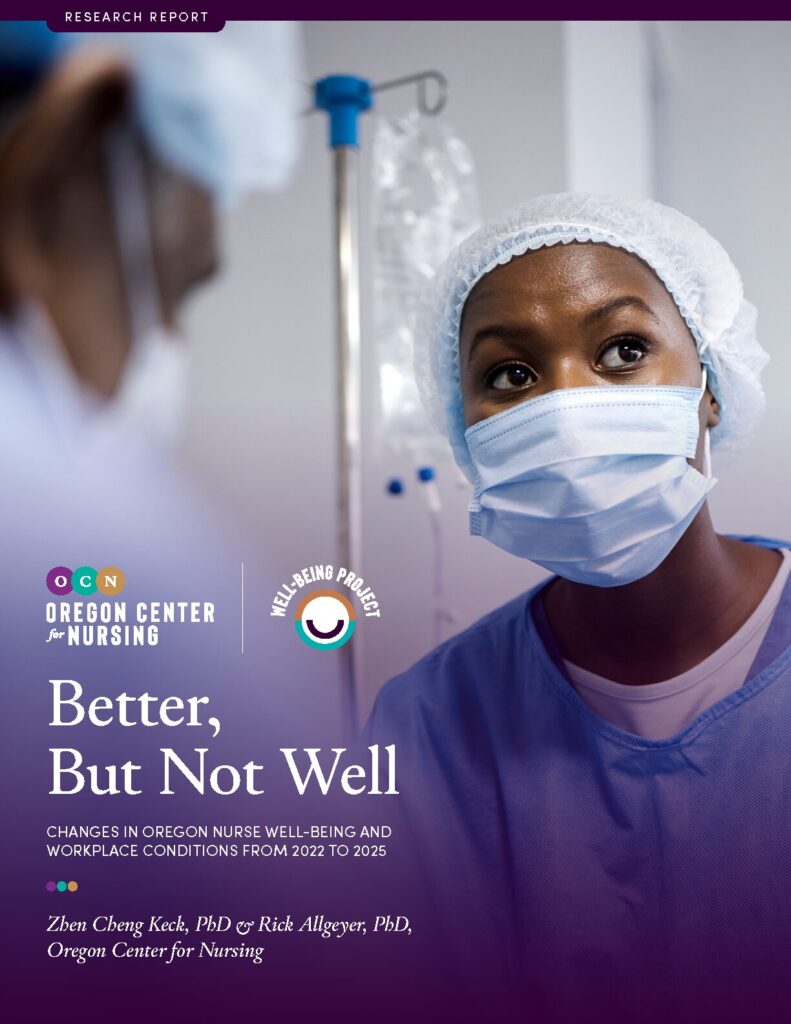
Related Work

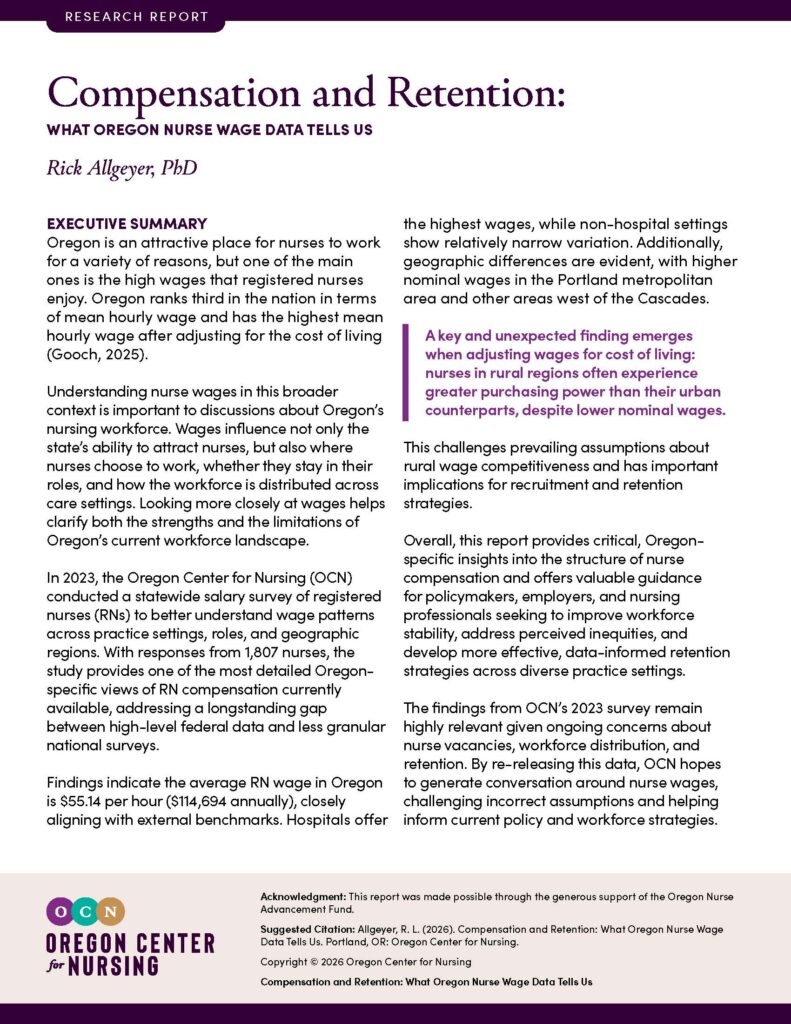
Compensation and Retention: What Oregon Nurse Wage Data Tells Us
Exploring how compensation shapes workforce stability reveals important insights into Oregon’s nursing landscape. Drawing from a statewide salary survey, the analysis examines differences across practice environments, professional roles, and geographic…
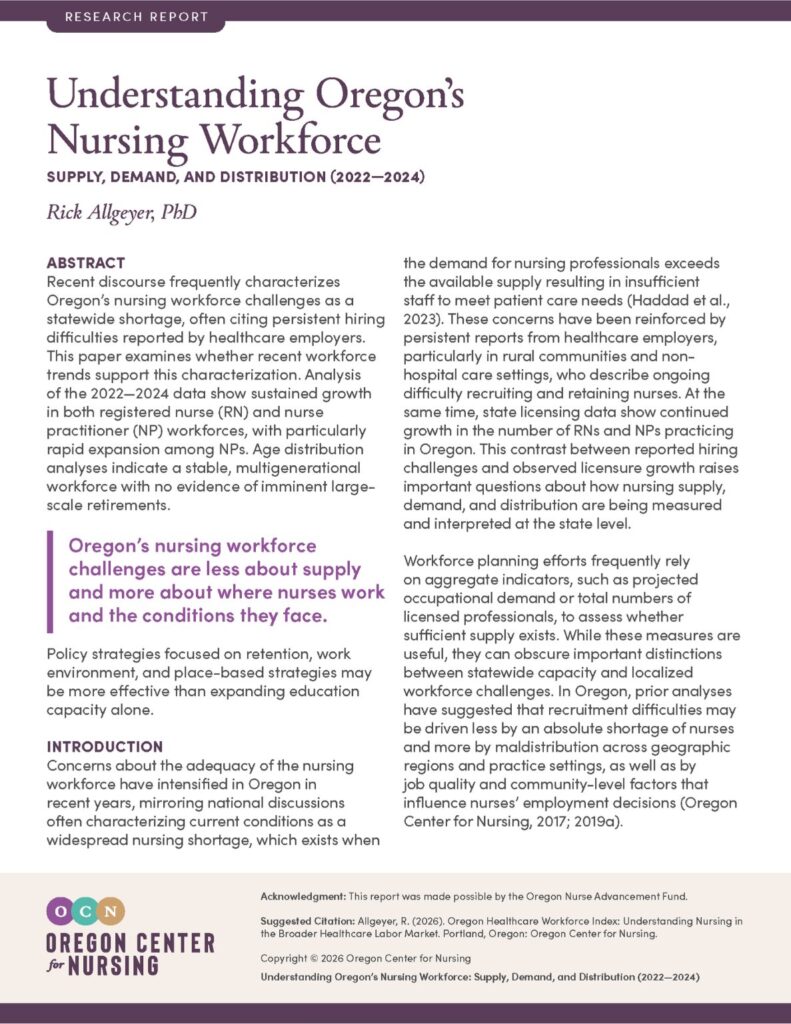
Cover page of Understanding Oregon’s Nursing Workforce: Supply, Demand, and Distribution (2022—2024) research report
Understanding Oregon’s Nursing Workforce Supply, Demand and Distribution
Shifting narratives around Oregon’s nursing workforce reveal a more complex reality than a simple shortage. Growth in licensed professionals contrasts with persistent hiring challenges across specific regions and care settings….
PDF cover for "From Burnout to Belonging," a 2025 OCN report on nurse-led well-being initiatives in Oregon.
From Burnout to Belonging: Nurse-Designed Approaches to Workforce Well-Being in Oregon
What happens when nurses design the solutions to their own workplace stress? Across Oregon, 18 nurse-led initiatives did just that, reshaping care environments and reframing well-being from the inside out….

Report Spotlight: Translating Nurse-Led Insights into System-Level Action

From Insight to Action in Oregon’s Nursing Workforce

This companion webinar to From Burnout to Belonging offers a focused overview of Oregon’s Nurse Well-Being Project at the close of its grant-funded phase. It highlights key findings from the statewide survey, explores lessons from 18 funded pilot sites, and outlines the systemic changes needed to reduce nurse stress and build a more sustainable workforce.
Skip to content