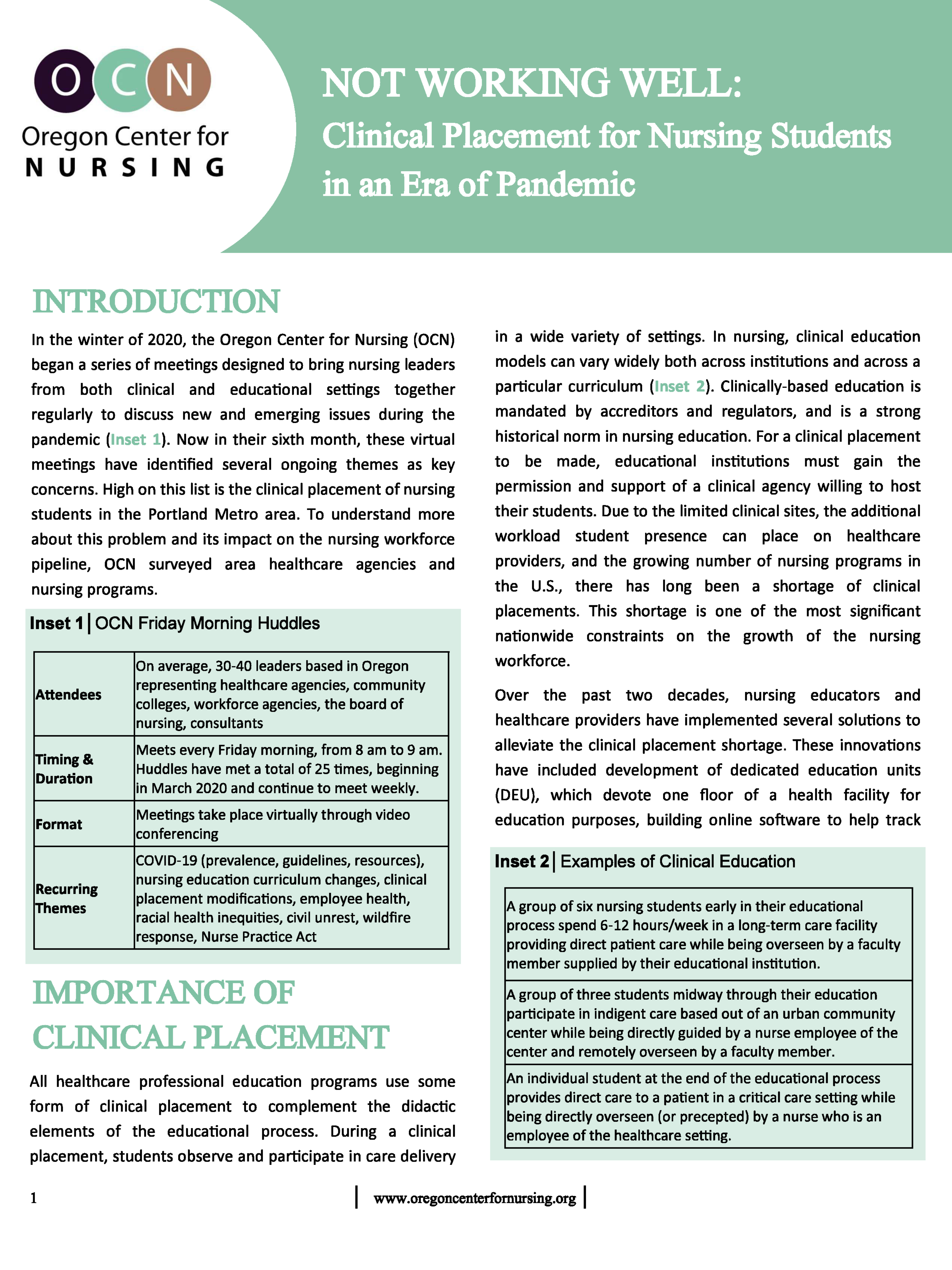
Not Working Well: Clinical Placement for Nursing Students in an Era of Pandemic
Faced with the urgency of a global health crisis, nursing education programs and healthcare agencies in Oregon scrambled to adapt clinical placement strategies. This publication captures the resulting stress, innovation, and breakdowns that surfaced as traditional education pipelines were upended. Interviews across sectors reveal a critical moment of reckoning for how students are prepared for practice.
Not Working Well: Clinical Placement for Nursing Students in an Era of Pandemic
As the COVID-19 pandemic intensified in early 2020, clinical placements for nursing students across the Portland Metro area were rapidly disrupted, exposing deep cracks in an already strained system. In response, the Oregon Center for Nursing convened weekly meetings with clinical and academic leaders to surface real-time challenges and conduct targeted interviews with key institutions. The resulting data revealed widespread cancellation of placements, inconsistent policies across sites, and growing reliance on simulation-based training as programs scrambled to meet educational requirements without access to clinical settings.
Healthcare agencies expressed mixed sentiments—while many continued to support student placements, limitations like PPE shortages, staff burden, and infection control guidelines sharply reduced capacity. Nursing programs faced parallel struggles, often operating with unclear guidance, reduced faculty, and logistical hurdles intensified by institutional policies and public health constraints. Some turned to community-based activities or telehealth as alternate solutions, though concern over educational quality persisted.
Ultimately, this publication frames the pandemic not just as a disruption but as an accelerant for long-standing issues: strained collaborations, insufficient placement infrastructure, and divergent priorities between educators and clinical sites. With a communal sense of urgency emerging from the crisis, the findings underscore the need for transformative collaboration and system redesign across Oregon’s nursing education pipeline.
What's Inside
25%
Friday Huddle meetings were held by August 2020 and continue to bring leaders together weekly.
17%
Healthcare and academic institutions participated in qualitative interviews on clinical placements.
50%
Some nursing programs replaced up to half of clinical hours with simulation during the pandemic.
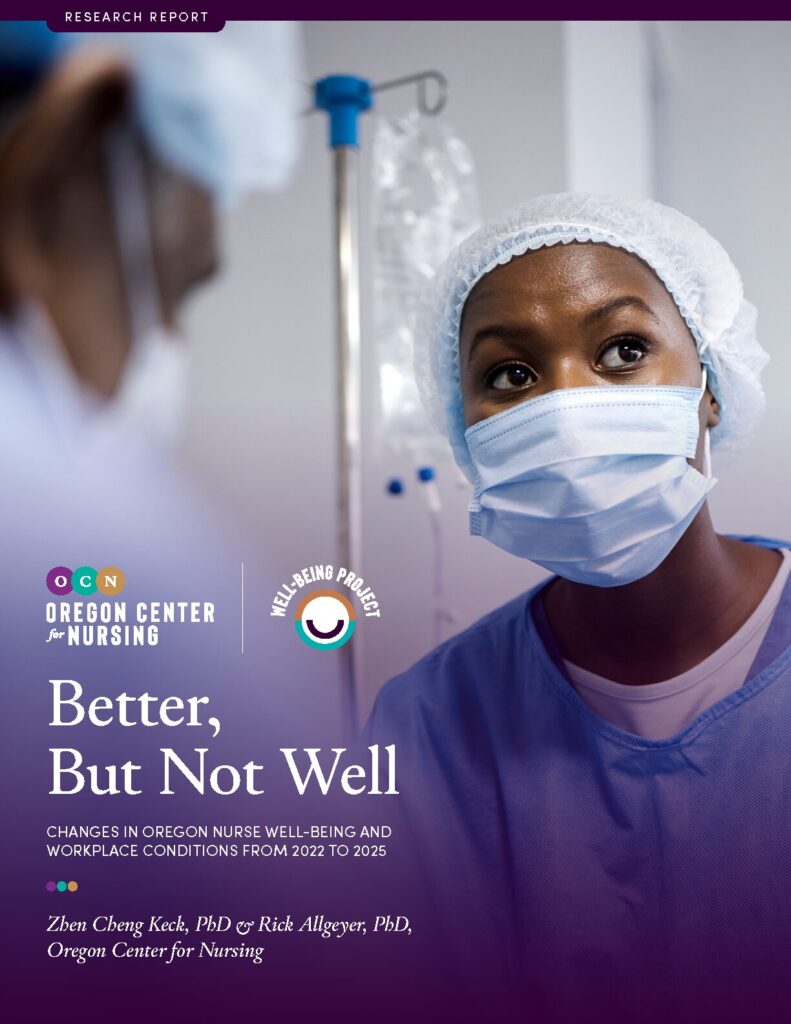
Better, But Not Well: Changes in Oregon Nurse Well-Being and Workplace Conditions from 2022 to 2025
Recovery across Oregon’s nursing workforce has begun, yet many workplace challenges continue to shape nurses’ daily experiences. Comparing survey findings across two time points, the report explores how emotional well-being,…