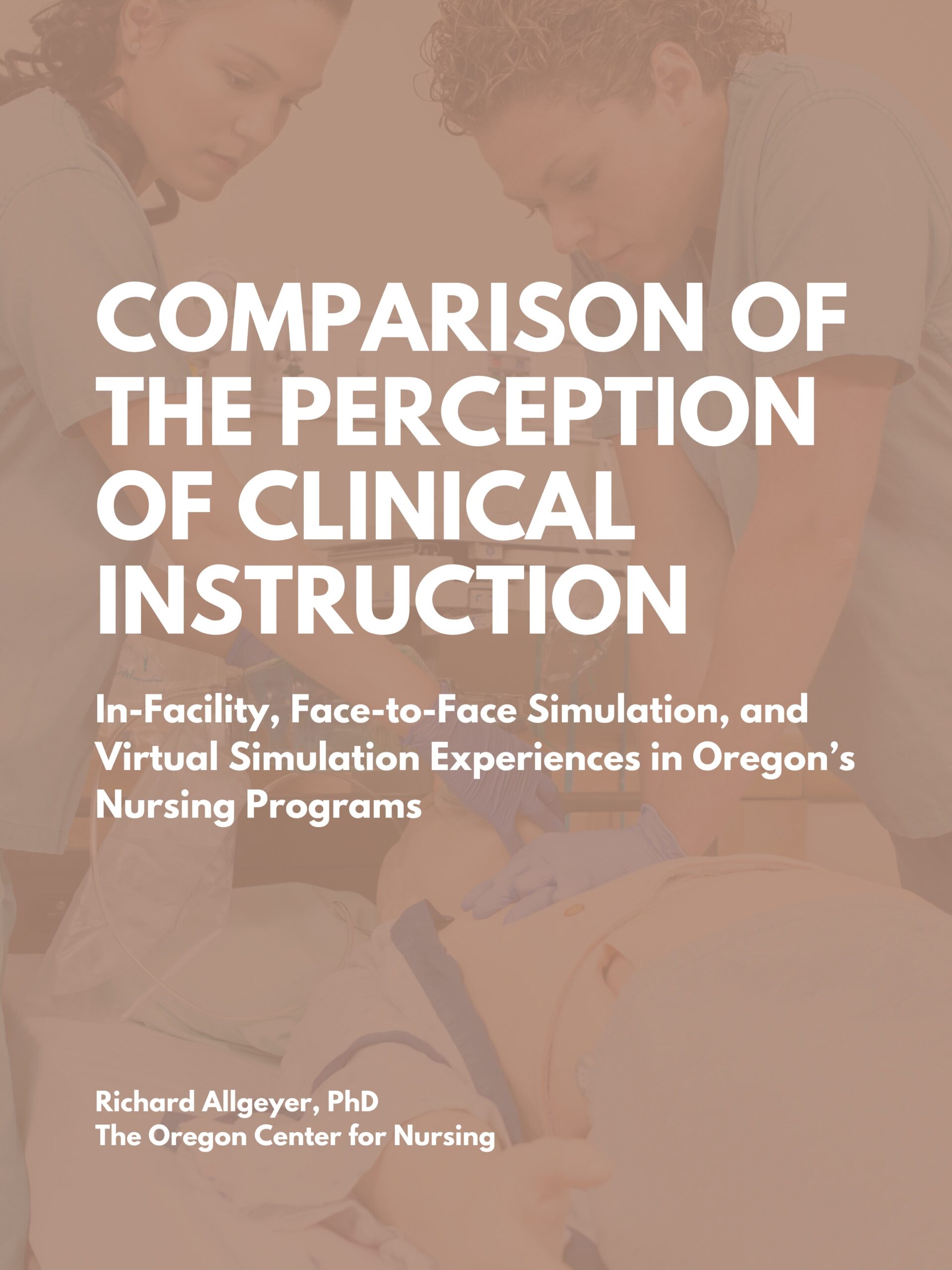
Comparison of the Perception of Clinical Instruction: In-Facility, Face-to-Face Simulation, and Virtual Simulation Experiences in Oregon’s Nursing Programs
Simulation-based instruction has become a key tool in Oregon’s nursing education, especially during pandemic-era disruptions. This study explores how students and faculty perceive in-facility, face-to-face, and virtual simulation methods. Findings reveal notable differences between student and faculty viewpoints across instructional environments.
Comparison of the Perception of Clinical Instruction: In-Facility, Face-to-Face Simulation, and Virtual Simulation Experiences in Oregon’s Nursing Programs
The sudden shift in clinical education during the COVID-19 pandemic prompted Oregon’s nursing programs to rely more heavily on simulation methods. This study investigates how effectively these alternate modes of clinical instruction—face-to-face and virtual simulations—meet the learning needs of students, using data collected from the CLECS 2.0 survey tool.
Faculty respondents generally viewed face-to-face simulations as comparable to traditional clinical experiences in most areas, except for communication and holistic care. Students, however, rated simulations less favorably across nearly all categories, citing a perceived gap in the learning value compared to real-world settings. Despite previous studies indicating no significant differences in outcomes between simulations and traditional instruction, these Oregon-based perceptions deviate from the broader literature.
Both students and faculty agreed that virtual simulation was the least effective across all sub-scales. This shared perception may stem from multiple interrelated influences, including comfort with technology, access to high-fidelity simulation tools, and the presence (or absence) of experienced facilitators. These findings suggest the need for deeper inquiry into how simulation is deployed and perceived in diverse learning environments—and how institutional or instructional variables may shape those perceptions.
What's Inside
20%
Drop in nursing graduates during 2020 led to expanded use of simulation-based clinical instruction in Oregon.
186
CLECS 2.0 survey responses gathered from faculty and students across Oregon nursing programs.
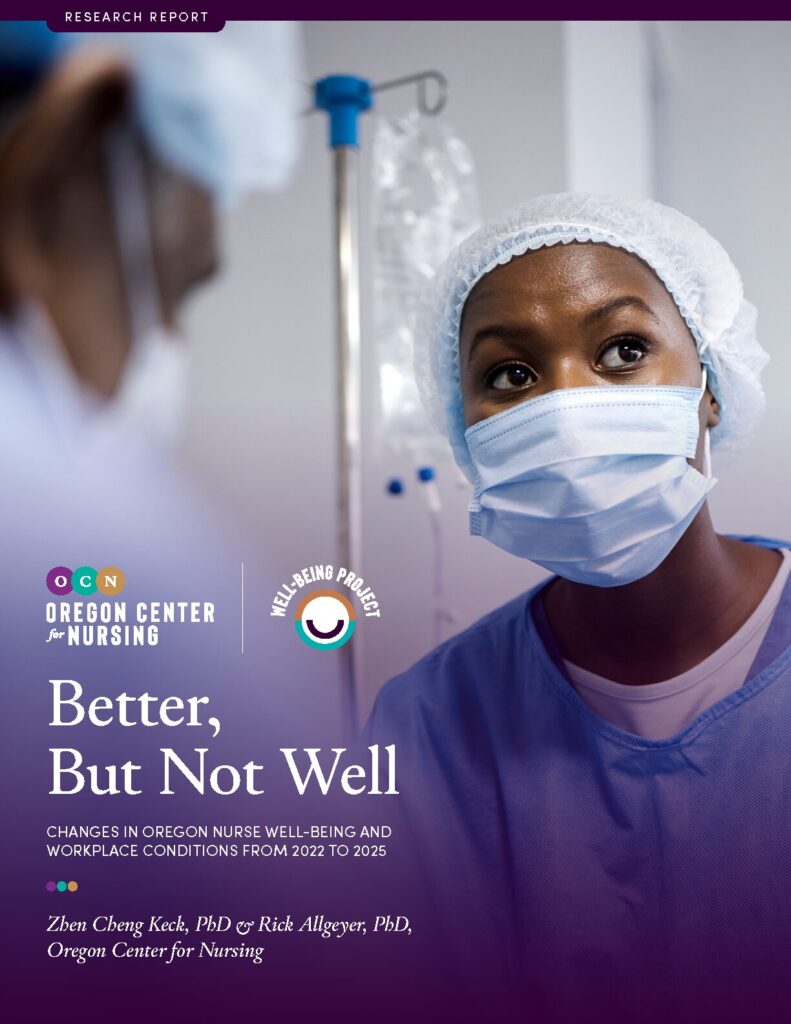
Better, But Not Well: Changes in Oregon Nurse Well-Being and Workplace Conditions from 2022 to 2025
Recovery across Oregon’s nursing workforce has begun, yet many workplace challenges continue to shape nurses’ daily experiences. Comparing survey findings across two time points, the report explores how emotional well-being,…