Better, But Not Well: Changes in Oregon Nurse Well-Being and Workplace Conditions from 2022 to 2025
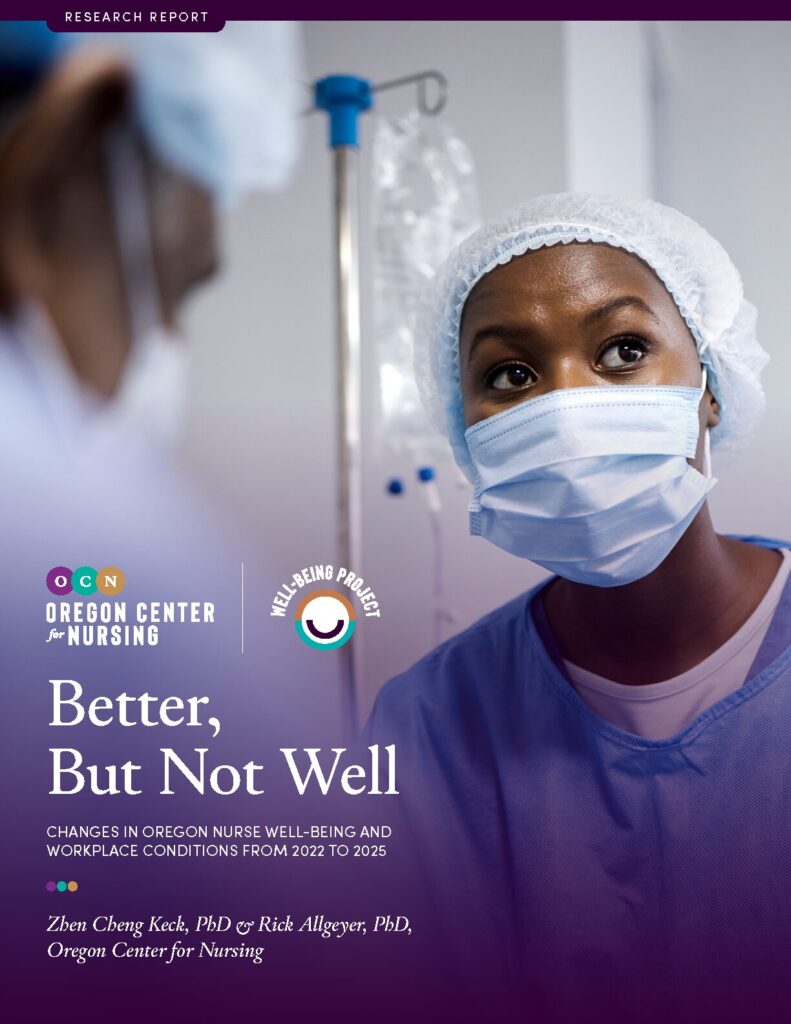
Recovery across Oregon’s nursing workforce has begun, yet many workplace challenges continue to shape nurses’ daily experiences. Comparing survey findings across two time points, the report explores how emotional well-being, workplace conditions, and perceived support have changed while identifying areas where progress remains incomplete. The findings offer guidance for leaders seeking long-term strategies to strengthen workforce well-being and retention.
Compensation and Retention: What Oregon Nurse Wage Data Tells Us
Explore how compensation varies across Oregon and what wage data reveals about workforce stability, recruitment, and retention.
Understanding Oregon’s Nursing Workforce Supply, Demand and Distribution
Examine workforce trends across Oregon, including nurse supply, regional demand, and access to care throughout the state.
2024 Working as a Nurse in Oregon
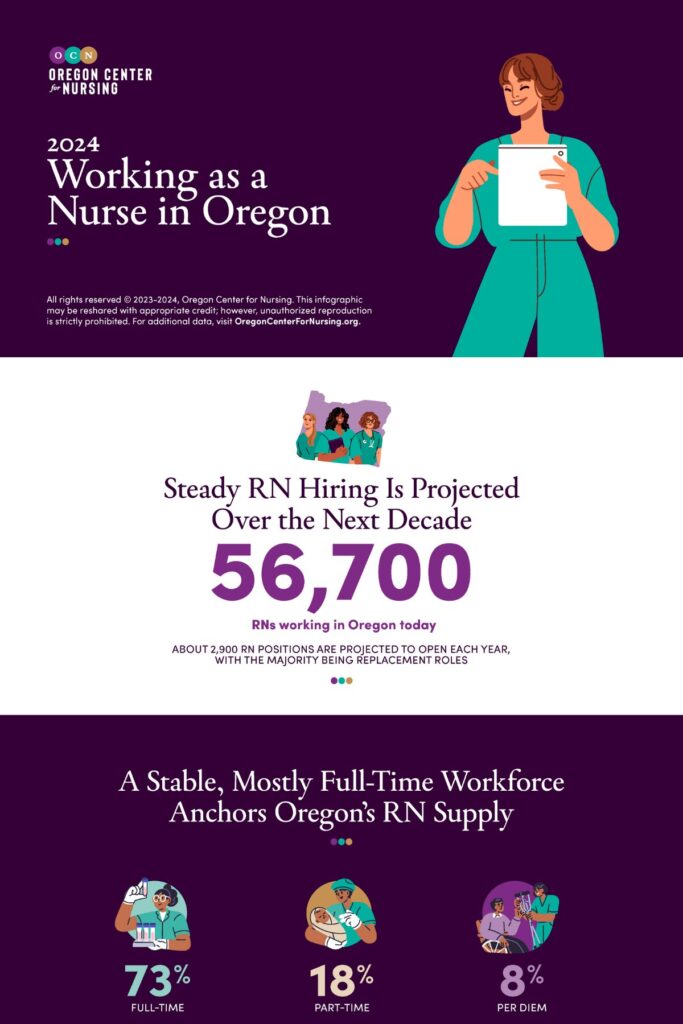
Explore where Oregon nurses work, common practice settings, and key trends shaping the state’s nursing workforce.
2024–2025 Snapshot: Nursing Education in Oregon
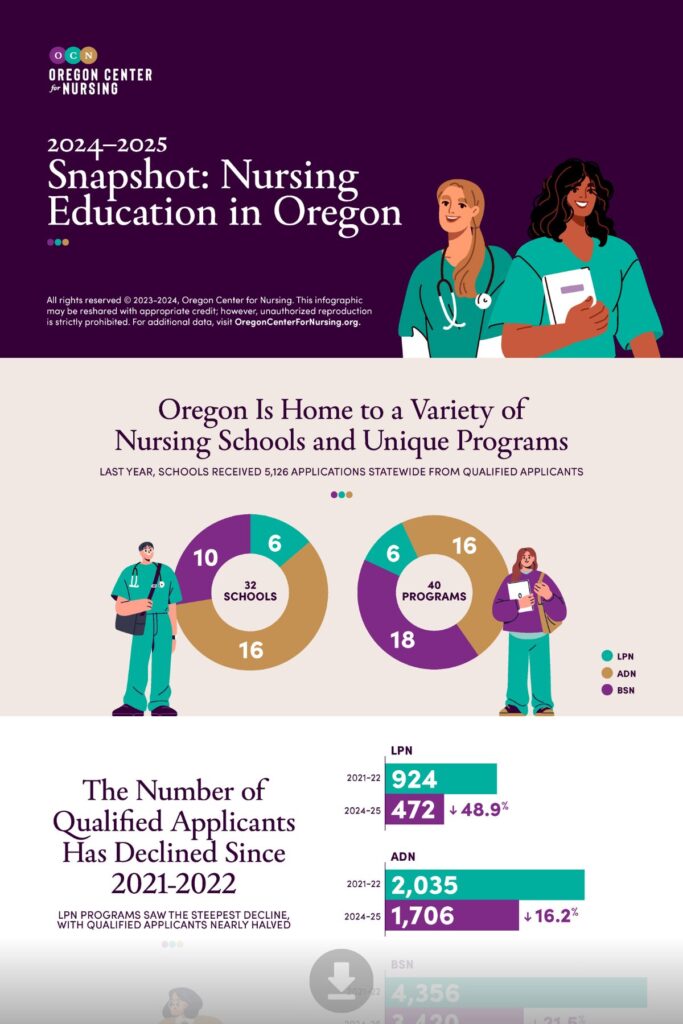
Explore Oregon’s nursing education pipeline, including program availability, applicant trends, graduate outcomes, and student demographics statewide.
Nursing Supply Infographic 2024
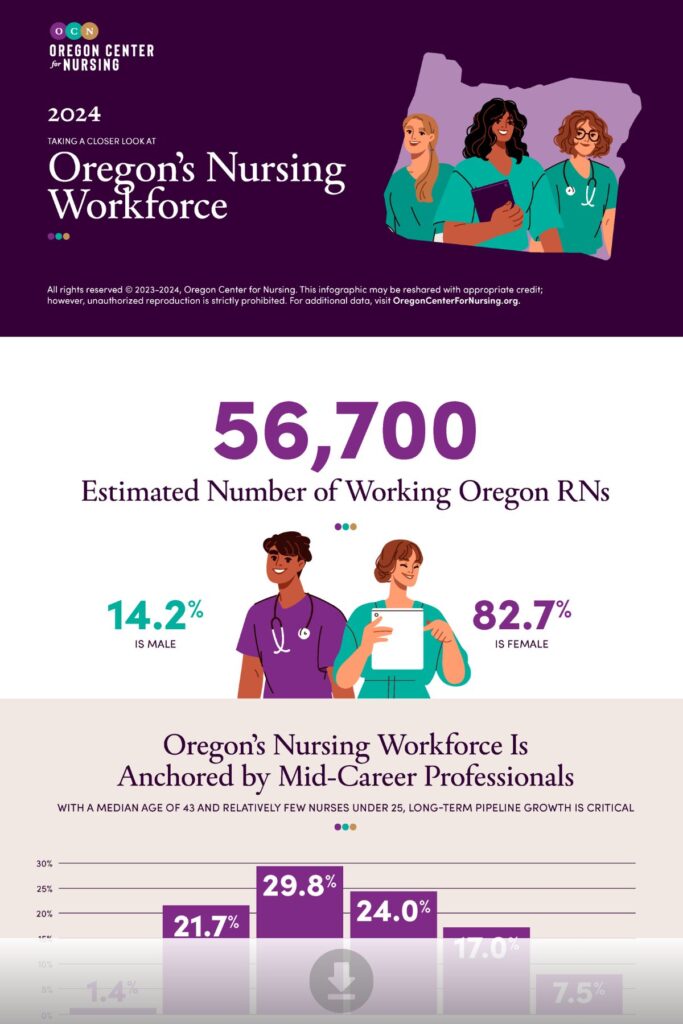
A visual overview highlights the composition, education, and practice settings of nurses across Oregon’s healthcare system. Key graphics illustrate who makes up the workforce and where care is delivered throughout the state. Designed for quick insight, the infographic offers a snapshot of nursing’s central role in Oregon’s health infrastructure.
2025 Oregon’s Nurse Well-Being
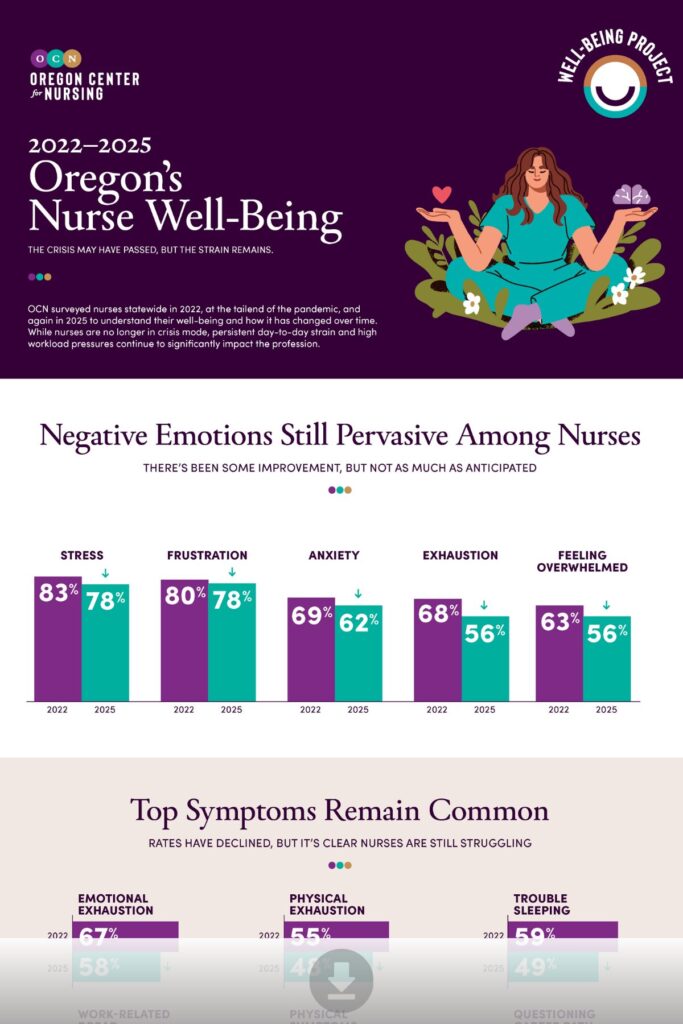
See how nurse well-being, workplace stressors, and support needs have changed between 2022 and 2025.
From Burnout to Belonging: Nurse-Designed Approaches to Workforce Well-Being in Oregon
Learn how Oregon nurses are addressing burnout, strengthening workplace well-being, and creating more supportive practice environments.
How Much Do Oregon’s Registered Nurses Earn? 2023 Oregon Wage Study
Compensation insights from more than 1,800 Oregon nurses uncover striking wage disparities by setting, role, and geography. From public health to hospital work, the findings offer a deep dive into how pay structures impact equity and sustainability in the nursing workforce. The report empowers leaders with data to guide retention and workforce planning.
Barriers to Nursing Workforce Retention and Attraction in Rural Areas
In Oregon’s rural communities, complex socioeconomic barriers continue to hinder nursing workforce stability. This qualitative study explores the real-world challenges healthcare employers face in retaining and attracting nurses across community-based settings. Findings from Coos County offer data-driven insights and next-step solutions tailored to underserved regions.