
Understanding Oregon’s Nursing Workforce Supply, Demand and Distribution
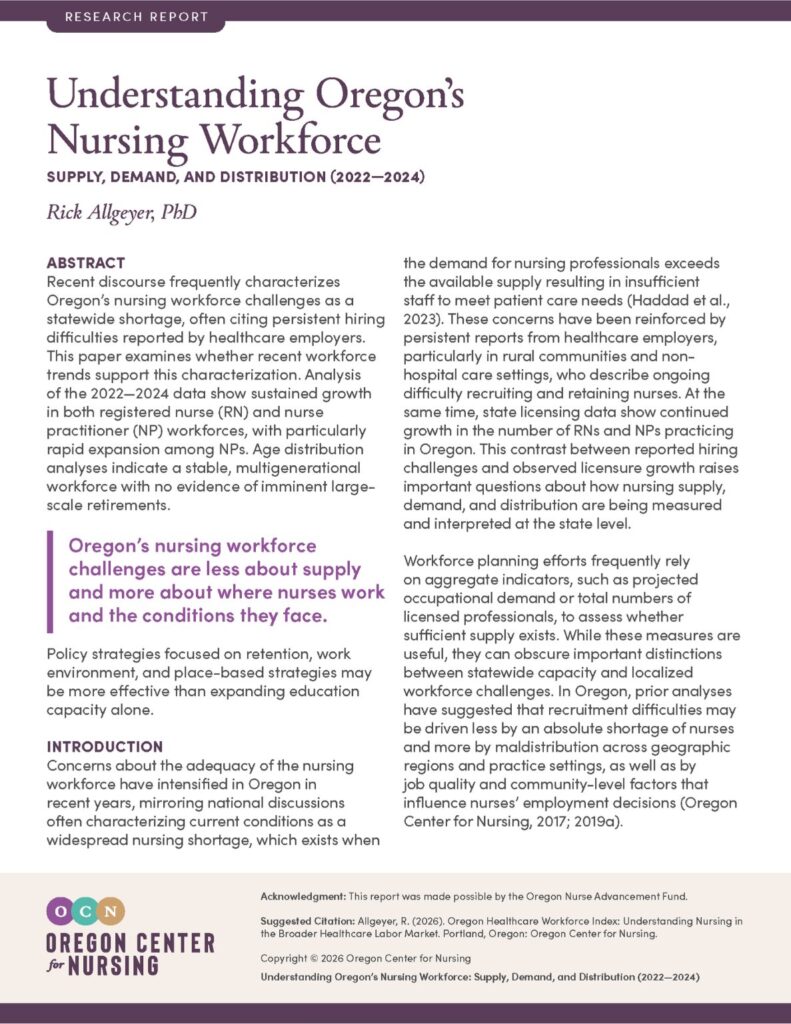
Examine workforce trends across Oregon, including nurse supply, regional demand, and access to care throughout the state.
2024–2025 Snapshot: Nursing Education in Oregon
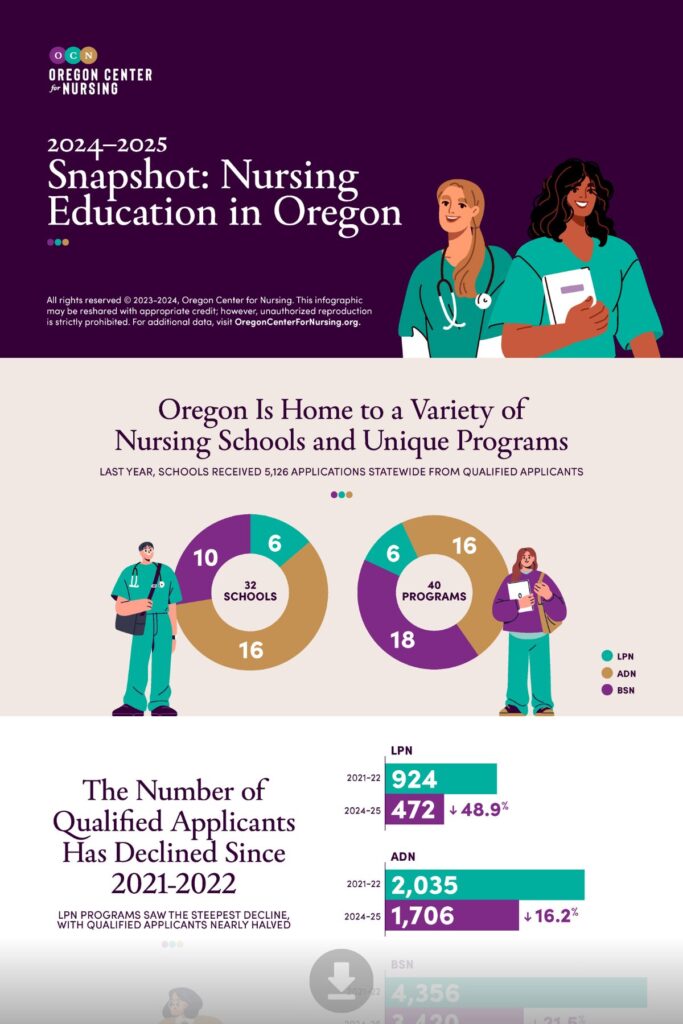
Explore Oregon’s nursing education pipeline, including program availability, applicant trends, graduate outcomes, and student demographics statewide.
Nursing Supply Infographic 2024
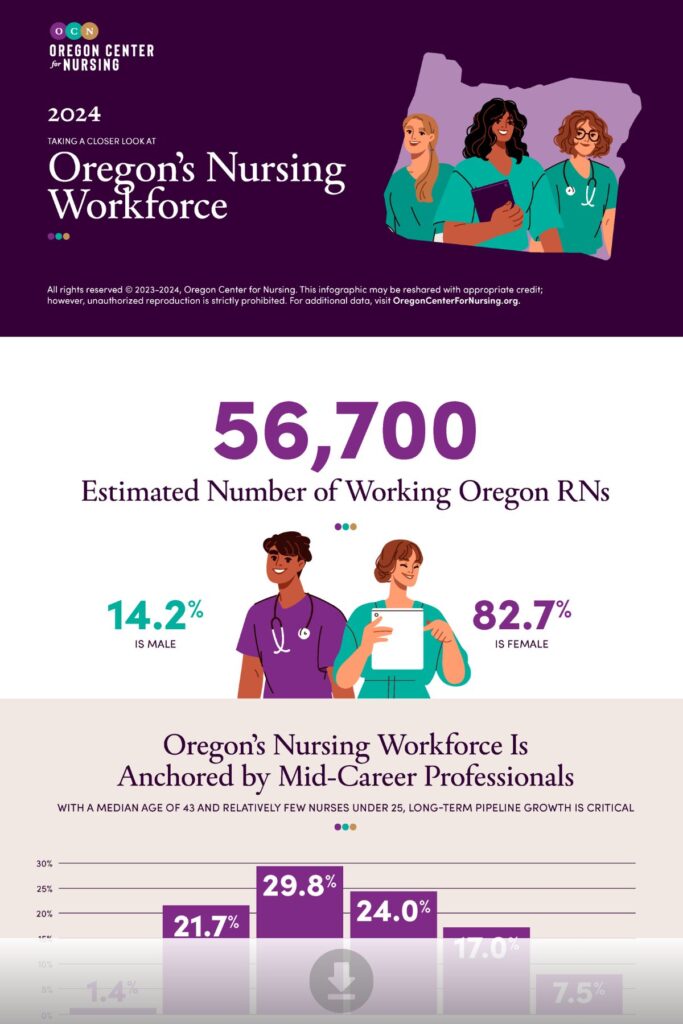
A visual overview highlights the composition, education, and practice settings of nurses across Oregon’s healthcare system. Key graphics illustrate who makes up the workforce and where care is delivered throughout the state. Designed for quick insight, the infographic offers a snapshot of nursing’s central role in Oregon’s health infrastructure.
How Much Do Oregon’s Registered Nurses Earn? 2023 Oregon Wage Study
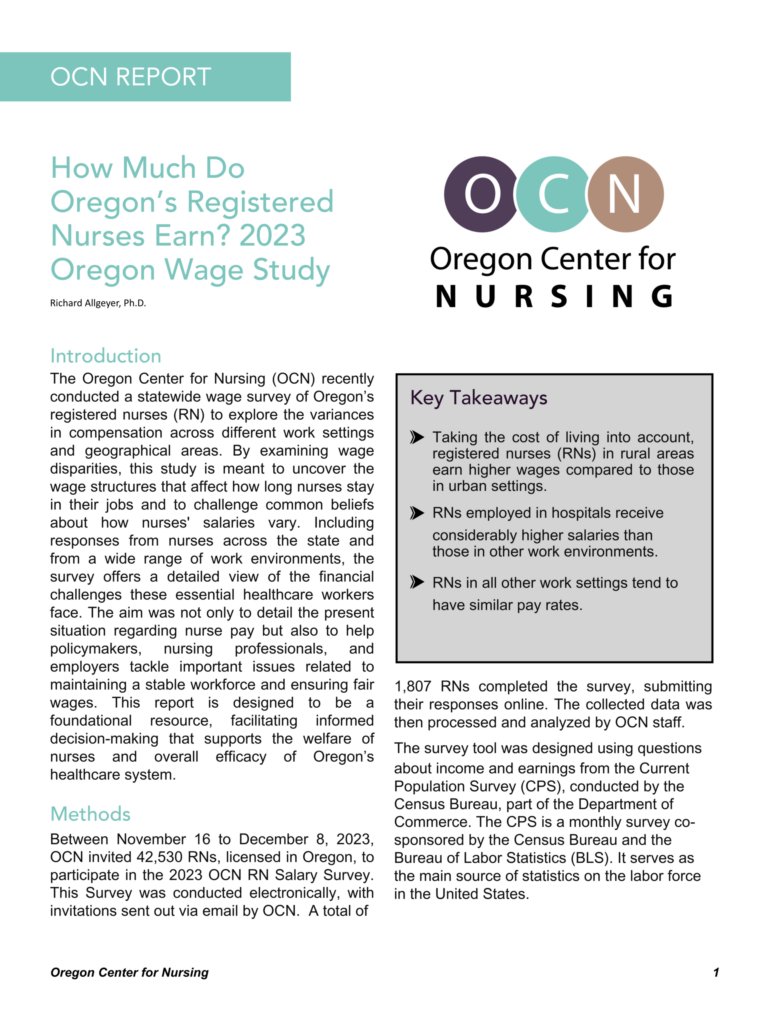
Compensation insights from more than 1,800 Oregon nurses uncover striking wage disparities by setting, role, and geography. From public health to hospital work, the findings offer a deep dive into how pay structures impact equity and sustainability in the nursing workforce. The report empowers leaders with data to guide retention and workforce planning.
Issues Facing the Post-Pandemic Nursing Workforce in Oregon – Stress and Emotional Health
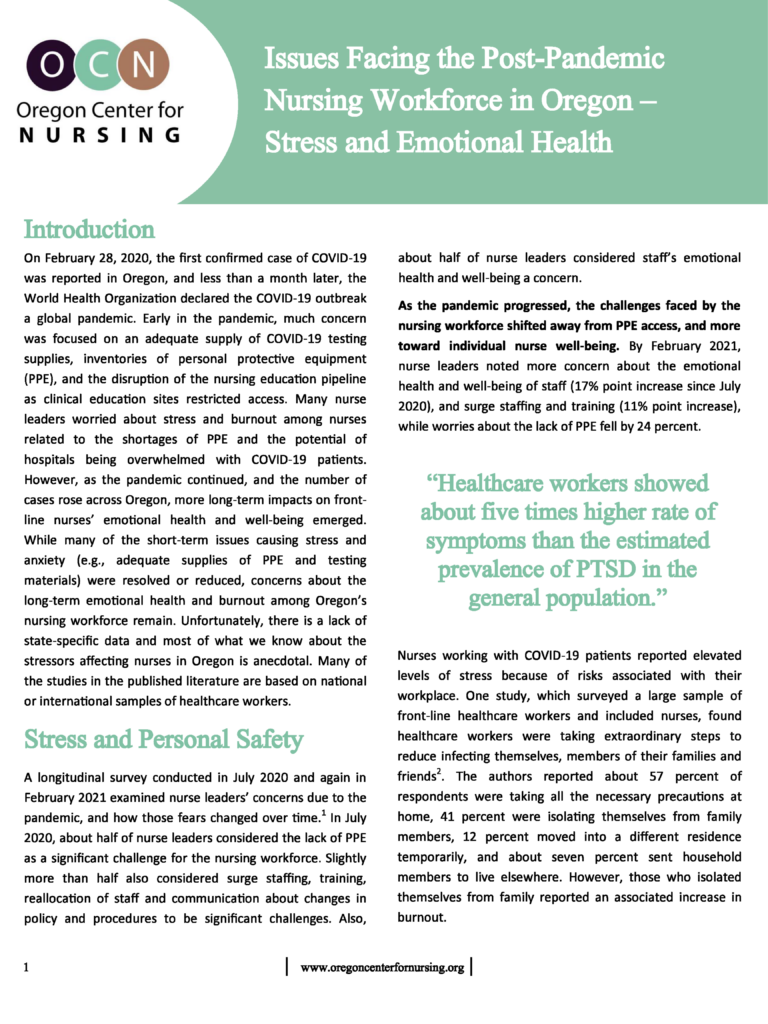
Emotional fatigue and burnout continue to shape Oregon’s nursing workforce in the aftermath of COVID-19. This publication explores how stress, safety concerns, and organizational responses have impacted nurses’ well-being. With limited state-specific data, the report emphasizes the urgency of targeted support systems rooted in local realities.
Not Working Well: Clinical Placement for Nursing Students in an Era of Pandemic
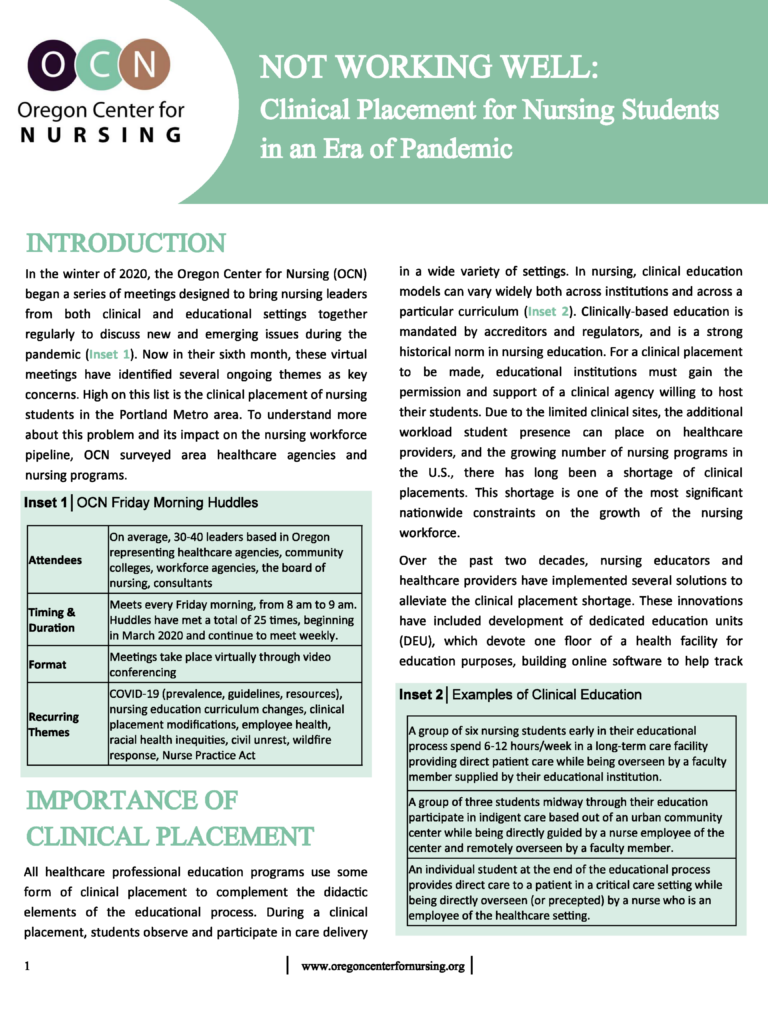
Faced with the urgency of a global health crisis, nursing education programs and healthcare agencies in Oregon scrambled to adapt clinical placement strategies. This publication captures the resulting stress, innovation, and breakdowns that surfaced as traditional education pipelines were upended. Interviews across sectors reveal a critical moment of reckoning for how students are prepared for practice.
Nursing Maldistribution: The Intersection Between Practice Setting and Years of Nursing Experience
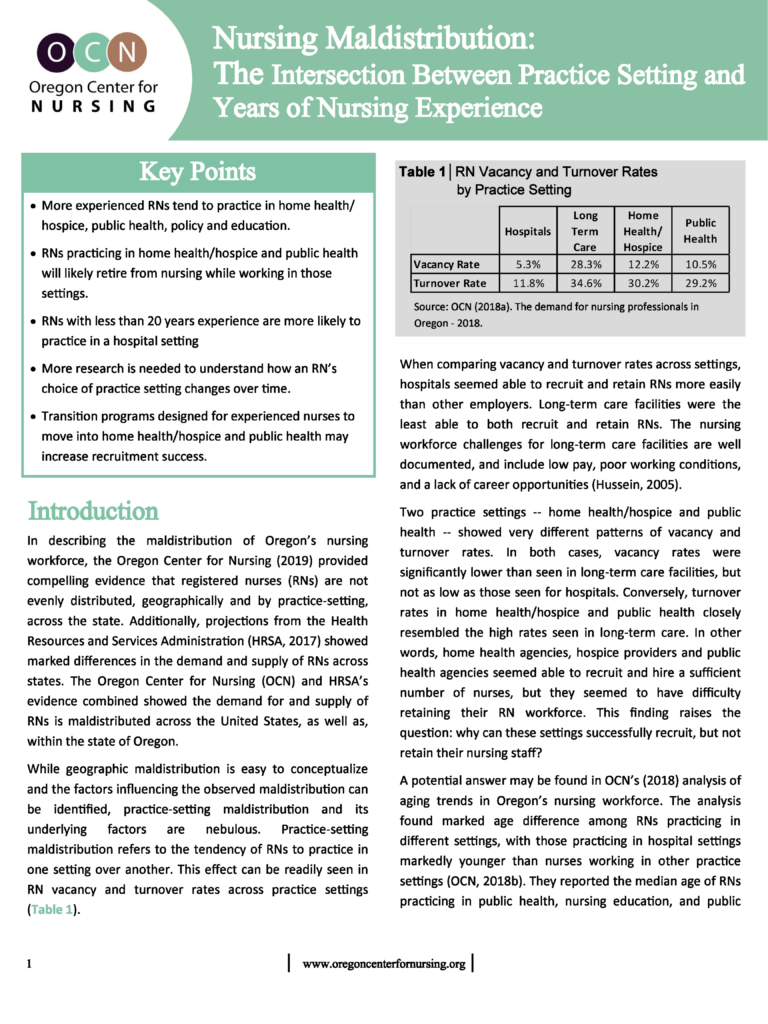
RNs across Oregon are not evenly distributed between care settings, especially when considering years of experience. Nurses with more experience tend to cluster in non-hospital environments, while newer nurses gravitate toward hospitals and long-term care. These patterns raise important implications for workforce planning, recruitment, and retention strategies statewide.
Trends in Oregon Nursing Education 2012–18
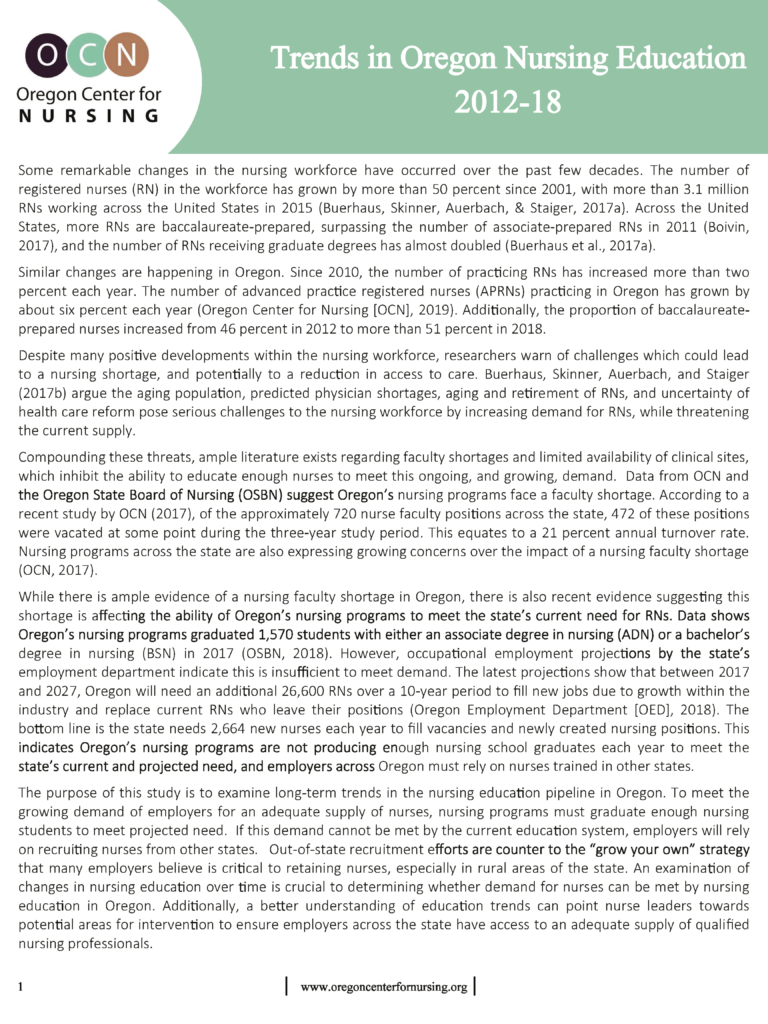
Nursing education in Oregon is evolving, but not fast enough to meet projected workforce needs. While BSN programs are growing, ADN and LPN pathways show stagnation or decline. This analysis highlights long-term trends shaping the state’s ability to “grow its own” nursing workforce.
The Demand for Nursing Professionals in Oregon – 2018
Employer perspectives across Oregon’s healthcare sectors reveal rising turnover and vacancy rates, especially in long term care. Survey findings uncover how workforce challenges vary dramatically across hospitals, public health, home health, and hospice settings. With regional shortages looming, employer responses suggest that targeted, sector-specific strategies are critical to stabilize Oregon’s nursing pipeline.
2018 Aging Trends in Oregon’s Nursing Workforce
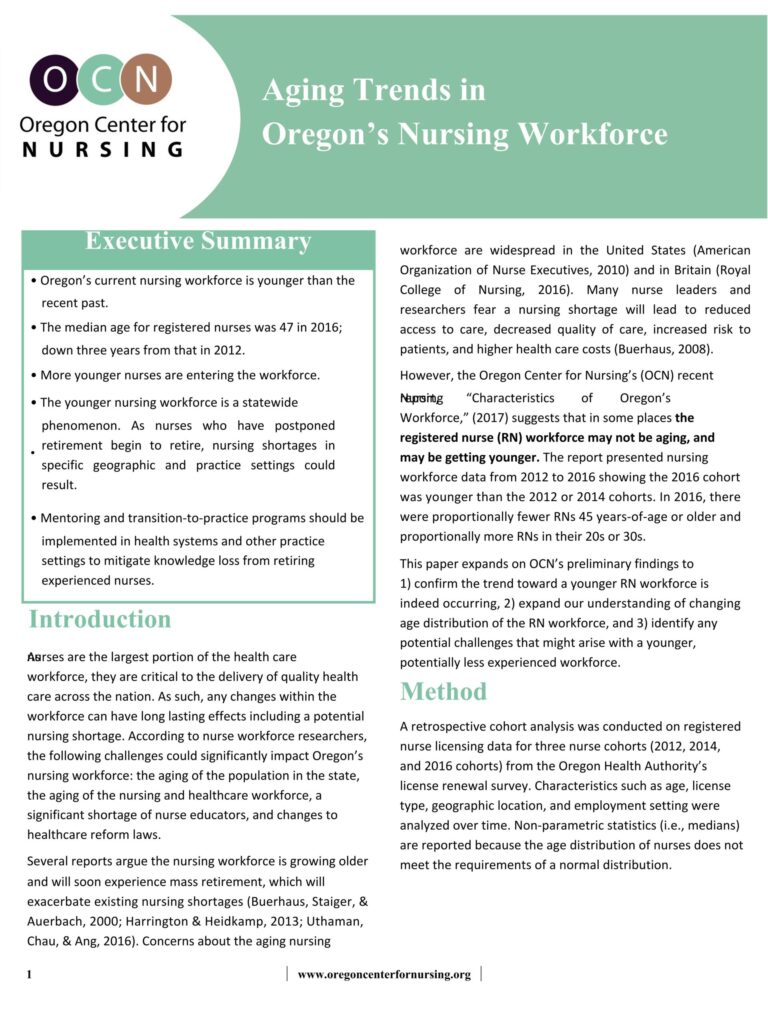
Oregon’s nursing workforce is getting younger, with a growing presence of nurses in their 20s and 30s. While this demographic shift offers promise, it raises urgent questions about experience gaps and impending retirements. This analysis explores how age trends differ by geography and employment setting, and what they mean for Oregon’s healthcare system.