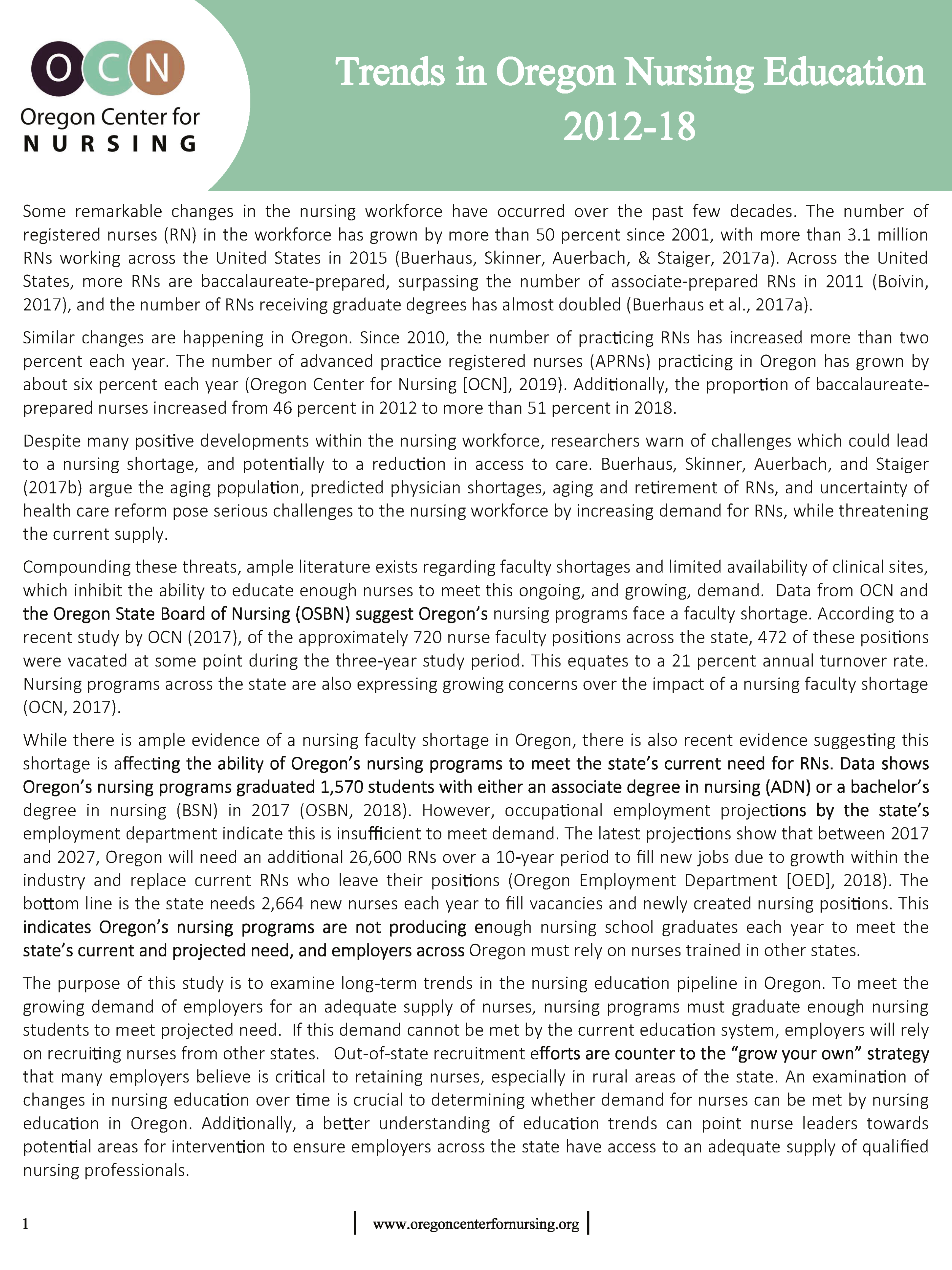
Nursing education in Oregon is evolving, but not fast enough to meet projected workforce needs. While BSN programs are growing, ADN and LPN pathways show stagnation or decline. This analysis highlights long-term trends shaping the state's ability to "grow its own" nursing workforce.
Oregon’s nursing education system has seen both progress and warning signs over the six-year period from 2012 to 2018. Bachelor’s degree programs in nursing (BSN) showed notable growth in capacity and diversity, becoming a stronger contributor to the registered nurse workforce. In contrast, practical nursing and associate degree programs exhibited signs of strain, including faculty shortages and decreased enrollment capacity. These disparities point to structural issues in how different educational pathways are supported and sustained.
The analysis shows that the proportion of BSN-prepared nurses is increasing, but the pace of change is slow. Oregon will not meet the National Academy of Medicine’s 80% BSN goal until 2038 if current trends continue. Additionally, despite increasing demand for RNs, state programs are not graduating enough nurses to meet workforce needs. This shortfall has forced healthcare employers to rely increasingly on nurses trained in other states, undermining local pipeline efforts—especially in rural and underserved areas.
Workforce outcomes are deeply influenced by the accessibility, scale, and diversity of nursing education programs. The findings indicate the need for targeted interventions: expanding BSN capacity, reducing attrition in faculty ranks, and addressing disparities in program availability. Without coordinated action, the state risks deepening workforce maldistribution and over-reliance on out-of-state recruitment strategies.
What's Inside
57%
Oregon’s RNs held a BSN or higher degree by 2018
21%
Annual turnover rate of Oregon nurse faculty positions during a three-year period
20%
Decrease in budgeted seats for Oregon’s practical nursing programs from 2012 to 2015
Better, But Not Well: Changes in Oregon Nurse Well-Being and Workplace Conditions from 2022 to 2025
Recovery across Oregon’s nursing workforce has begun, yet many workplace challenges continue to shape nurses’ daily experiences. Comparing survey findings across two time points, the report explores how emotional well-being,…