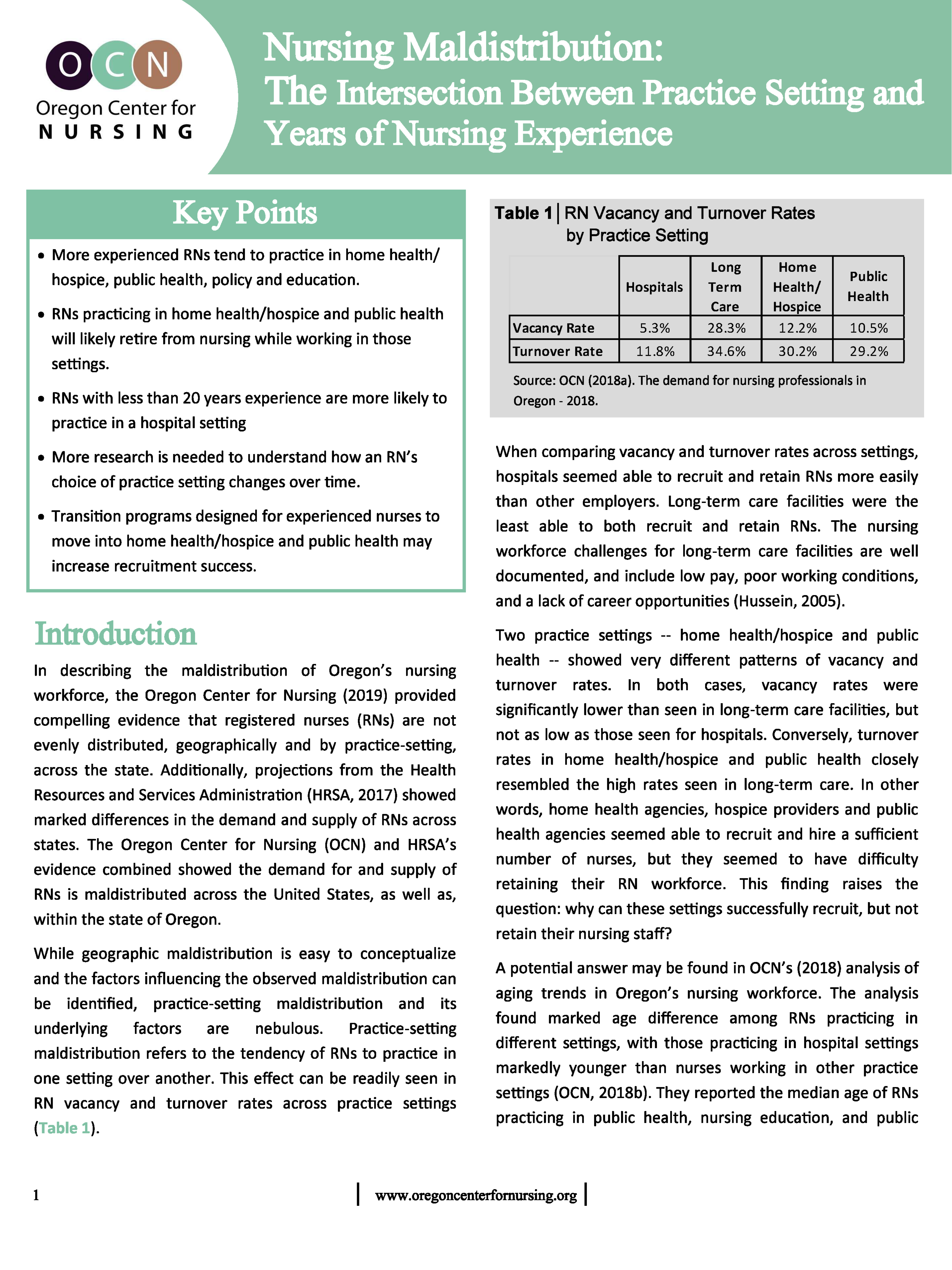
Nursing Maldistribution: The Intersection Between Practice Setting and Years of Nursing Experience
RNs across Oregon are not evenly distributed between care settings, especially when considering years of experience. Nurses with more experience tend to cluster in non-hospital environments, while newer nurses gravitate toward hospitals and long-term care. These patterns raise important implications for workforce planning, recruitment, and retention strategies statewide.
Nursing Maldistribution: The Intersection Between Practice Setting and Years of Nursing Experience
Across Oregon’s nursing landscape, experienced RNs increasingly transition into settings such as public health, home health, and education, leaving hospitals and long-term care as the predominant domains for less experienced nurses. This experience-driven pattern creates measurable imbalances in the workforce that align with differing recruitment and turnover rates across settings.
Data show that the likelihood of working in a hospital drops steadily as years of experience increase. Simultaneously, non-hospital settings such as public health, office/clinic, and public policy attract higher concentrations of nurses later in their careers. This distribution dynamic also contributes to high turnover rates in some settings—not from poor recruitment, but due to a higher proportion of retirement-ready RNs.
Understanding how practice setting preferences evolve over time is critical. By examining trends through the lens of experience, rather than age alone, this study reveals clear implications for employers and educators. The findings emphasize the need for more tailored transition programs to support the redistribution of nursing talent, especially into settings most affected by retirements.
What's Inside
70%
Nurses with 1–5 years of experience were most likely to work in hospital settings, showing early-career clustering.
52%
More than half of RNs with over 30 years of experience worked outside hospital settings, showing a clear shift away from hospitals later in careers.
56%
Just over half of public health RNs planned to stay in the workforce for more than 10 years, the lowest long-term retention outlook among all settings.
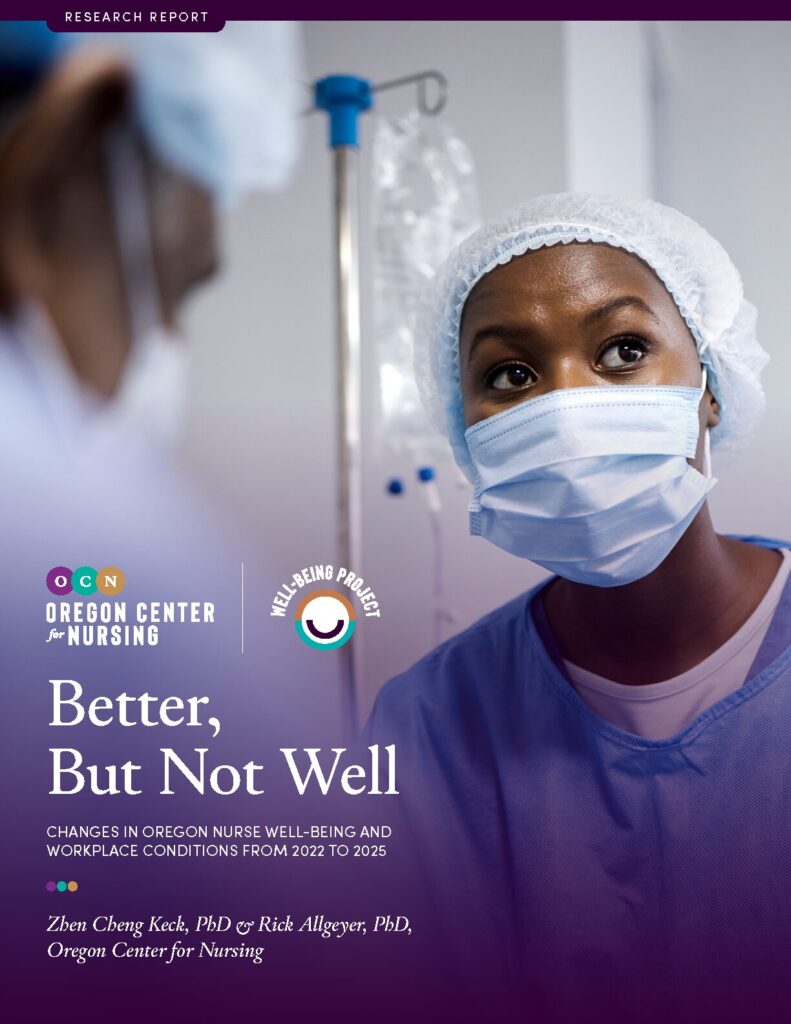
Better, But Not Well: Changes in Oregon Nurse Well-Being and Workplace Conditions from 2022 to 2025
Recovery across Oregon’s nursing workforce has begun, yet many workplace challenges continue to shape nurses’ daily experiences. Comparing survey findings across two time points, the report explores how emotional well-being,…