
Comparison of the Perception of Clinical Instruction: In-Facility, Face-to-Face Simulation, and Virtual Simulation Experiences in Oregon’s Nursing Programs
Simulation-based instruction has become a key tool in Oregon’s nursing education, especially during pandemic-era disruptions. This study explores how students and faculty perceive in-facility, face-to-face, and virtual simulation methods. Findings reveal notable differences between student and faculty viewpoints across instructional environments.
The Future of Oregon’s Nursing Workforce: Analysis and Recommendations
Oregon’s nursing workforce is shaped by more than staffing numbers. This collaborative study was commissioned to uncover what’s driving instability—and what to do about it. Grounded in data and statewide input, the report surfaces actionable insights on retention, preparation, and the evolving realities of nursing practice.
BRIEF: The Connection Between Local Nurse Recruitment Efforts and Social Determinants of Health
Growing concern about nursing maldistribution has shifted focus toward community-driven solutions. This brief explores how nurse workforce size and practice settings correlate with public health indicators in Oregon. It offers compelling insight into how strategic recruitment in ambulatory and long-term care could influence local health outcomes.
Filling the Gap: An Examination of Oregon Registered Nurses Licensed Through Endorsement
Oregon’s growing nurse demand increasingly depends on nurses licensed through endorsement. This report explores where these nurses practice and how that impacts healthcare access. Insights reveal how rural and non-hospital settings may face widening staffing gaps if current trends persist.
Issues Facing the Post-Pandemic Nursing Workforce in Oregon – Lasting Pandemic Impacts
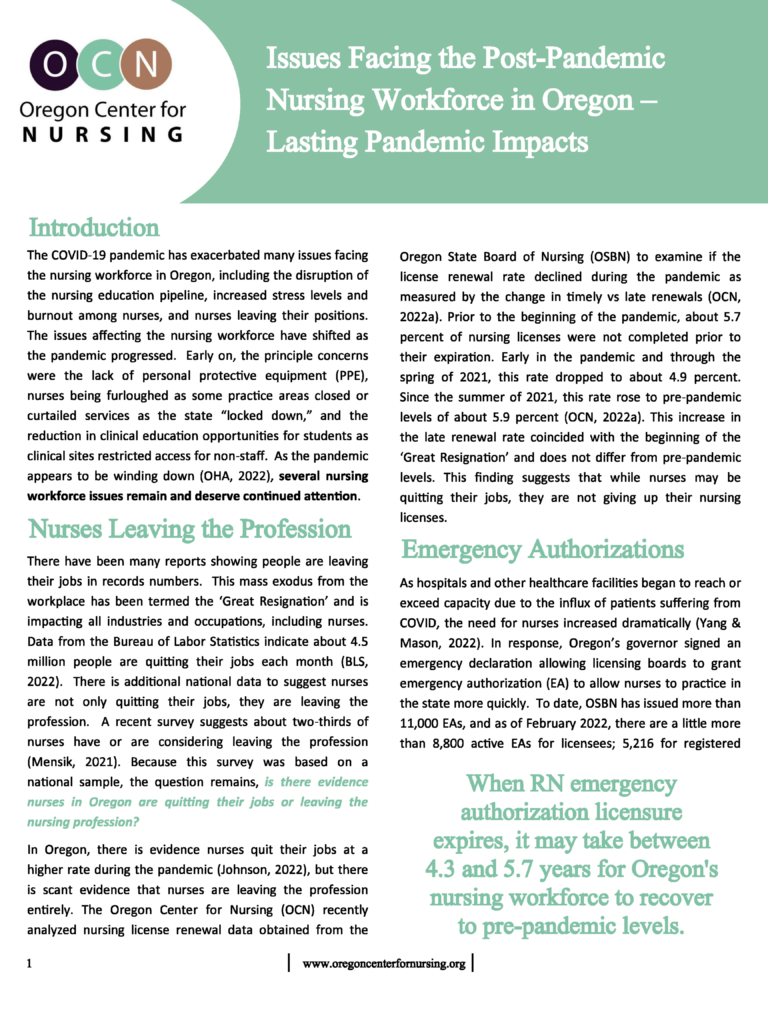
Oregon’s nursing workforce is still grappling with lingering effects of the COVID-19 pandemic, from license disruptions to emergency staffing shifts. This report explores how short-term policy responses and long-term workforce trends are reshaping the profession. As the state navigates a post-pandemic future, key questions remain about staffing capacity and nurse retention.
Issues Facing the Post-Pandemic Nursing Workforce in Oregon – Stress and Emotional Health
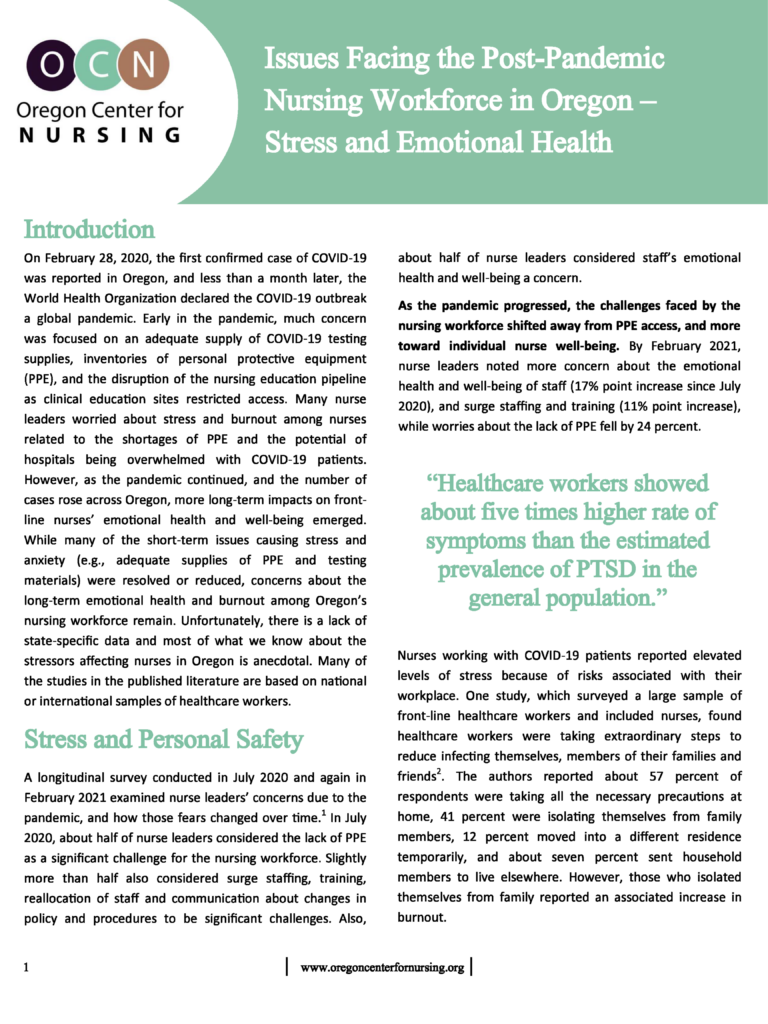
Emotional fatigue and burnout continue to shape Oregon’s nursing workforce in the aftermath of COVID-19. This publication explores how stress, safety concerns, and organizational responses have impacted nurses’ well-being. With limited state-specific data, the report emphasizes the urgency of targeted support systems rooted in local realities.
Not Working Well: Clinical Placement for Nursing Students in an Era of Pandemic
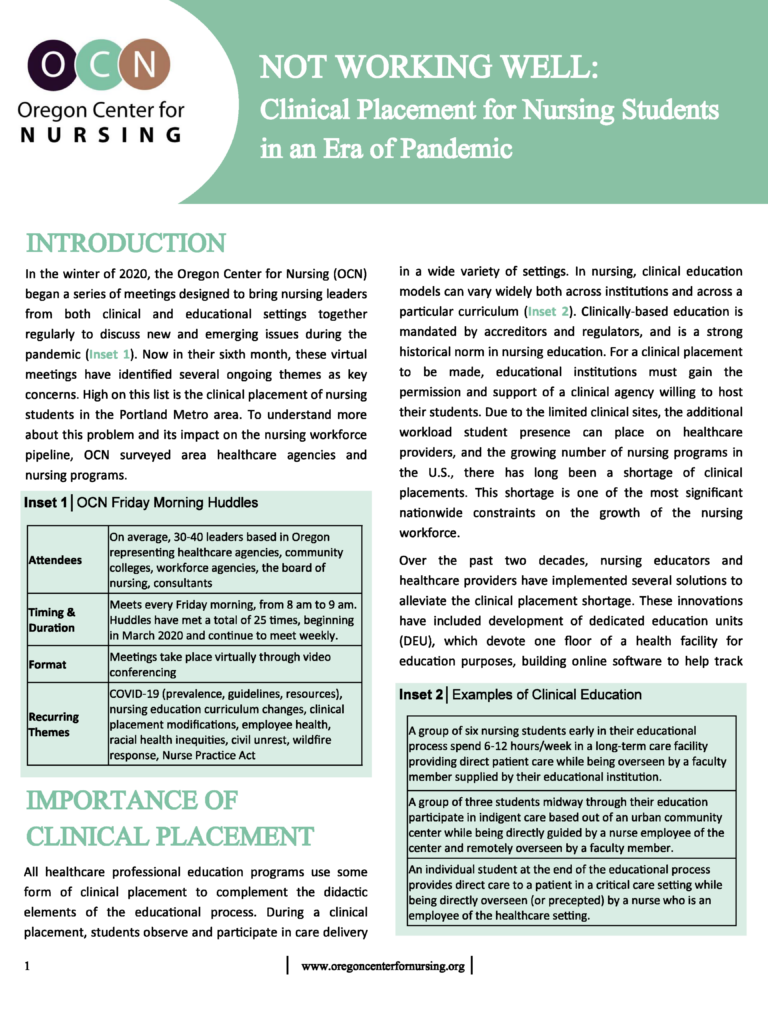
Faced with the urgency of a global health crisis, nursing education programs and healthcare agencies in Oregon scrambled to adapt clinical placement strategies. This publication captures the resulting stress, innovation, and breakdowns that surfaced as traditional education pipelines were upended. Interviews across sectors reveal a critical moment of reckoning for how students are prepared for practice.
Nursing Maldistribution: The Intersection Between Practice Setting and Years of Nursing Experience
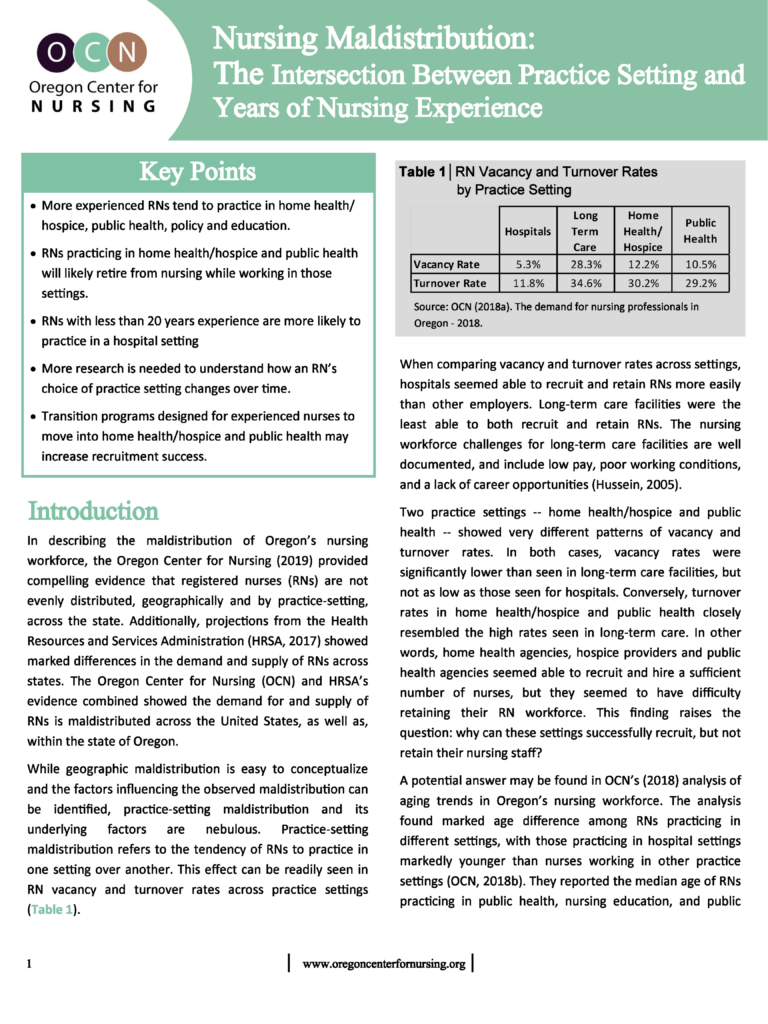
RNs across Oregon are not evenly distributed between care settings, especially when considering years of experience. Nurses with more experience tend to cluster in non-hospital environments, while newer nurses gravitate toward hospitals and long-term care. These patterns raise important implications for workforce planning, recruitment, and retention strategies statewide.
Trends in Oregon Nursing Education 2012–18
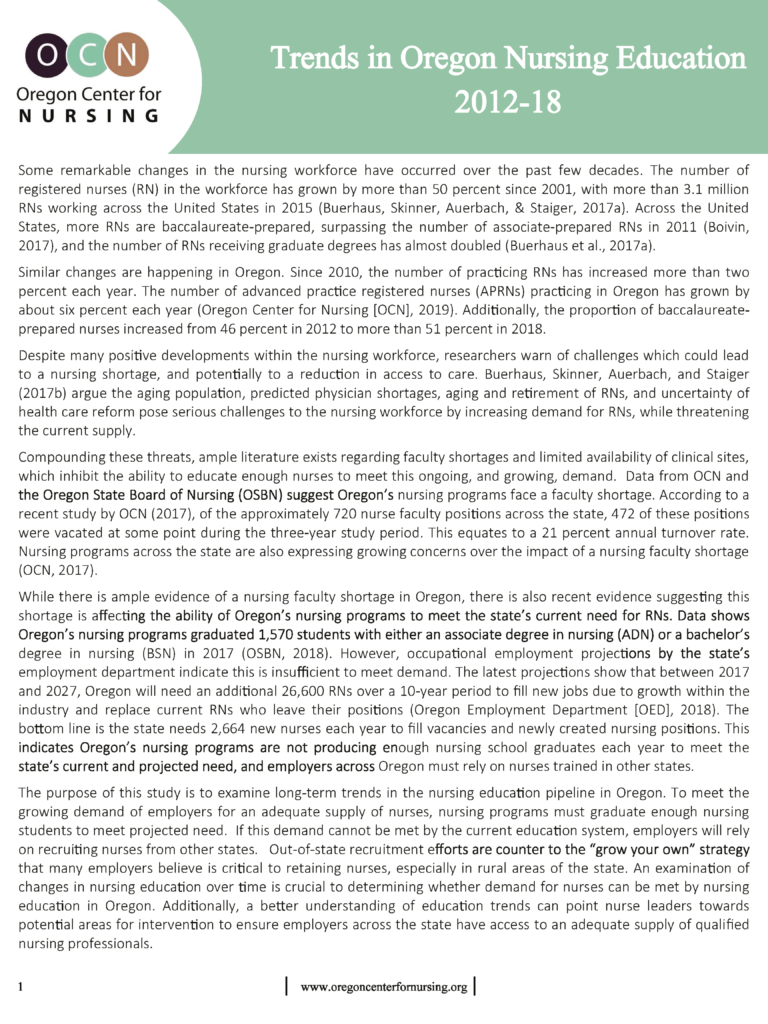
Nursing education in Oregon is evolving, but not fast enough to meet projected workforce needs. While BSN programs are growing, ADN and LPN pathways show stagnation or decline. This analysis highlights long-term trends shaping the state’s ability to “grow its own” nursing workforce.
Shortage or Maldistribution: Shifting the Conversation About Oregon’s Nursing Workforce
Misconceptions about a statewide nursing shortage often overshadow a more pressing issue: maldistribution. This analysis reveals how workforce imbalance affects rural regions and non-hospital settings. OCN’s research encourages targeted action by identifying critical disparities in nurse availability across Oregon.