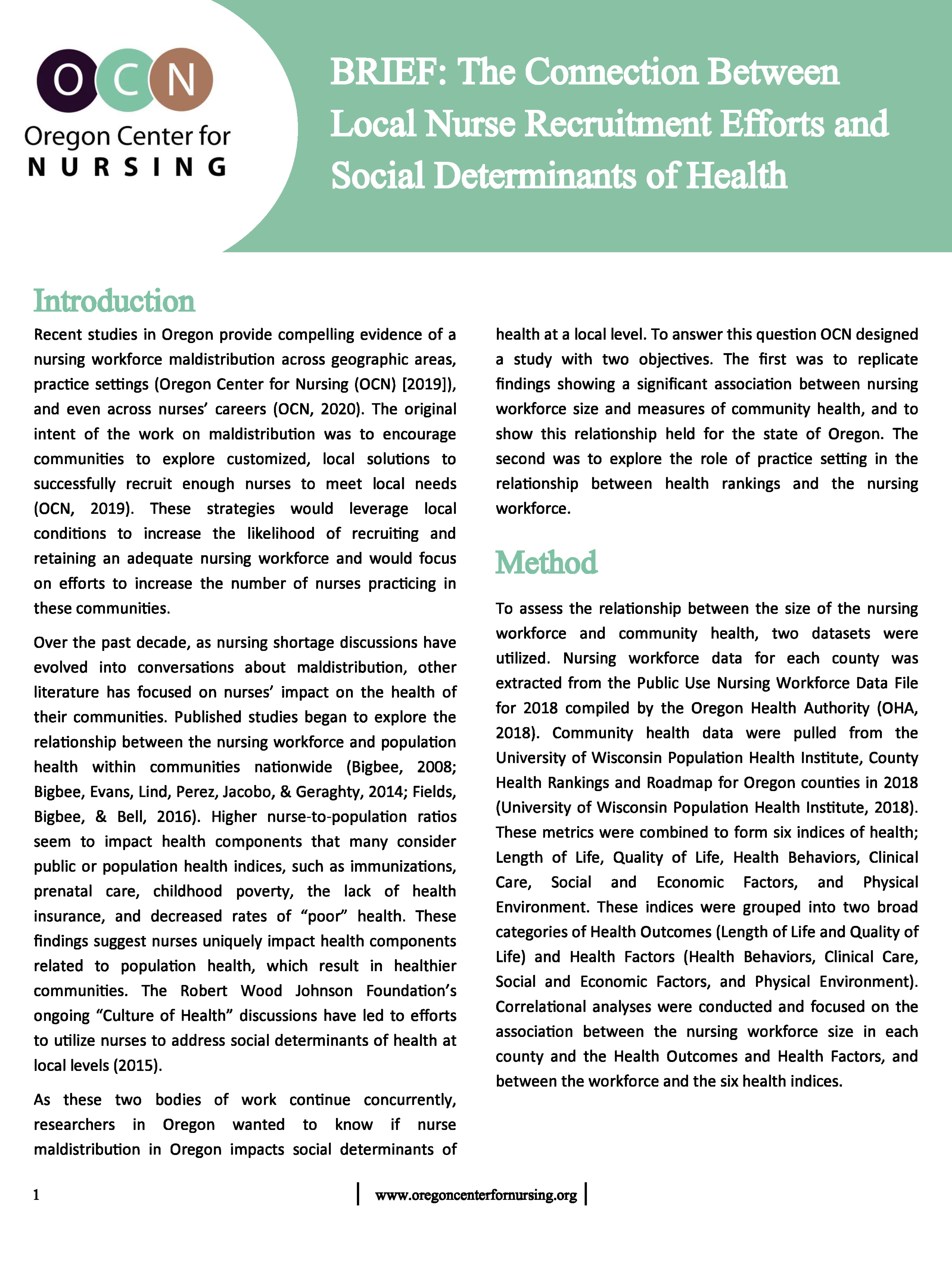
BRIEF: The Connection Between Local Nurse Recruitment Efforts and Social Determinants of Health
Growing concern about nursing maldistribution has shifted focus toward community-driven solutions. This brief explores how nurse workforce size and practice settings correlate with public health indicators in Oregon. It offers compelling insight into how strategic recruitment in ambulatory and long-term care could influence local health outcomes.
BRIEF: The Connection Between Local Nurse Recruitment Efforts and Social Determinants of Health
Understanding the relationship between nurse recruitment and community health is essential in addressing Oregon’s ongoing workforce maldistribution. This brief investigates whether counties with larger nursing workforces experience better public health outcomes. It specifically analyzes how practice settings, such as ambulatory and long-term care, influence health indicators beyond hospital-based roles.
OCN researchers utilized datasets from the Oregon Health Authority and County Health Rankings to correlate nurse distribution with six health indices. Statistically significant results revealed that larger county-level nursing workforces are strongly associated with improved scores for length and quality of life, as well as clinical care. Interestingly, the physical environment index showed a positive correlation with higher nurse numbers—likely reflecting challenges tied to population density, not access to care.
Perhaps most notable is the finding that nurses in ambulatory and long-term care settings were more closely tied to improvements in health behavior and socioeconomic indicators. These results suggest that certain practice environments offer unique opportunities for nurses to influence individual and population health through sustained engagement and relationship-building, particularly in rural areas. These findings point toward targeted recruitment as a viable strategy to not only address workforce imbalances but also improve community well-being.
What's Inside
6
County health indices analyzed: length of life, quality of life, health behaviors, clinical care, socioeconomic factors, physical environment
36
Oregon counties were evaluated for correlations between nurse supply and health indicators
4
Of 6 health indices were significantly associated with the total number of practicing nurses
Better, But Not Well: Changes in Oregon Nurse Well-Being and Workplace Conditions from 2022 to 2025
Recovery across Oregon’s nursing workforce has begun, yet many workplace challenges continue to shape nurses’ daily experiences. Comparing survey findings across two time points, the report explores how emotional well-being,…