
Issues Facing the Post-Pandemic Nursing Workforce in Oregon
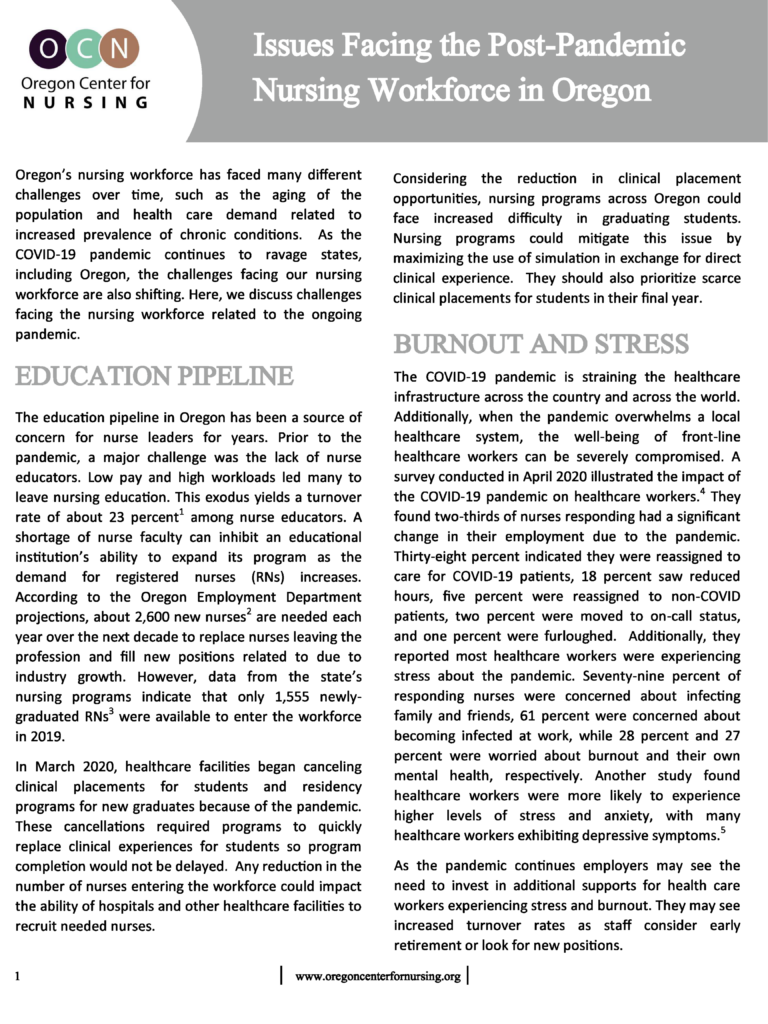
COVID-19 intensified Oregon’s existing nursing workforce challenges, disrupting education pipelines and stressing care delivery systems. This report explores how these shifts affect nurse training, licensure trends, and frontline well-being. Nurse migration patterns and burnout risks reveal vulnerabilities that require immediate and strategic attention.
Nursing Maldistribution: The Intersection Between Practice Setting and Years of Nursing Experience
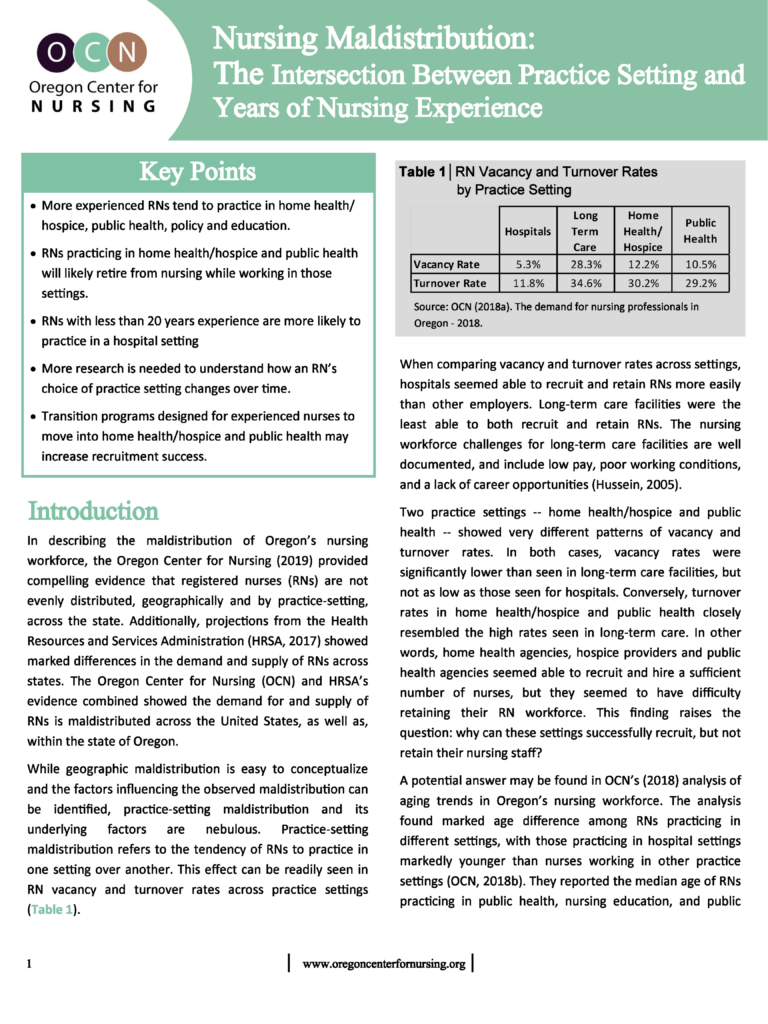
RNs across Oregon are not evenly distributed between care settings, especially when considering years of experience. Nurses with more experience tend to cluster in non-hospital environments, while newer nurses gravitate toward hospitals and long-term care. These patterns raise important implications for workforce planning, recruitment, and retention strategies statewide.
Primary Care Workforce Crisis Looming in Oregon: Nurse Practitioners Vital to Filling the Gap, But Not Enough to Go Around

Oregon faces an urgent primary care shortage, with only a fraction of nurse practitioners delivering direct primary care services. Despite favorable practice laws, the state struggles to align NP capacity with community needs. Policymakers must rethink workforce distribution to avoid deepening care disparities statewide.
Trends in Oregon Nursing Education 2012–18
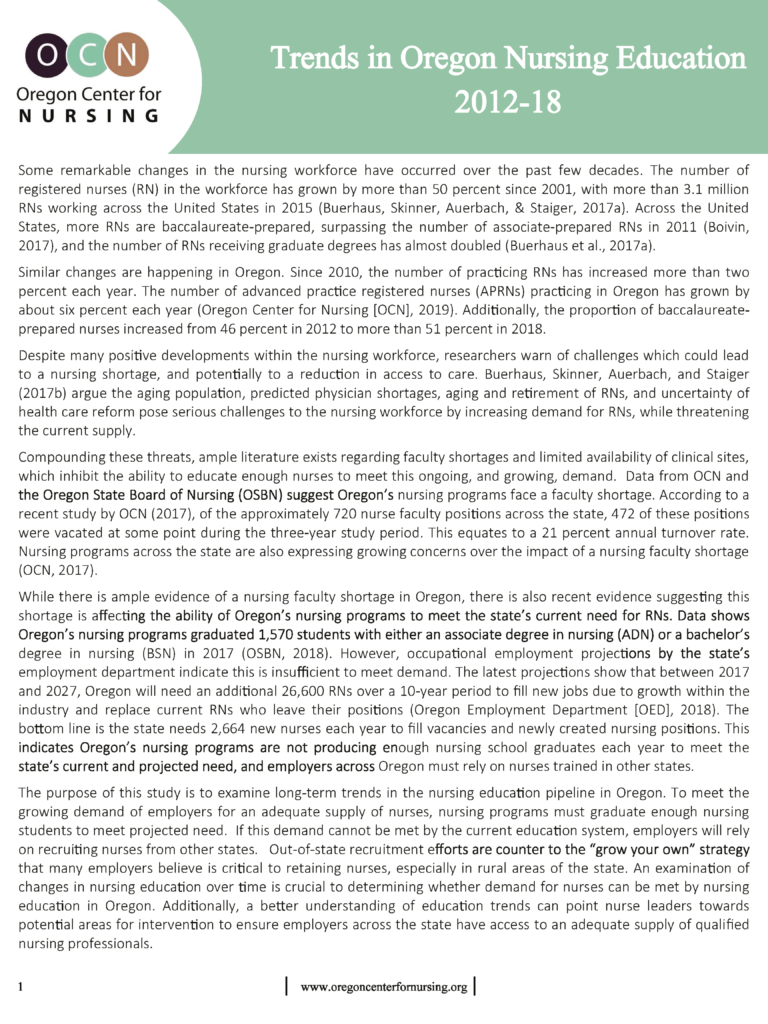
Nursing education in Oregon is evolving, but not fast enough to meet projected workforce needs. While BSN programs are growing, ADN and LPN pathways show stagnation or decline. This analysis highlights long-term trends shaping the state’s ability to “grow its own” nursing workforce.
Shortage or Maldistribution: Shifting the Conversation About Oregon’s Nursing Workforce
Misconceptions about a statewide nursing shortage often overshadow a more pressing issue: maldistribution. This analysis reveals how workforce imbalance affects rural regions and non-hospital settings. OCN’s research encourages targeted action by identifying critical disparities in nurse availability across Oregon.
The Demand for Nursing Professionals in Oregon – 2018
Employer perspectives across Oregon’s healthcare sectors reveal rising turnover and vacancy rates, especially in long term care. Survey findings uncover how workforce challenges vary dramatically across hospitals, public health, home health, and hospice settings. With regional shortages looming, employer responses suggest that targeted, sector-specific strategies are critical to stabilize Oregon’s nursing pipeline.
2018 Aging Trends in Oregon’s Nursing Workforce
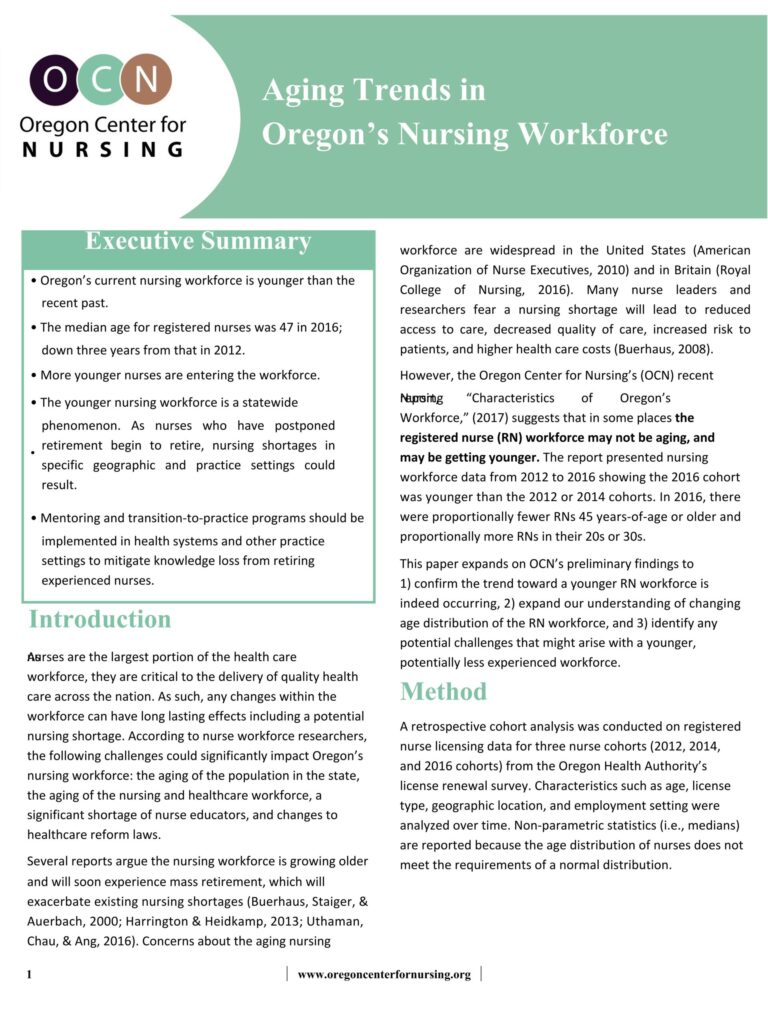
Oregon’s nursing workforce is getting younger, with a growing presence of nurses in their 20s and 30s. While this demographic shift offers promise, it raises urgent questions about experience gaps and impending retirements. This analysis explores how age trends differ by geography and employment setting, and what they mean for Oregon’s healthcare system.
Characteristics of the Nursing Workforce in Oregon – 2016
Nurses make up the largest share of Oregon’s healthcare workforce, serving as essential contributors to care access, quality, and cost outcomes. This 2016 profile outlines age, education, gender, and licensure trends across practice settings and specialties. Workforce planners, educators, and employers will find critical context for responding to statewide healthcare demands.
Oregon’s Newly Licensed Nurse Workforce
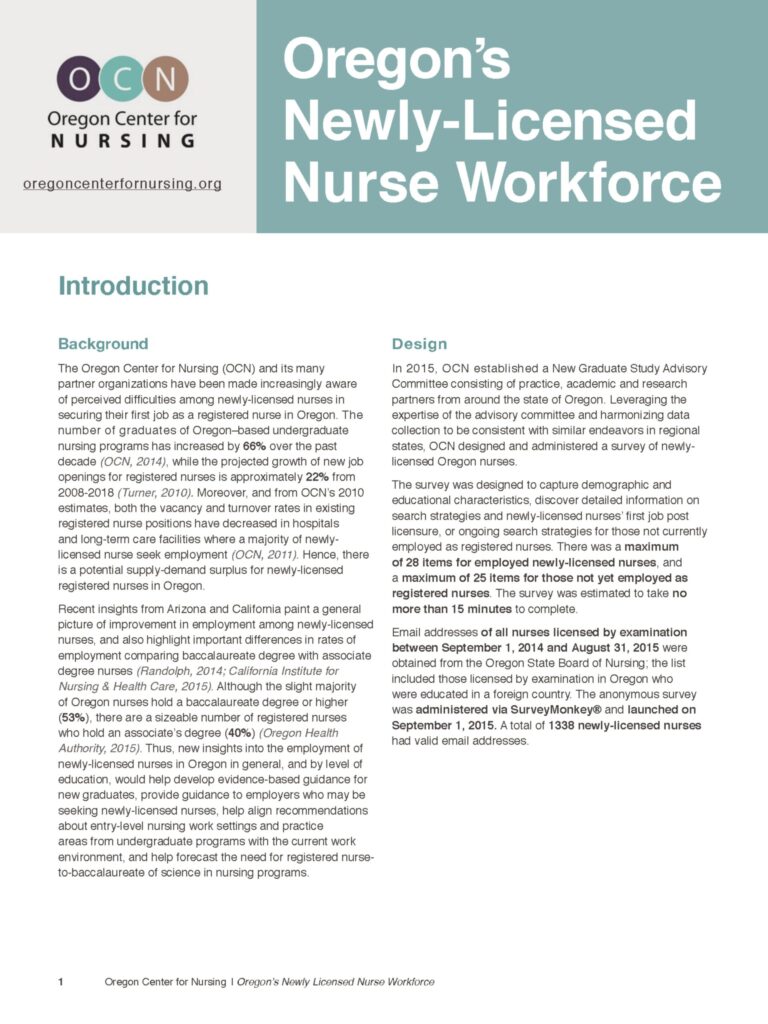
Newly licensed nurses in Oregon face a challenging entry into the profession as workforce growth lags behind graduation rates. This publication captures how location, degree type, and search strategies impact employment outcomes. Insights reveal where gaps exist and where opportunity lies for employers, educators, and policymakers.
The Demand for Nursing Professionals in Oregon

Nursing workforce shortages are mounting across Oregon’s health sectors. Employers report rising turnover and persistent vacancy challenges, particularly in long term care and public health. As demand increases, the findings signal a critical need for system-wide strategies to support nursing workforce stability.