
Nursing Supply Infographic 2024
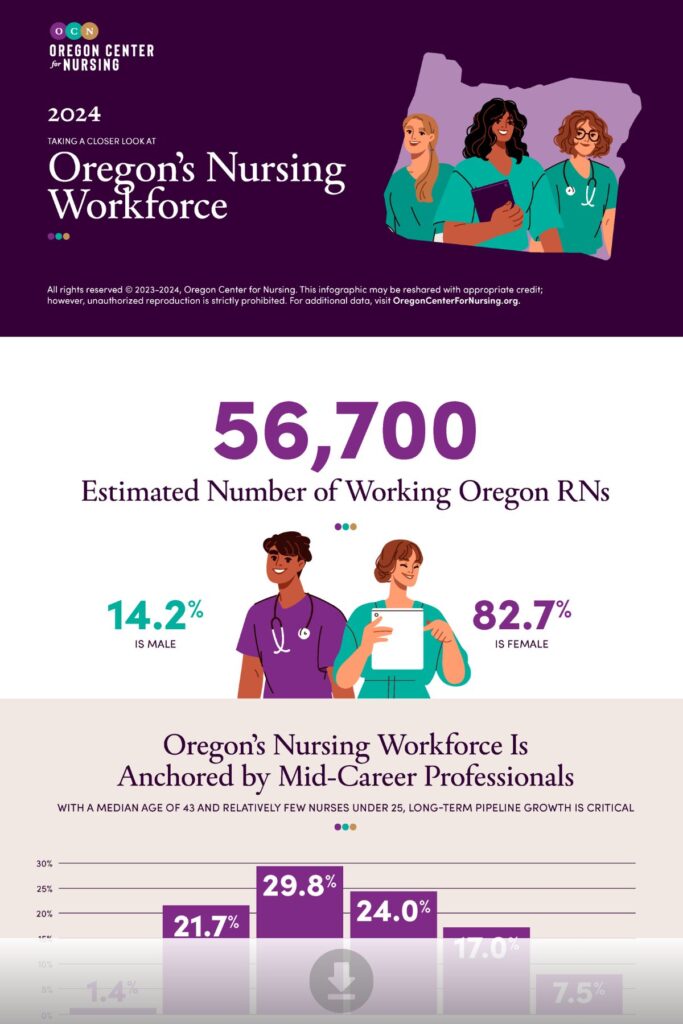
A visual overview highlights the composition, education, and practice settings of nurses across Oregon’s healthcare system. Key graphics illustrate who makes up the workforce and where care is delivered throughout the state. Designed for quick insight, the infographic offers a snapshot of nursing’s central role in Oregon’s health infrastructure.
2025 Oregon’s Nurse Well-Being
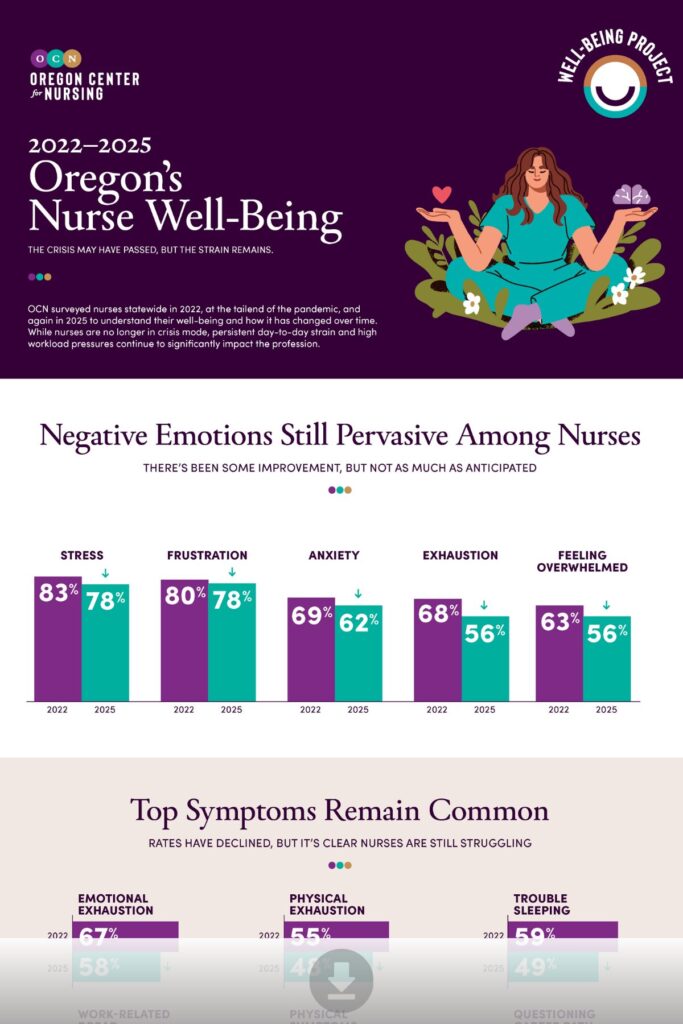
Persistent stress and emotional fatigue continue to weigh on Oregon’s nursing workforce, even as the emergency phase of the pandemic has passed. Most nurses still manage their mental health independently, and day-to-day work pressures remain the top reported stressor. The need for organizational change is clear as systemic strain endures across the profession.
From Burnout to Belonging: Nurse-Designed Approaches to Workforce Well-Being in Oregon
What happens when nurses design the solutions to their own workplace stress? Across Oregon, 18 nurse-led initiatives did just that, reshaping care environments and reframing well-being from the inside out. Discover how voice, equity, and system-level design replaced quick fixes and built lasting change.
Oregon Healthcare Workforce Index: Understanding Nursing in the Broader Healthcare Labor Market
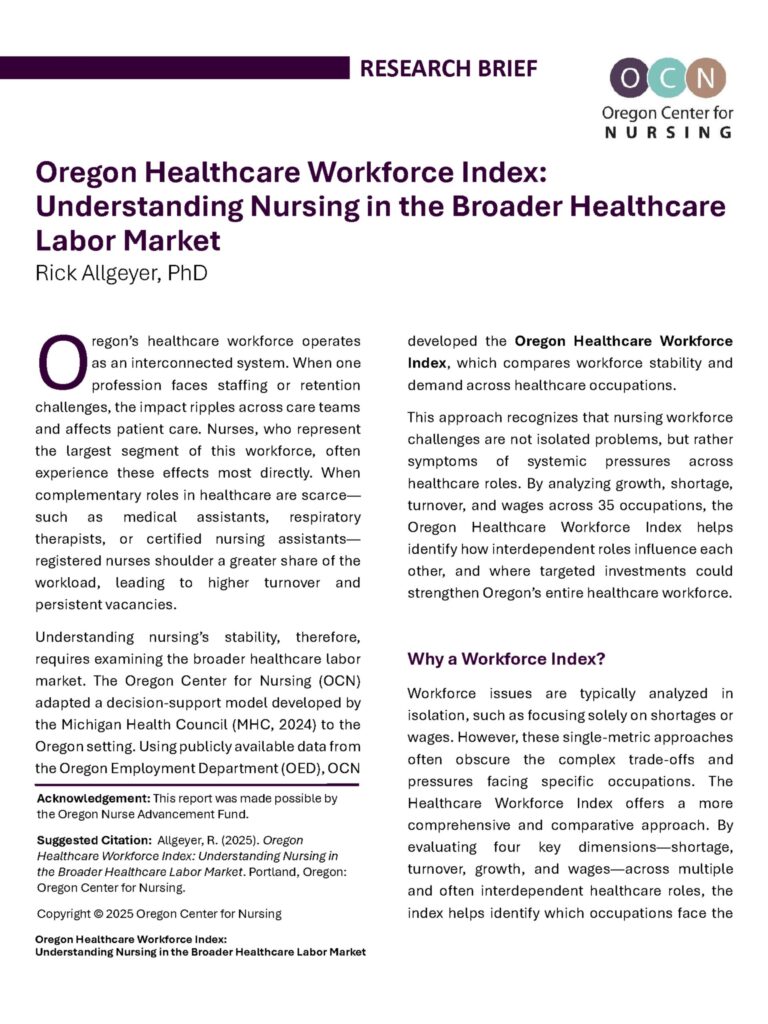
Nursing shortages don’t happen in isolation as they reflect deeper workforce dynamics. This index reveals how interconnected roles like medical assistants, respiratory therapists, and advanced practitioners impact Oregon’s nursing workforce. Built from public employment and wage data, the tool offers a new lens for planning healthcare workforce strategies across the state.
BRIEF: Oregon’s Nurse Vacancy Crisis
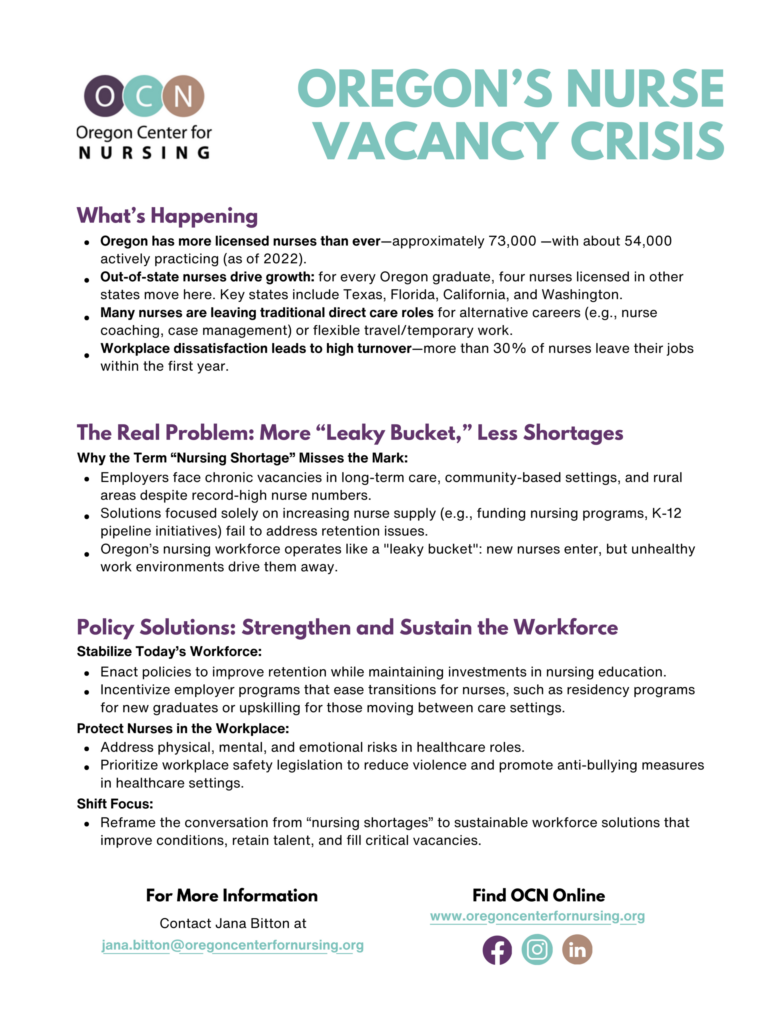
Oregon’s nursing workforce is growing, yet critical care roles remain unfilled. Traditional shortage narratives fail to capture deeper retention challenges affecting direct care. This brief reframes the problem and outlines urgent strategies to stabilize and support the profession.
How Much Do Oregon’s Registered Nurses Earn? 2023 Oregon Wage Study
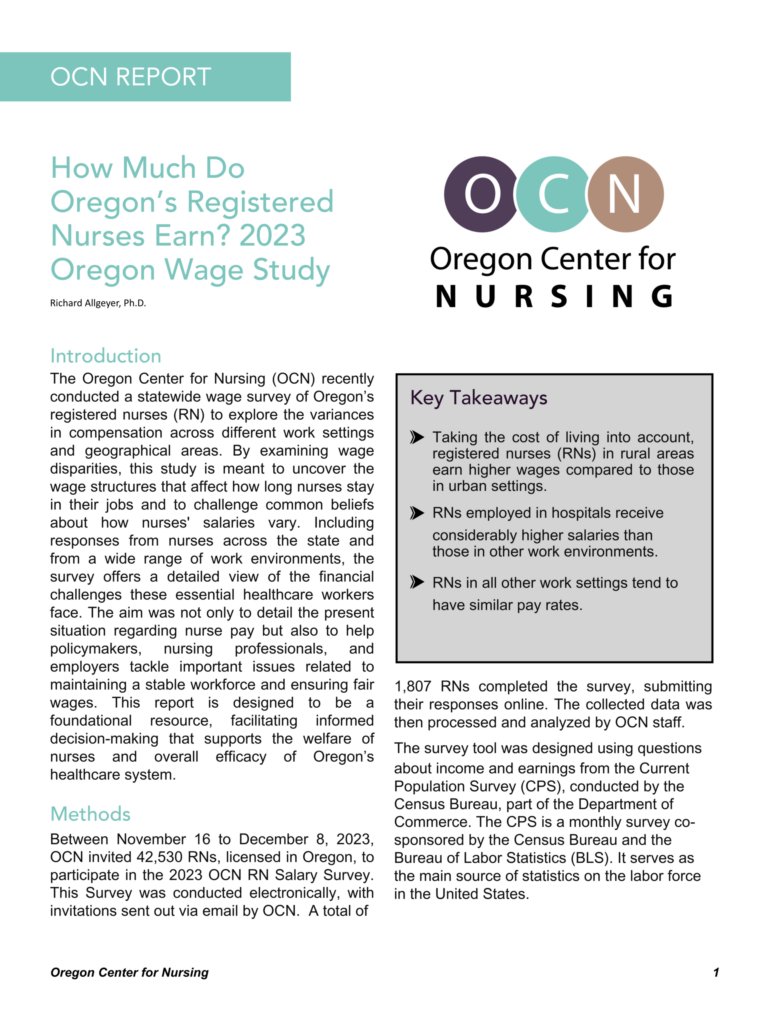
Compensation insights from more than 1,800 Oregon nurses uncover striking wage disparities by setting, role, and geography. From public health to hospital work, the findings offer a deep dive into how pay structures impact equity and sustainability in the nursing workforce. The report empowers leaders with data to guide retention and workforce planning.
Barriers to Nursing Workforce Retention and Attraction in Rural Areas
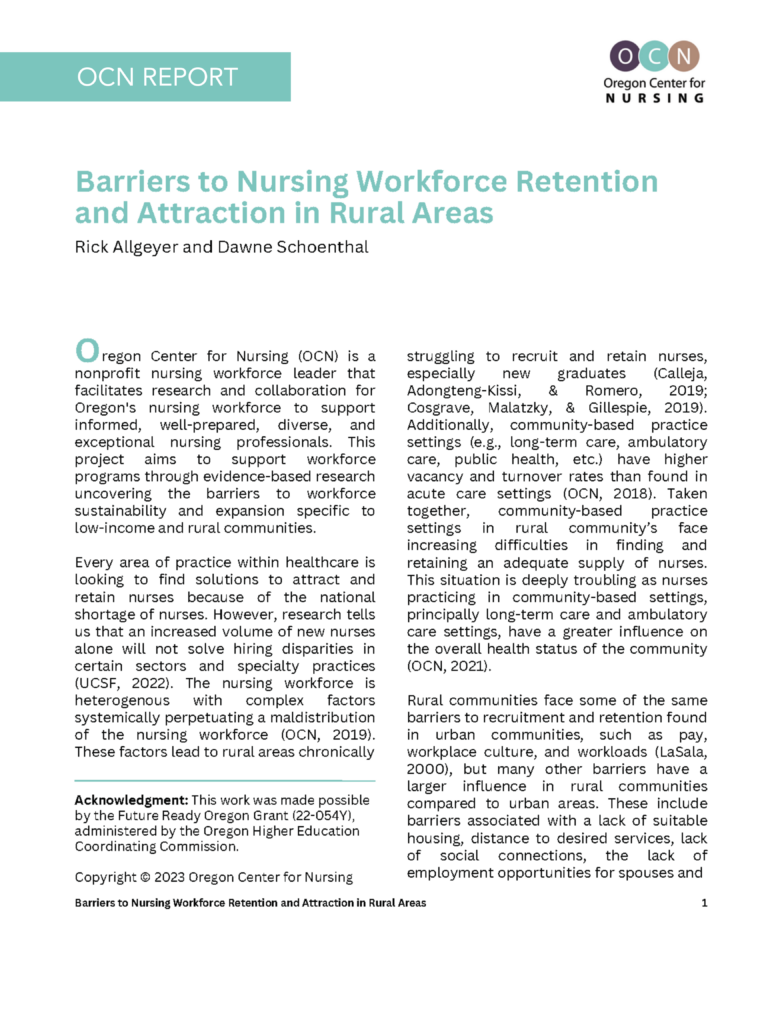
In Oregon’s rural communities, complex socioeconomic barriers continue to hinder nursing workforce stability. This qualitative study explores the real-world challenges healthcare employers face in retaining and attracting nurses across community-based settings. Findings from Coos County offer data-driven insights and next-step solutions tailored to underserved regions.
Comparison of the Perception of Clinical Instruction: In-Facility, Face-to-Face Simulation, and Virtual Simulation Experiences in Oregon’s Nursing Programs
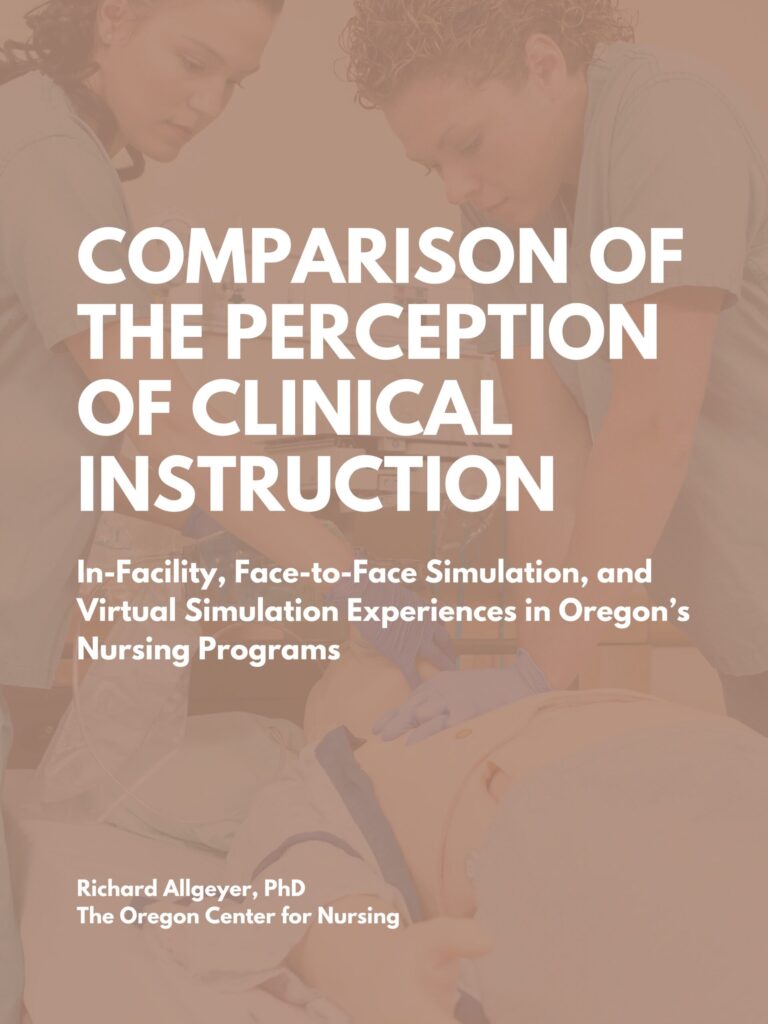
Simulation-based instruction has become a key tool in Oregon’s nursing education, especially during pandemic-era disruptions. This study explores how students and faculty perceive in-facility, face-to-face, and virtual simulation methods. Findings reveal notable differences between student and faculty viewpoints across instructional environments.
The Future of Oregon’s Nursing Workforce: Analysis and Recommendations
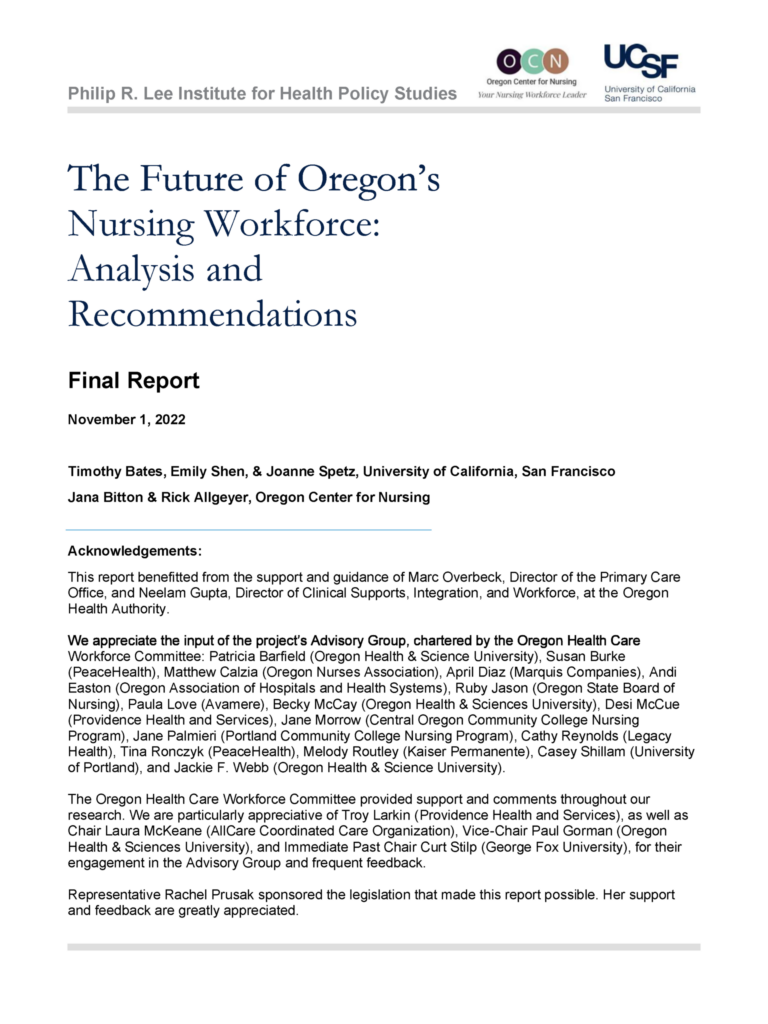
Oregon’s nursing workforce is shaped by more than staffing numbers. This collaborative study was commissioned to uncover what’s driving instability—and what to do about it. Grounded in data and statewide input, the report surfaces actionable insights on retention, preparation, and the evolving realities of nursing practice.
BRIEF: The Connection Between Local Nurse Recruitment Efforts and Social Determinants of Health
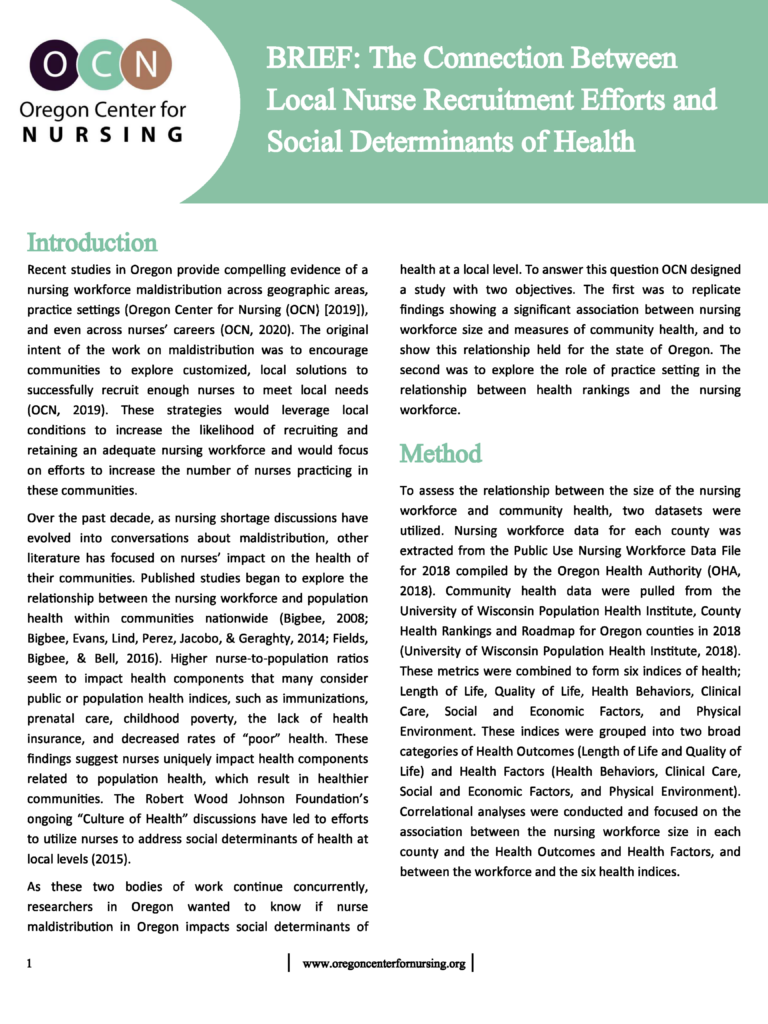
Growing concern about nursing maldistribution has shifted focus toward community-driven solutions. This brief explores how nurse workforce size and practice settings correlate with public health indicators in Oregon. It offers compelling insight into how strategic recruitment in ambulatory and long-term care could influence local health outcomes.