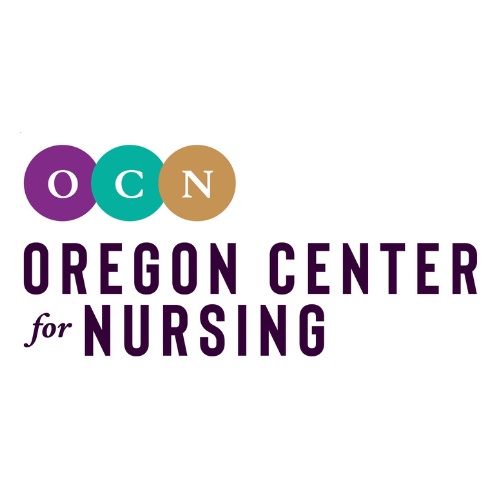
Understanding Oregon’s Nursing Workforce Supply, Demand and Distribution
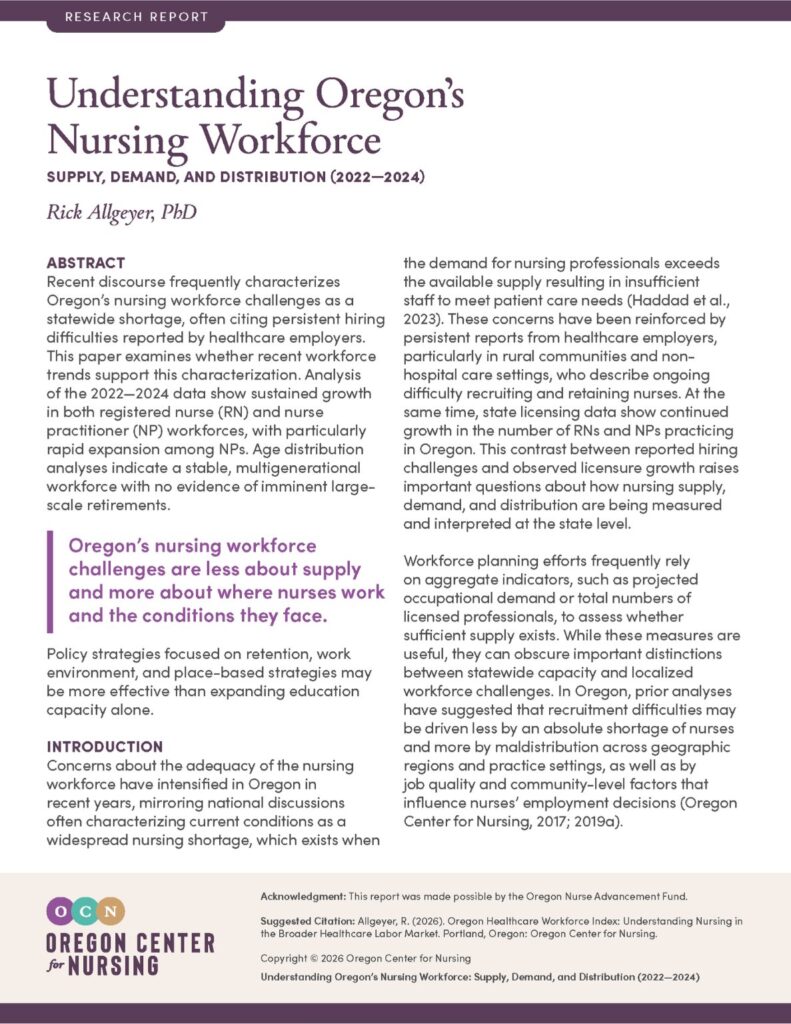
Examine workforce trends across Oregon, including nurse supply, regional demand, and access to care throughout the state.
Oregon Healthcare Workforce Index: Understanding Nursing in the Broader Healthcare Labor Market
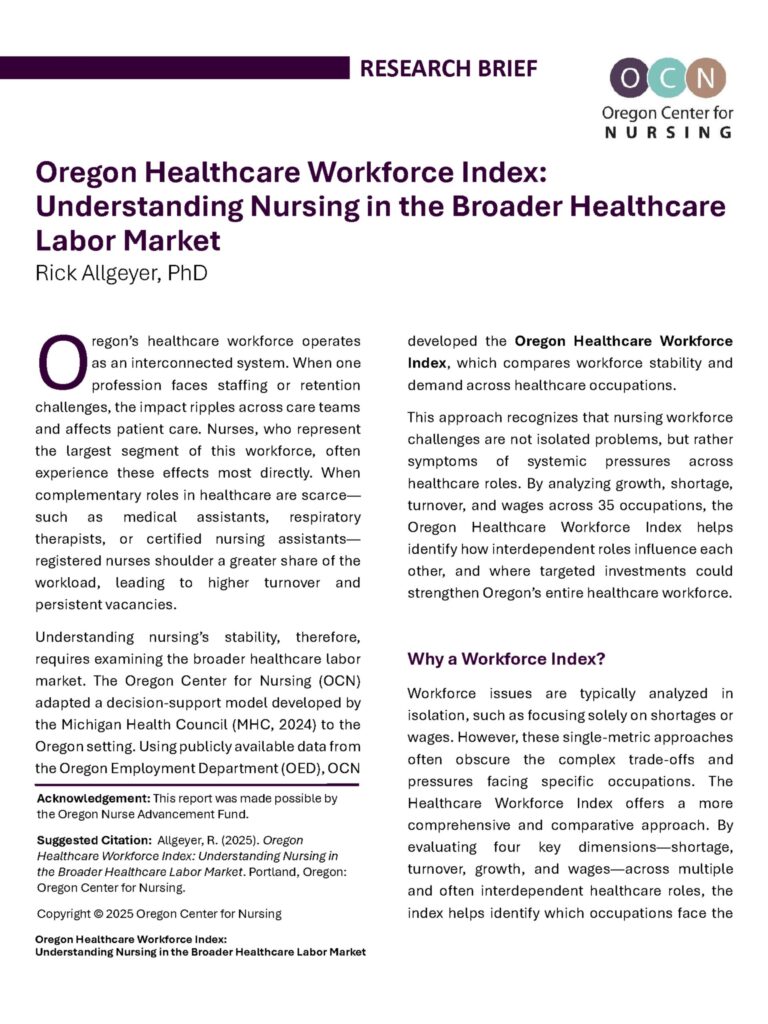
Explore how nursing fits within Oregon’s broader healthcare workforce and the trends shaping labor supply, demand, and workforce planning.
BRIEF: Oregon’s Nurse Vacancy Crisis
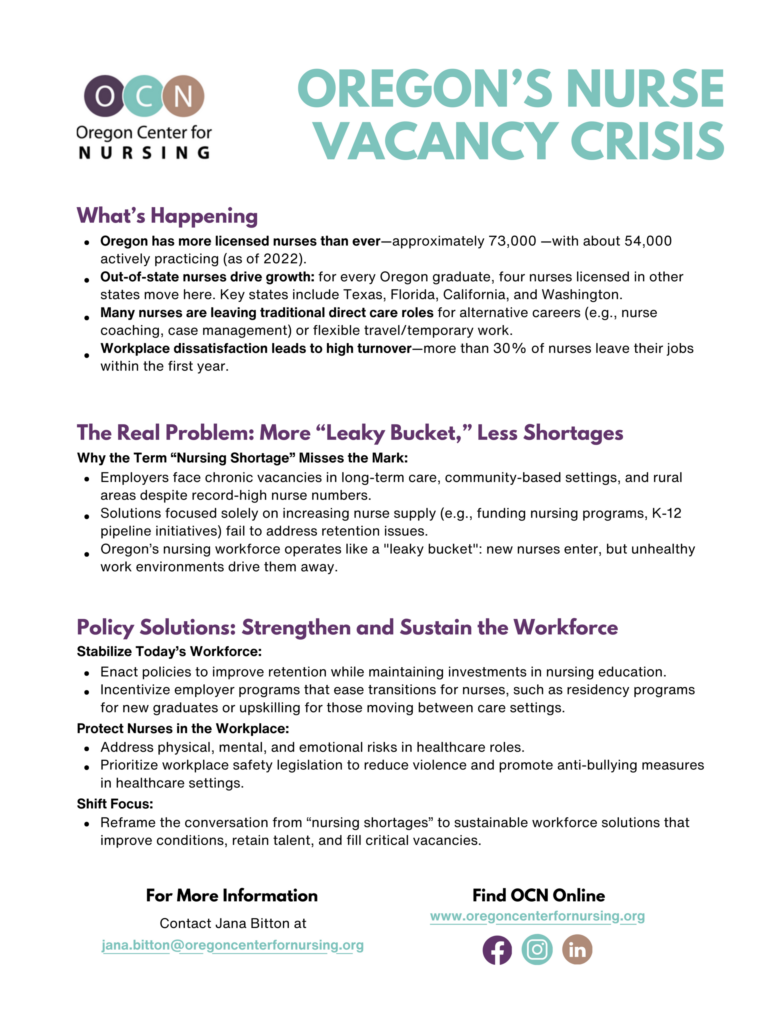
Oregon’s nursing workforce is growing, yet critical care roles remain unfilled. Traditional shortage narratives fail to capture deeper retention challenges affecting direct care. This brief reframes the problem and outlines urgent strategies to stabilize and support the profession.
How Much Do Oregon’s Registered Nurses Earn? 2023 Oregon Wage Study
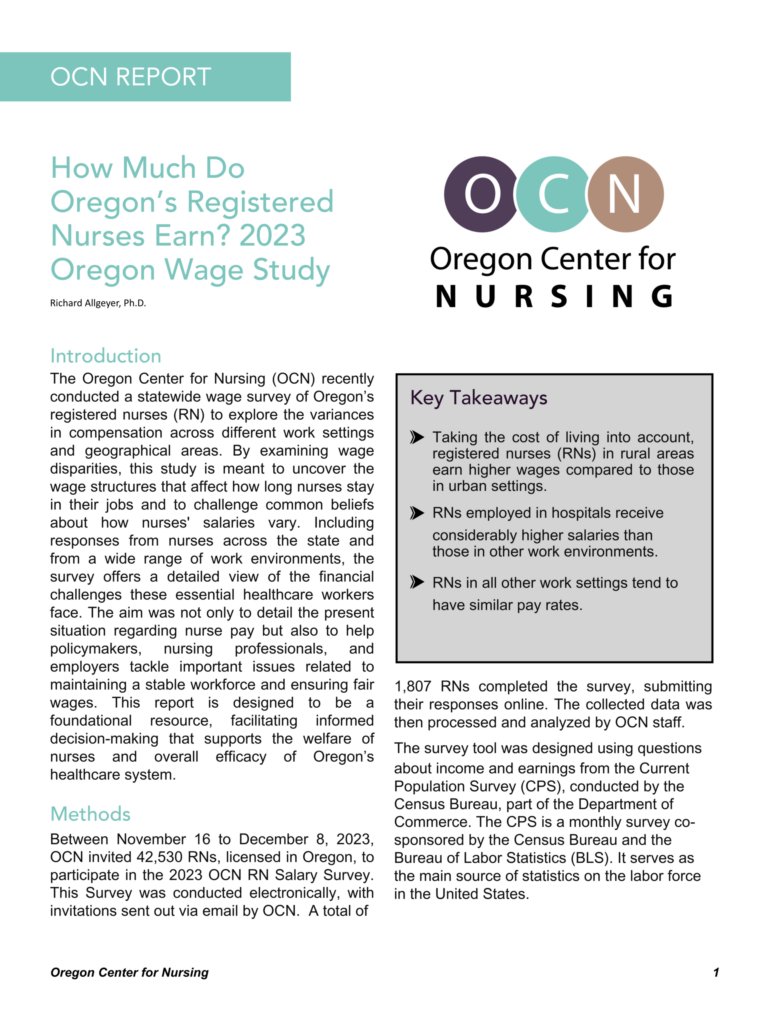
Compensation insights from more than 1,800 Oregon nurses uncover striking wage disparities by setting, role, and geography. From public health to hospital work, the findings offer a deep dive into how pay structures impact equity and sustainability in the nursing workforce. The report empowers leaders with data to guide retention and workforce planning.
Barriers to Nursing Workforce Retention and Attraction in Rural Areas
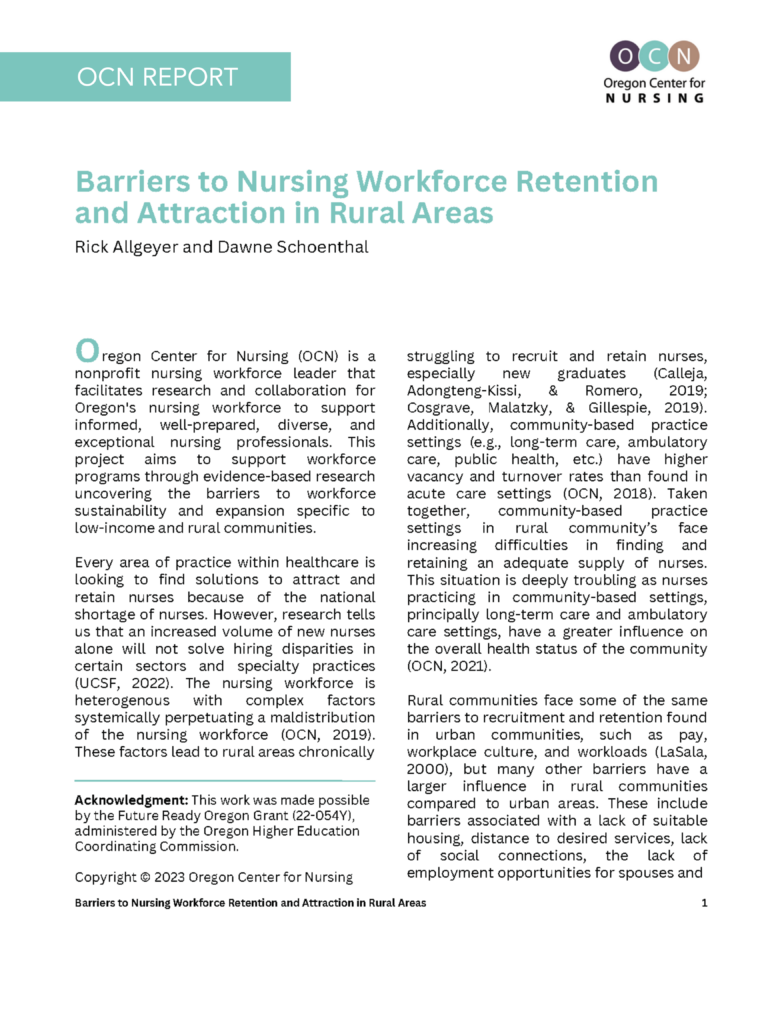
In Oregon’s rural communities, complex socioeconomic barriers continue to hinder nursing workforce stability. This qualitative study explores the real-world challenges healthcare employers face in retaining and attracting nurses across community-based settings. Findings from Coos County offer data-driven insights and next-step solutions tailored to underserved regions.
Comparison of the Perception of Clinical Instruction: In-Facility, Face-to-Face Simulation, and Virtual Simulation Experiences in Oregon’s Nursing Programs
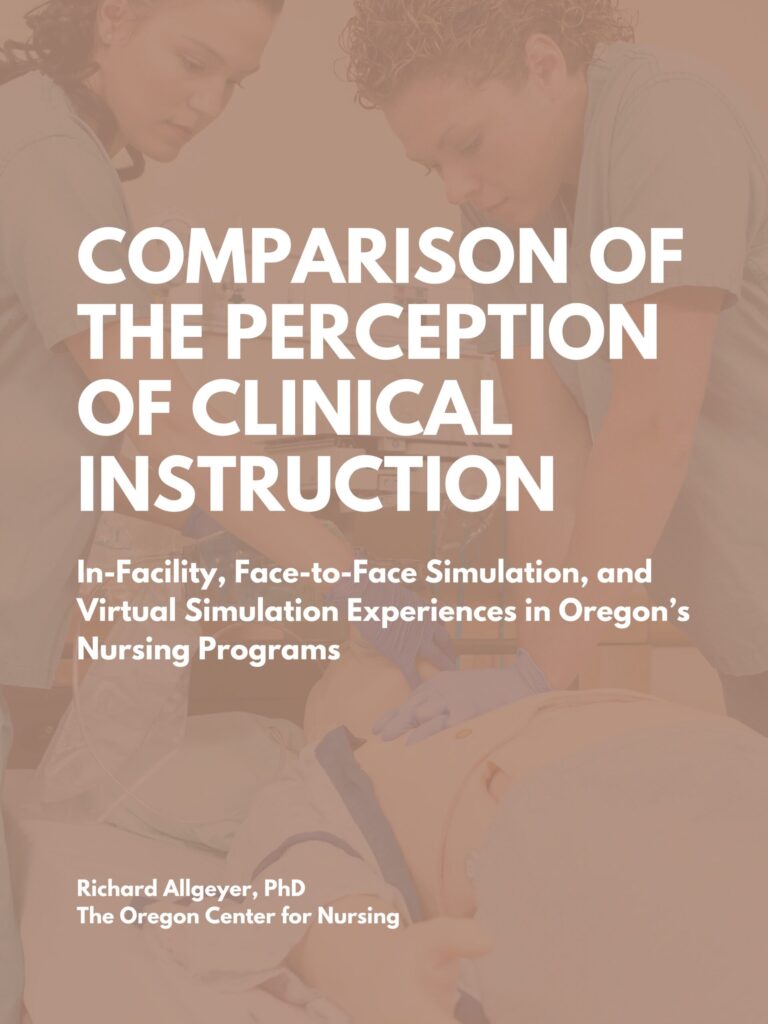
Simulation-based instruction has become a key tool in Oregon’s nursing education, especially during pandemic-era disruptions. This study explores how students and faculty perceive in-facility, face-to-face, and virtual simulation methods. Findings reveal notable differences between student and faculty viewpoints across instructional environments.
BRIEF: The Connection Between Local Nurse Recruitment Efforts and Social Determinants of Health
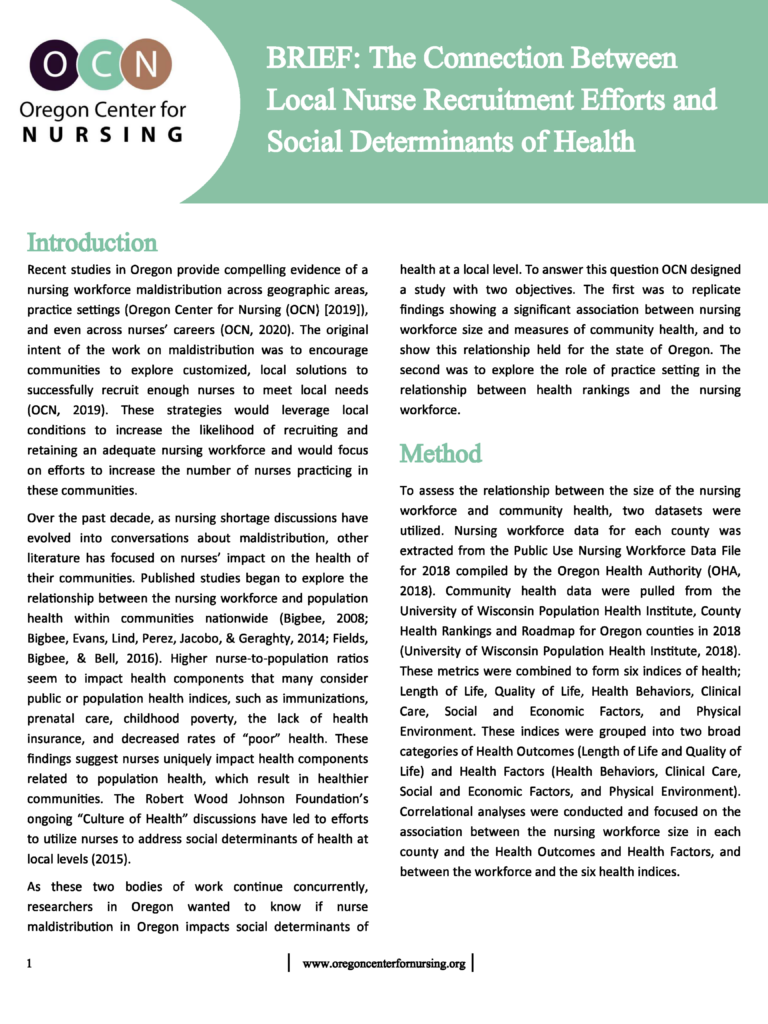
Growing concern about nursing maldistribution has shifted focus toward community-driven solutions. This brief explores how nurse workforce size and practice settings correlate with public health indicators in Oregon. It offers compelling insight into how strategic recruitment in ambulatory and long-term care could influence local health outcomes.
Filling the Gap: An Examination of Oregon Registered Nurses Licensed Through Endorsement
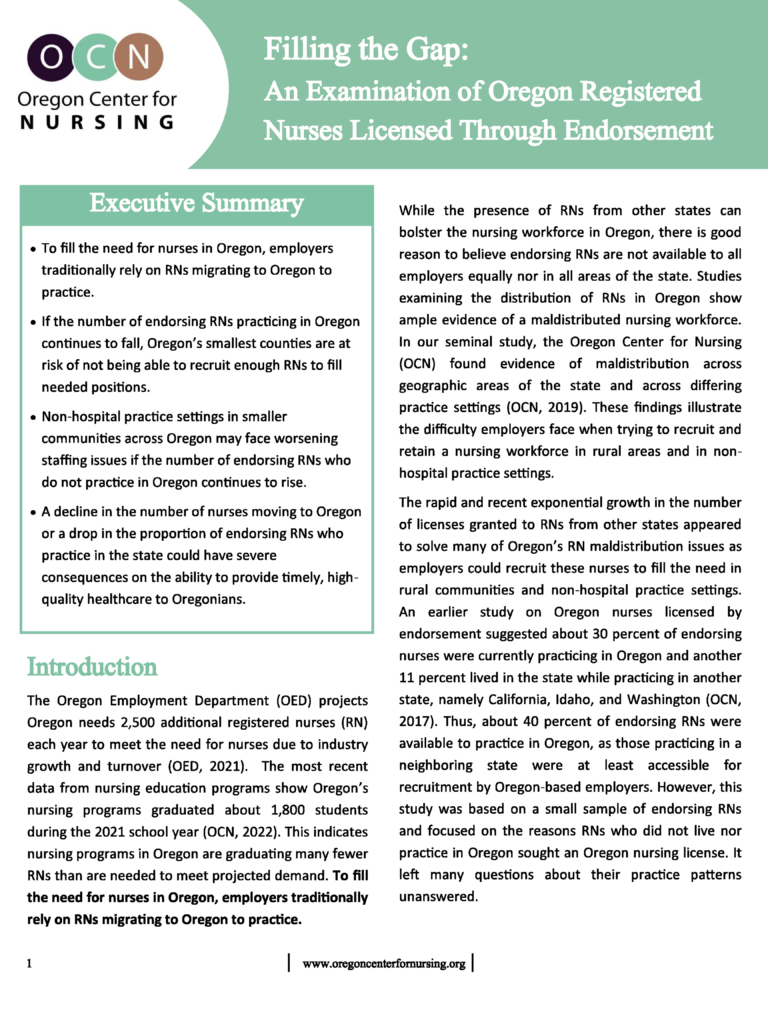
Oregon’s growing nurse demand increasingly depends on nurses licensed through endorsement. This report explores where these nurses practice and how that impacts healthcare access. Insights reveal how rural and non-hospital settings may face widening staffing gaps if current trends persist.
Issues Facing the Post-Pandemic Nursing Workforce in Oregon – Lasting Pandemic Impacts
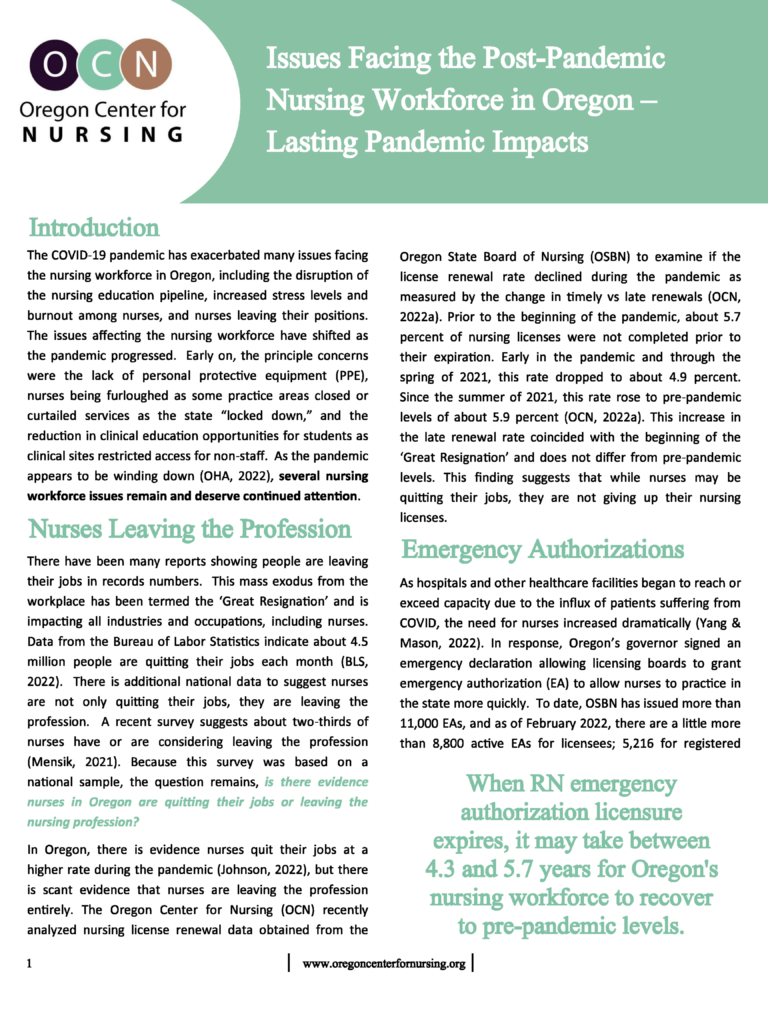
Oregon’s nursing workforce is still grappling with lingering effects of the COVID-19 pandemic, from license disruptions to emergency staffing shifts. This report explores how short-term policy responses and long-term workforce trends are reshaping the profession. As the state navigates a post-pandemic future, key questions remain about staffing capacity and nurse retention.
Not Working Well: Clinical Placement for Nursing Students in an Era of Pandemic
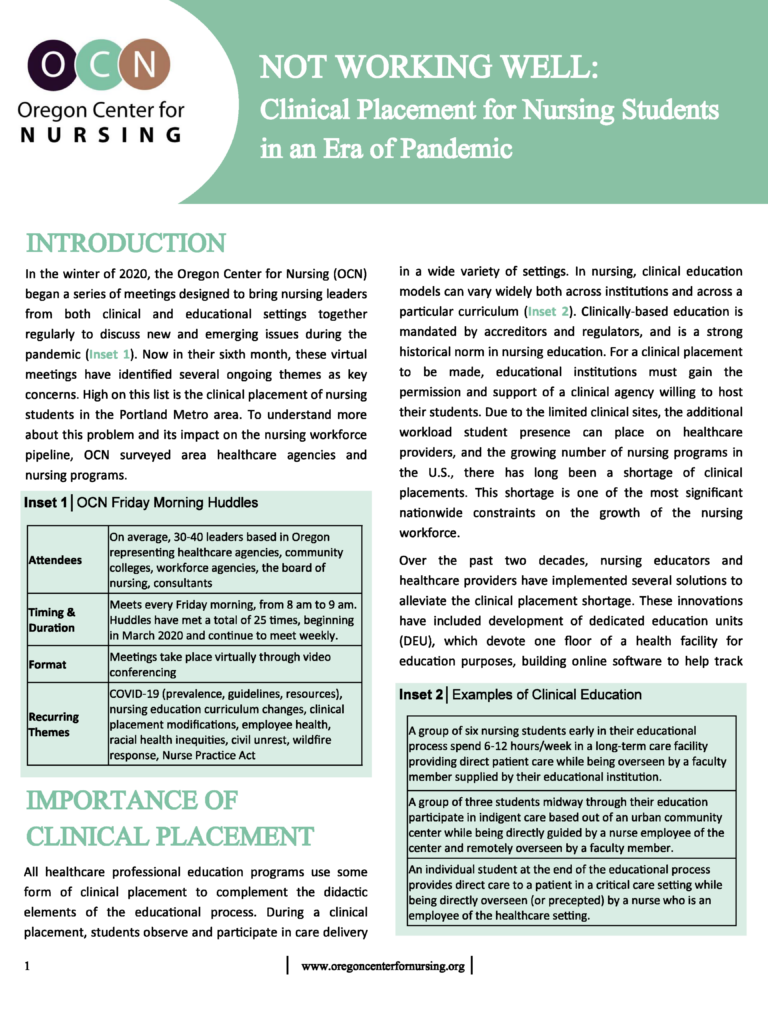
Faced with the urgency of a global health crisis, nursing education programs and healthcare agencies in Oregon scrambled to adapt clinical placement strategies. This publication captures the resulting stress, innovation, and breakdowns that surfaced as traditional education pipelines were upended. Interviews across sectors reveal a critical moment of reckoning for how students are prepared for practice.