
Compensation and Retention: What Oregon Nurse Wage Data Tells Us
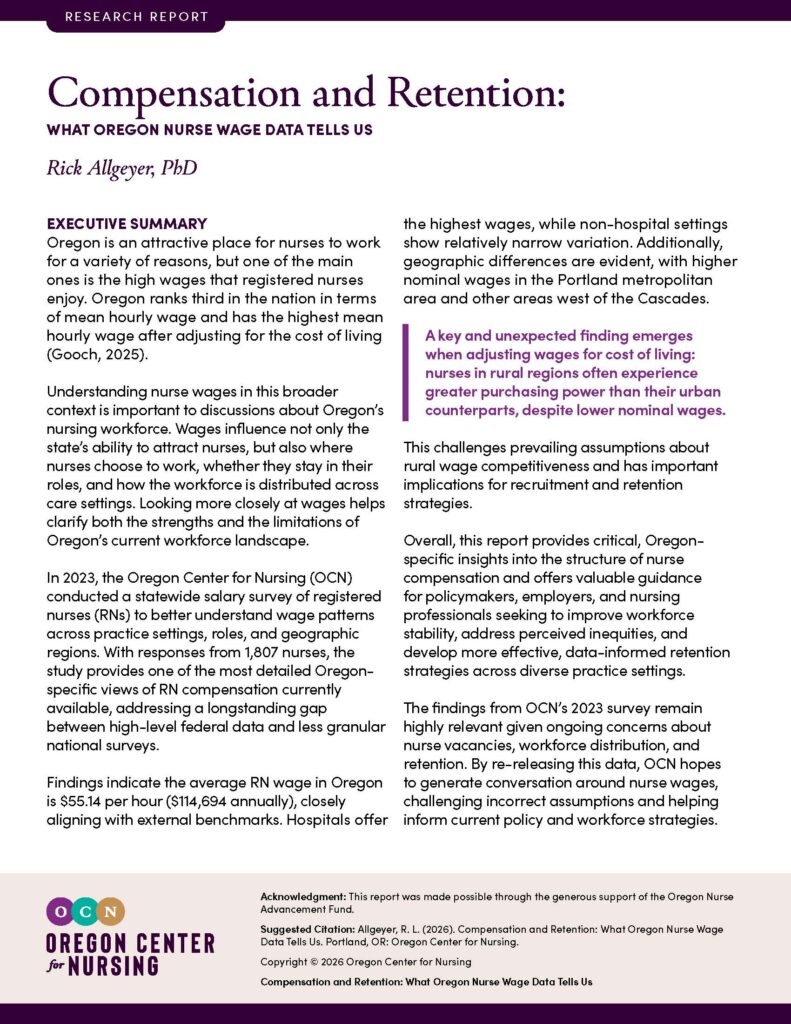
Explore how compensation varies across Oregon and what wage data reveals about workforce stability, recruitment, and retention.
Understanding Oregon’s Nursing Workforce Supply, Demand and Distribution
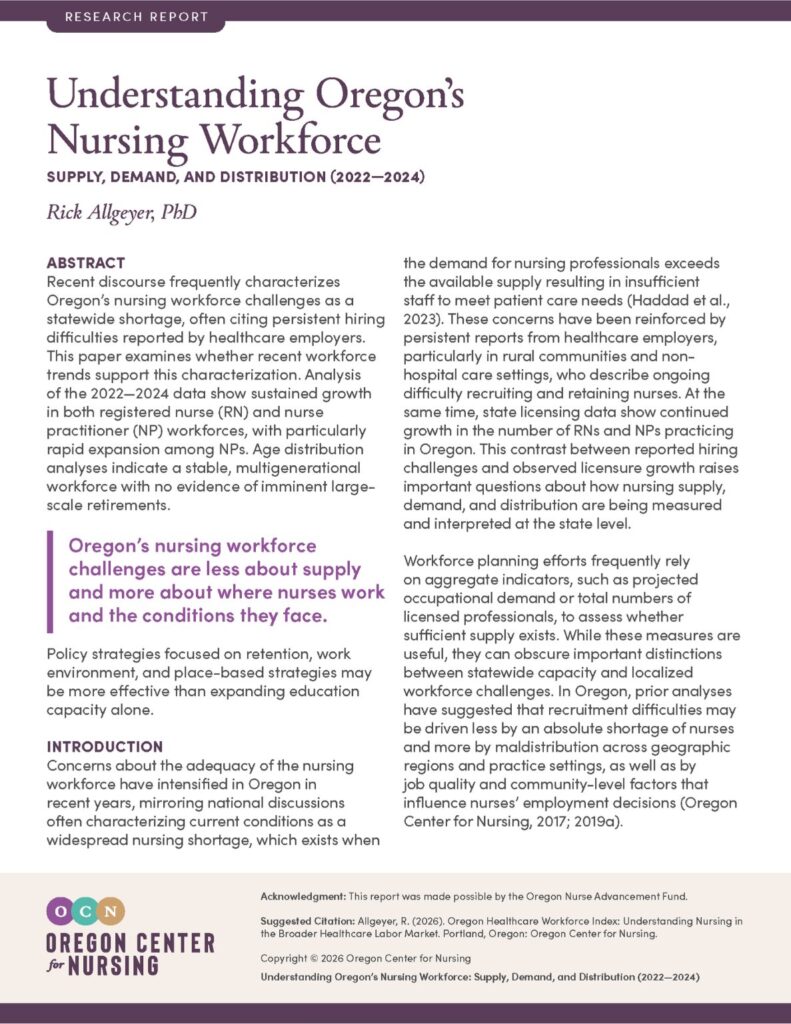
Examine workforce trends across Oregon, including nurse supply, regional demand, and access to care throughout the state.
2024 Working as a Nurse in Oregon
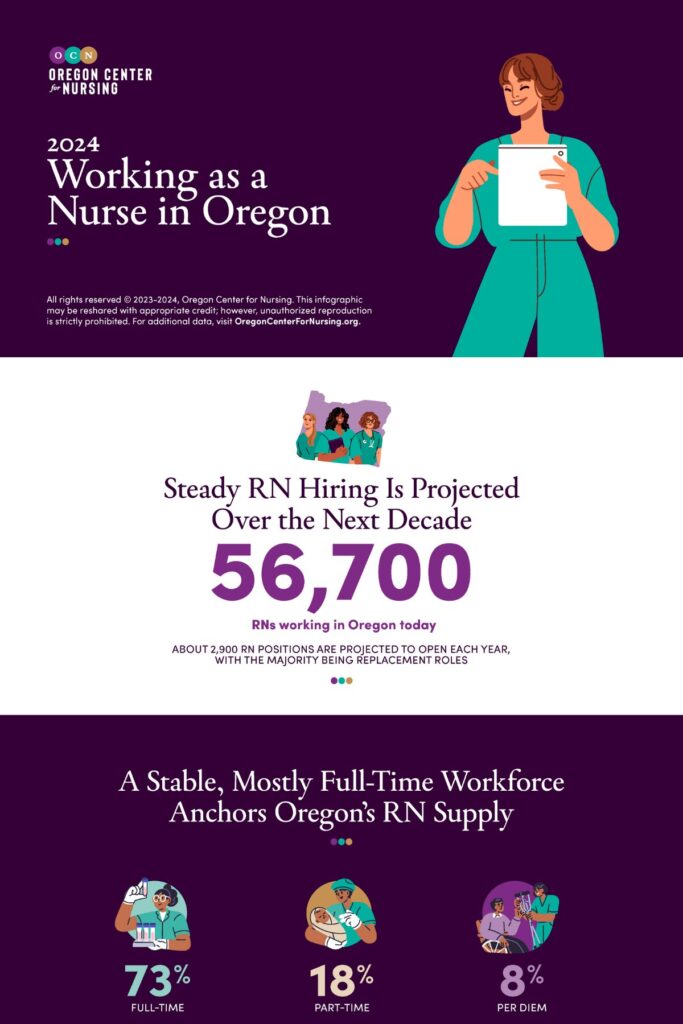
Explore where Oregon nurses work, common practice settings, and key trends shaping the state’s nursing workforce.
2024–2025 Snapshot: Nursing Education in Oregon
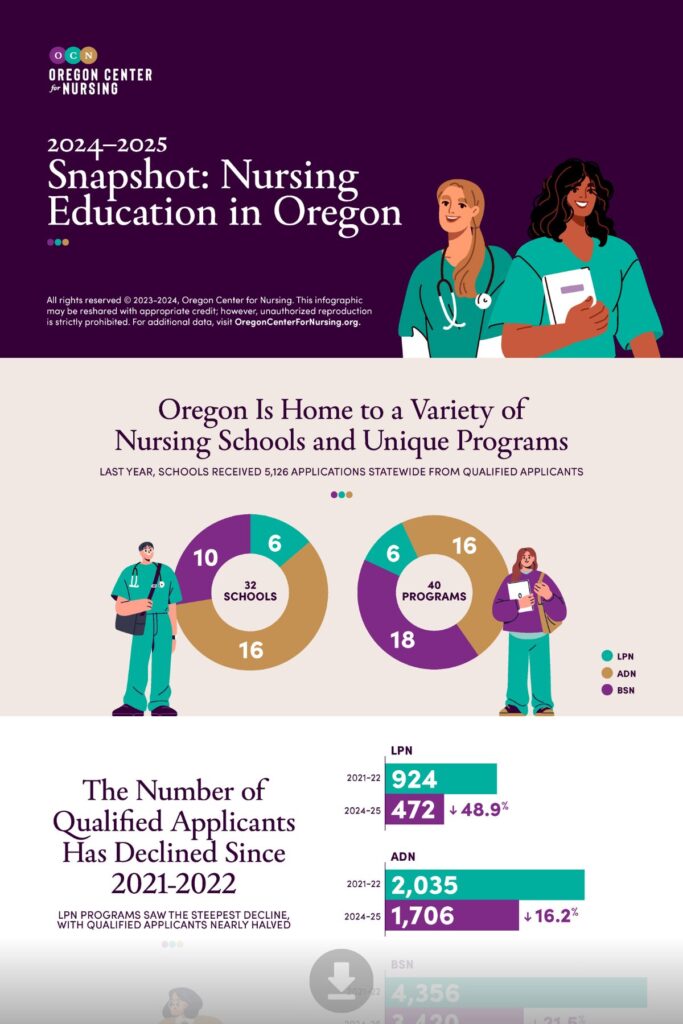
Explore Oregon’s nursing education pipeline, including program availability, applicant trends, graduate outcomes, and student demographics statewide.
Nursing Supply Infographic 2024
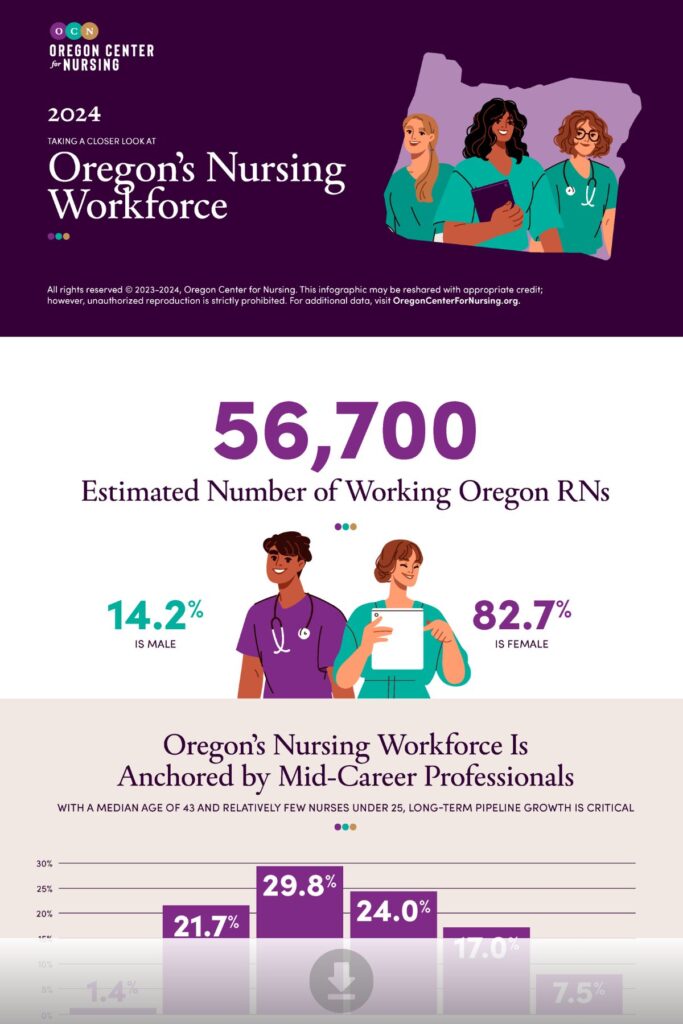
A visual overview highlights the composition, education, and practice settings of nurses across Oregon’s healthcare system. Key graphics illustrate who makes up the workforce and where care is delivered throughout the state. Designed for quick insight, the infographic offers a snapshot of nursing’s central role in Oregon’s health infrastructure.
BRIEF: Oregon’s Nurse Vacancy Crisis
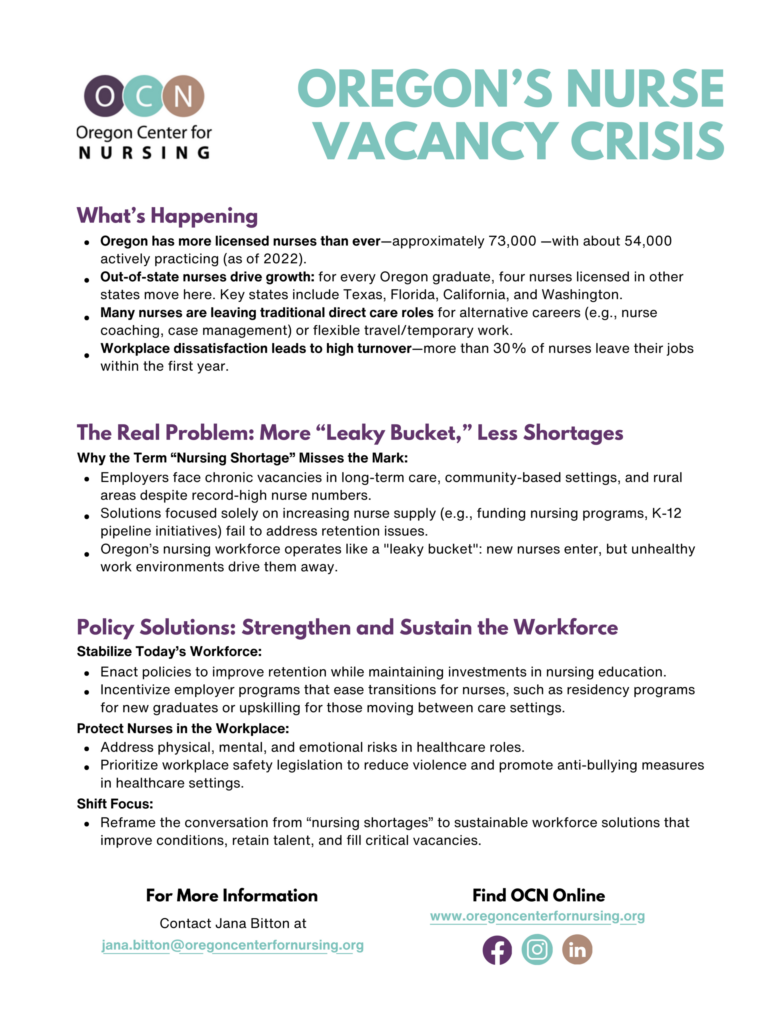
Oregon’s nursing workforce is growing, yet critical care roles remain unfilled. Traditional shortage narratives fail to capture deeper retention challenges affecting direct care. This brief reframes the problem and outlines urgent strategies to stabilize and support the profession.
How Much Do Oregon’s Registered Nurses Earn? 2023 Oregon Wage Study
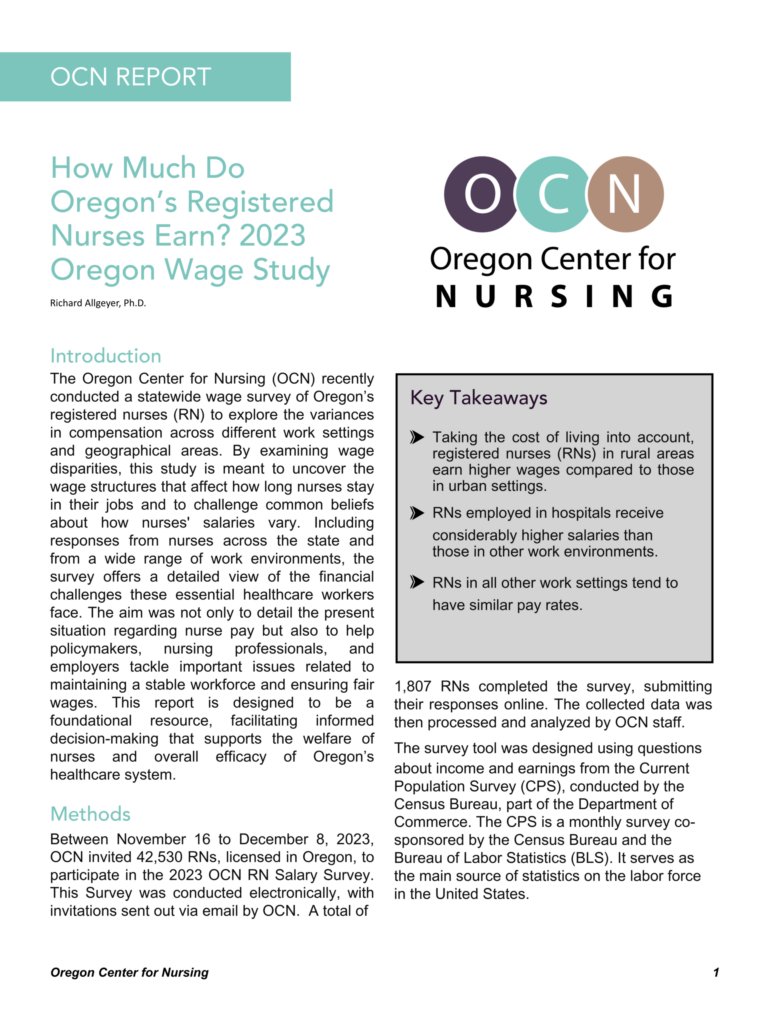
Compensation insights from more than 1,800 Oregon nurses uncover striking wage disparities by setting, role, and geography. From public health to hospital work, the findings offer a deep dive into how pay structures impact equity and sustainability in the nursing workforce. The report empowers leaders with data to guide retention and workforce planning.
Filling the Gap: An Examination of Oregon Registered Nurses Licensed Through Endorsement
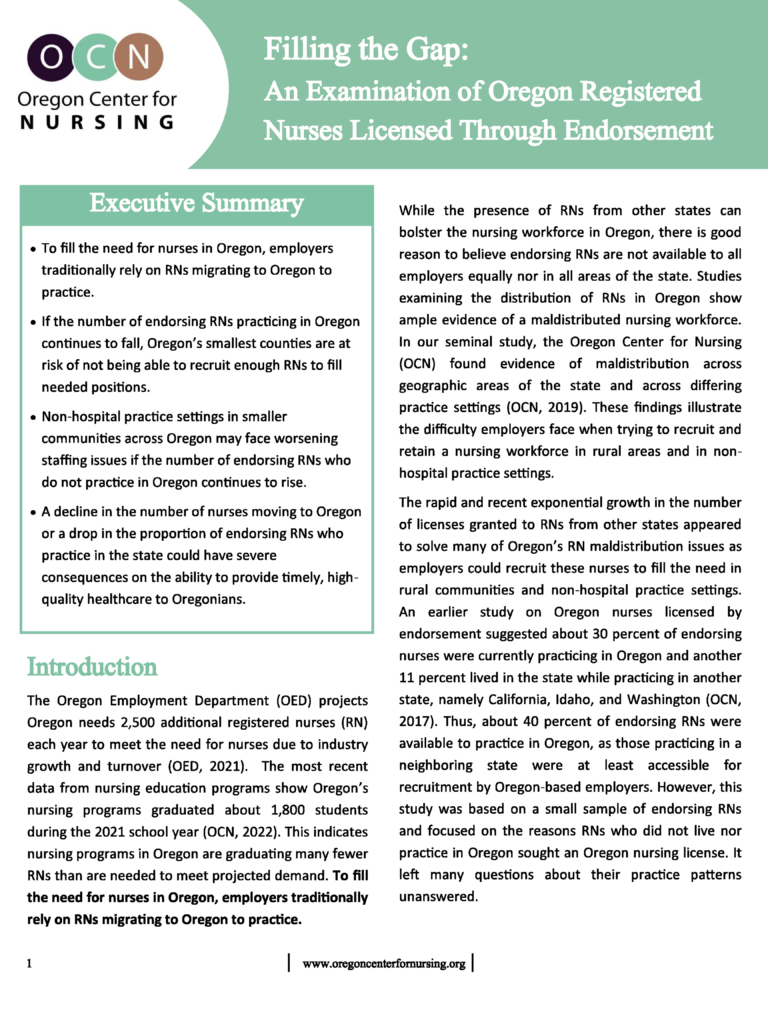
Oregon’s growing nurse demand increasingly depends on nurses licensed through endorsement. This report explores where these nurses practice and how that impacts healthcare access. Insights reveal how rural and non-hospital settings may face widening staffing gaps if current trends persist.
Issues Facing the Post-Pandemic Nursing Workforce in Oregon
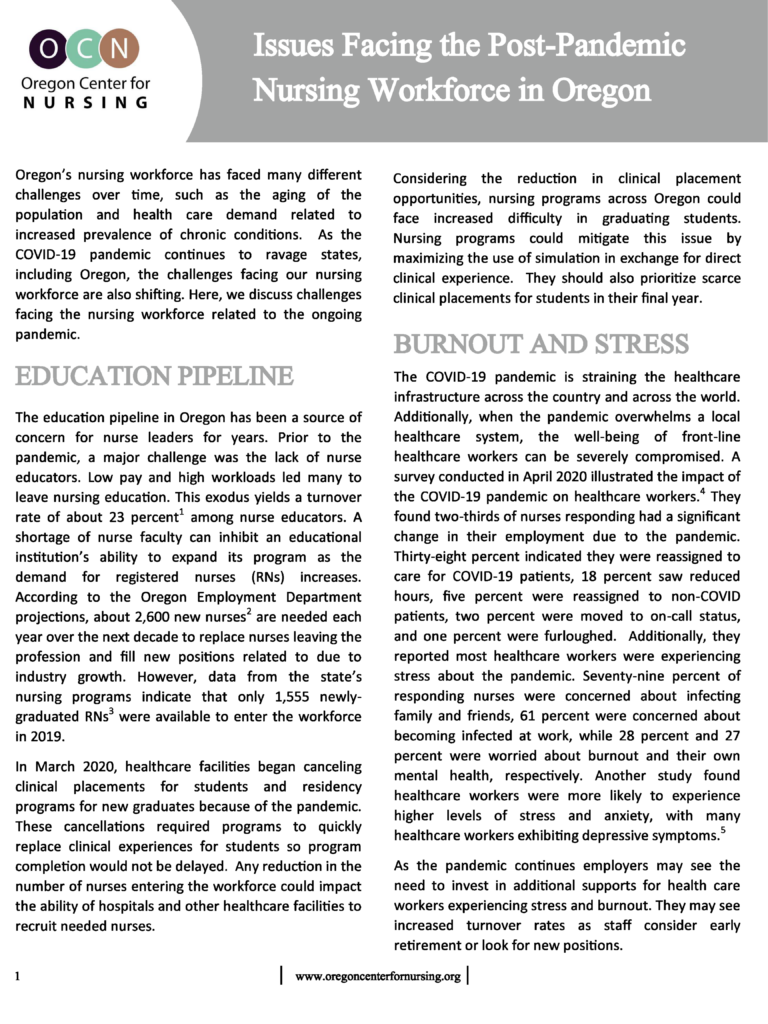
COVID-19 intensified Oregon’s existing nursing workforce challenges, disrupting education pipelines and stressing care delivery systems. This report explores how these shifts affect nurse training, licensure trends, and frontline well-being. Nurse migration patterns and burnout risks reveal vulnerabilities that require immediate and strategic attention.
Trends in Oregon Nursing Education 2012–18
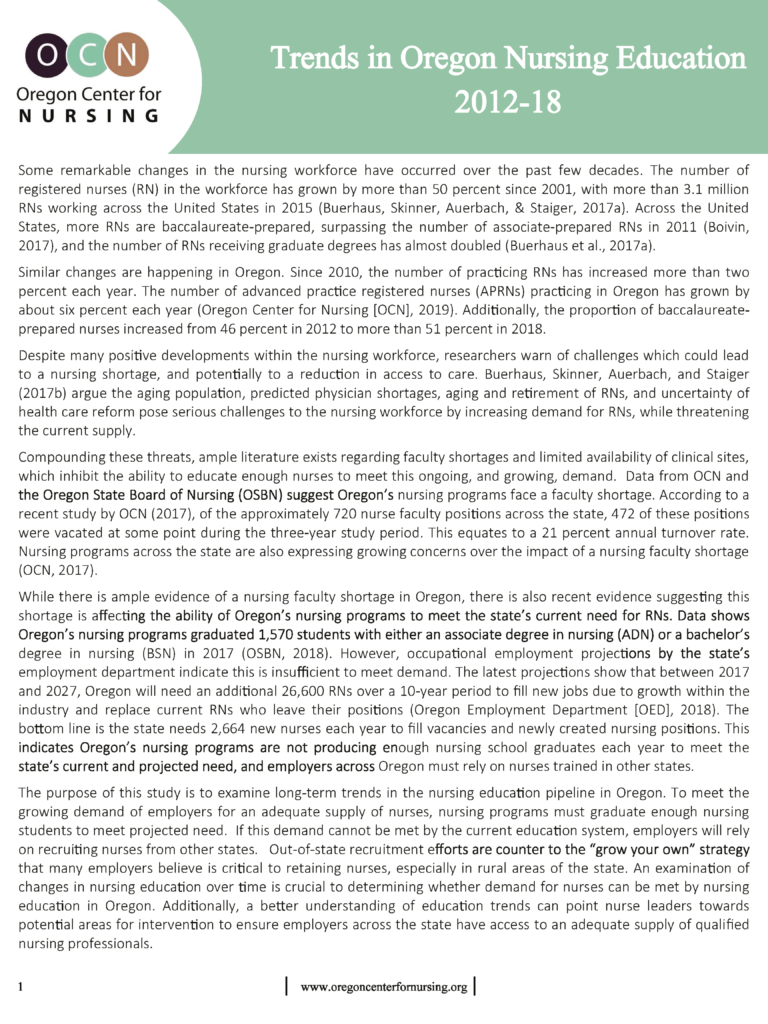
Nursing education in Oregon is evolving, but not fast enough to meet projected workforce needs. While BSN programs are growing, ADN and LPN pathways show stagnation or decline. This analysis highlights long-term trends shaping the state’s ability to “grow its own” nursing workforce.