
2024–2025 Snapshot: Nursing Education in Oregon
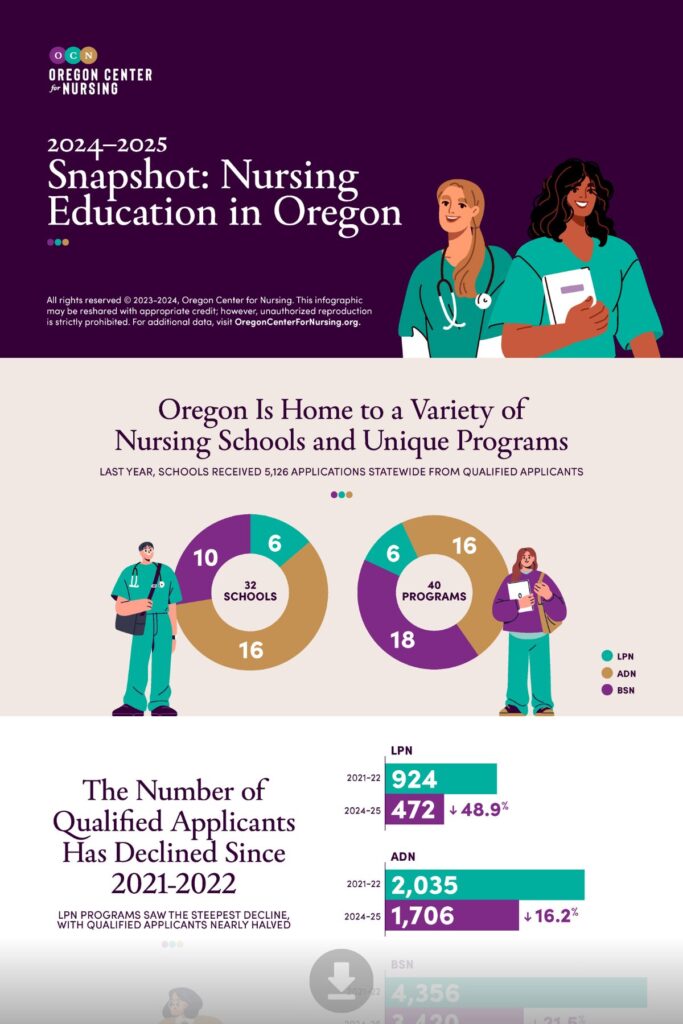
Nursing Supply Infographic 2024
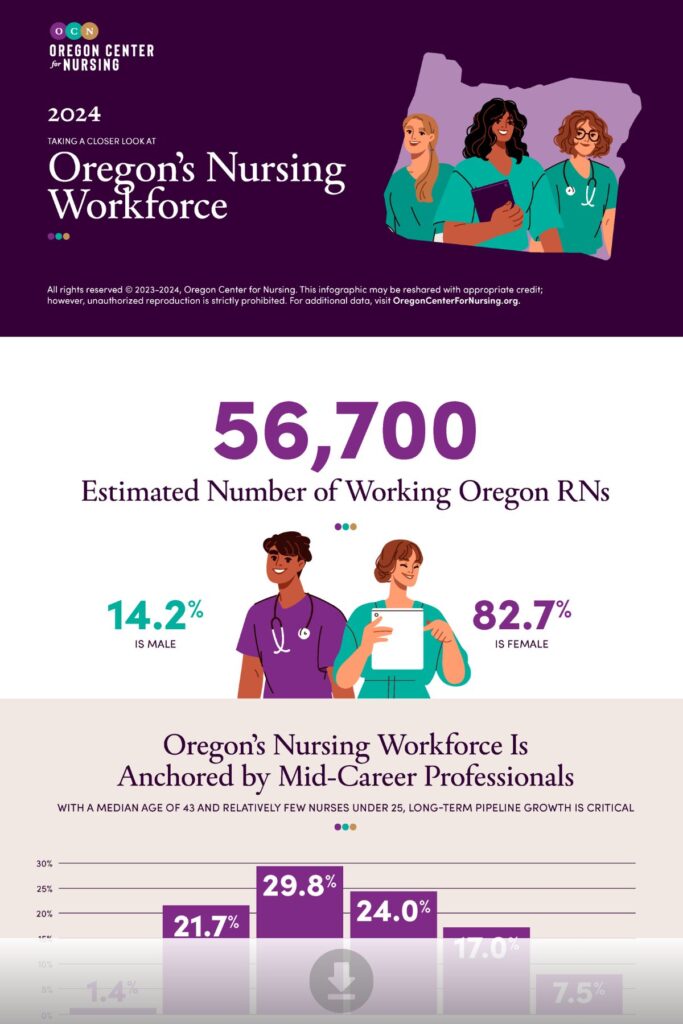
A visual overview highlights the composition, education, and practice settings of nurses across Oregon’s healthcare system. Key graphics illustrate who makes up the workforce and where care is delivered throughout the state. Designed for quick insight, the infographic offers a snapshot of nursing’s central role in Oregon’s health infrastructure.
Comparison of the Perception of Clinical Instruction: In-Facility, Face-to-Face Simulation, and Virtual Simulation Experiences in Oregon’s Nursing Programs
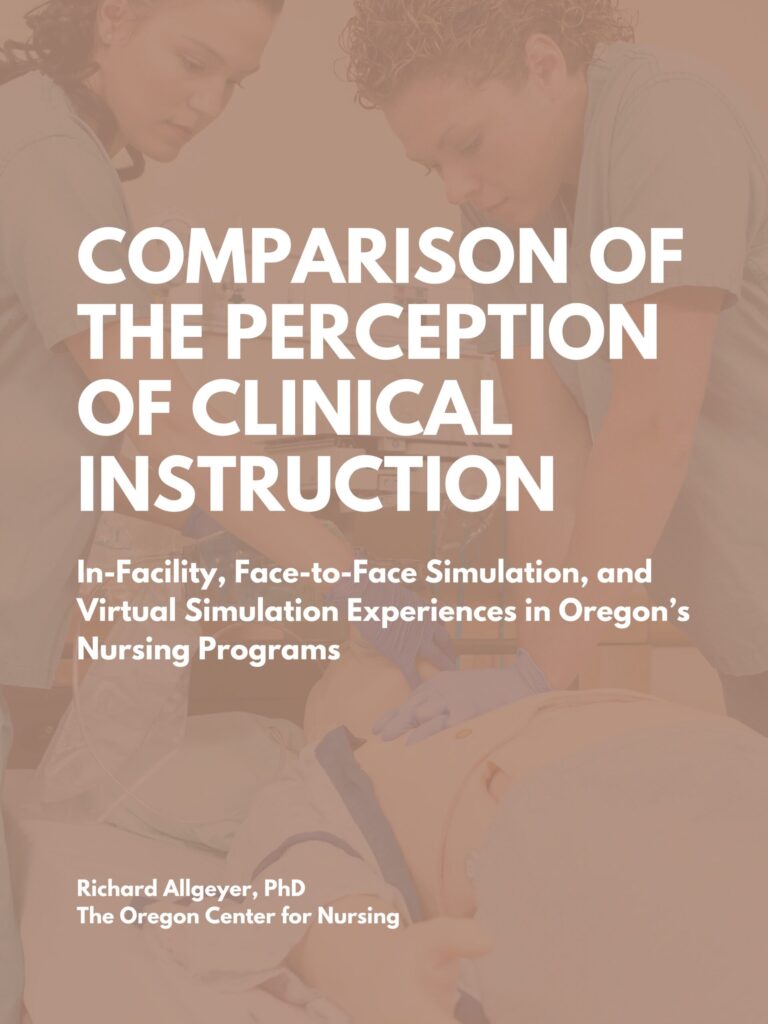
Simulation-based instruction has become a key tool in Oregon’s nursing education, especially during pandemic-era disruptions. This study explores how students and faculty perceive in-facility, face-to-face, and virtual simulation methods. Findings reveal notable differences between student and faculty viewpoints across instructional environments.
Not Working Well: Clinical Placement for Nursing Students in an Era of Pandemic
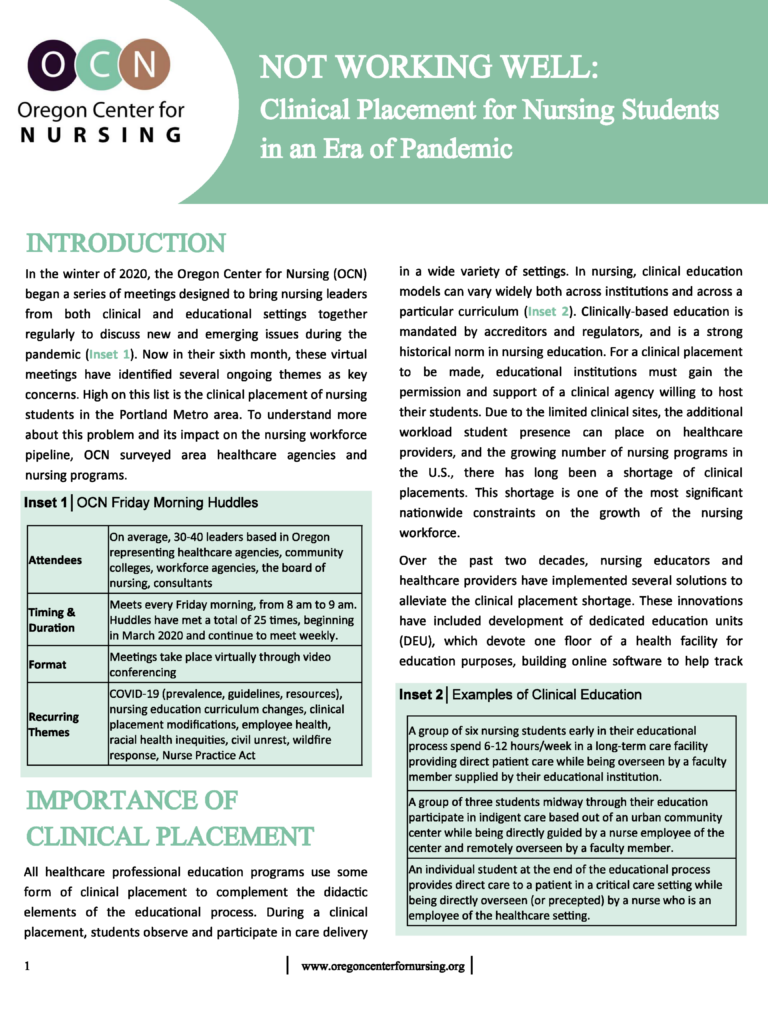
Faced with the urgency of a global health crisis, nursing education programs and healthcare agencies in Oregon scrambled to adapt clinical placement strategies. This publication captures the resulting stress, innovation, and breakdowns that surfaced as traditional education pipelines were upended. Interviews across sectors reveal a critical moment of reckoning for how students are prepared for practice.
Issues Facing the Post-Pandemic Nursing Workforce in Oregon
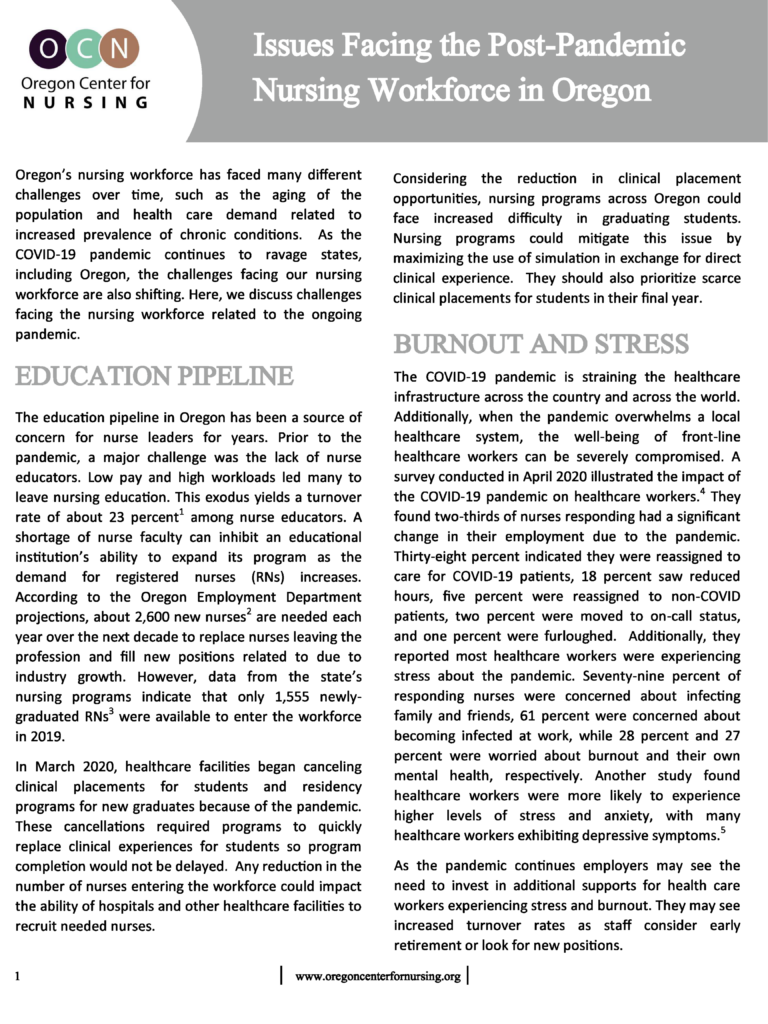
COVID-19 intensified Oregon’s existing nursing workforce challenges, disrupting education pipelines and stressing care delivery systems. This report explores how these shifts affect nurse training, licensure trends, and frontline well-being. Nurse migration patterns and burnout risks reveal vulnerabilities that require immediate and strategic attention.
Trends in Oregon Nursing Education 2012–18
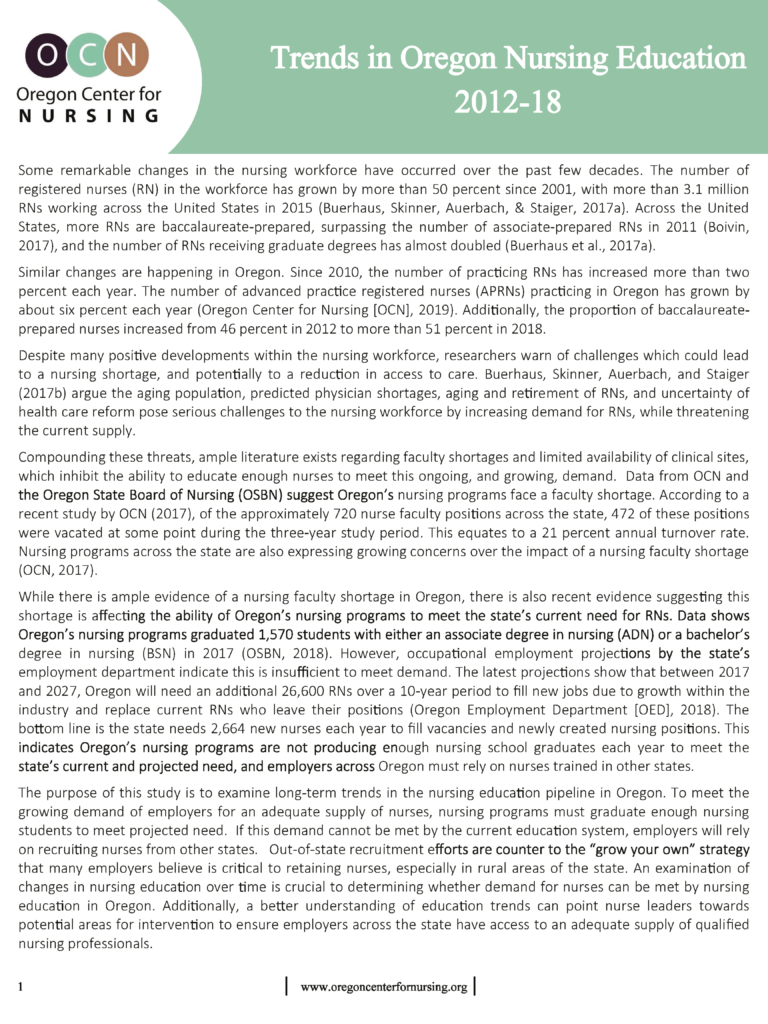
Nursing education in Oregon is evolving, but not fast enough to meet projected workforce needs. While BSN programs are growing, ADN and LPN pathways show stagnation or decline. This analysis highlights long-term trends shaping the state’s ability to “grow its own” nursing workforce.
2018 Aging Trends in Oregon’s Nursing Workforce
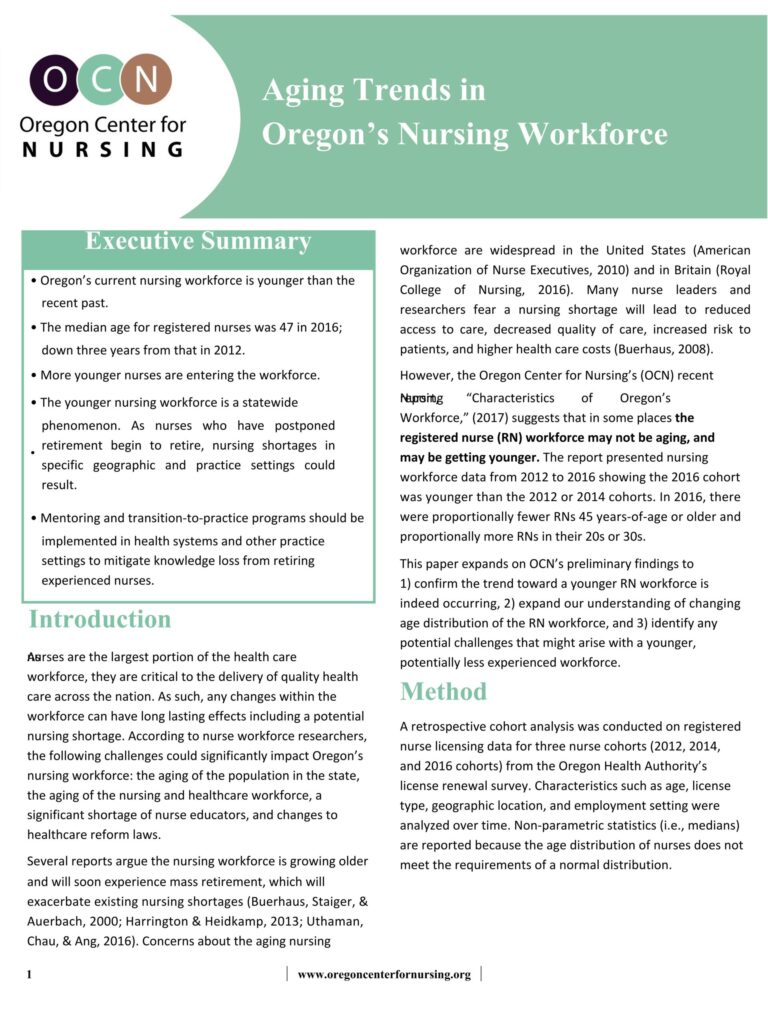
Oregon’s nursing workforce is getting younger, with a growing presence of nurses in their 20s and 30s. While this demographic shift offers promise, it raises urgent questions about experience gaps and impending retirements. This analysis explores how age trends differ by geography and employment setting, and what they mean for Oregon’s healthcare system.
Nursing Education in Oregon (2016)
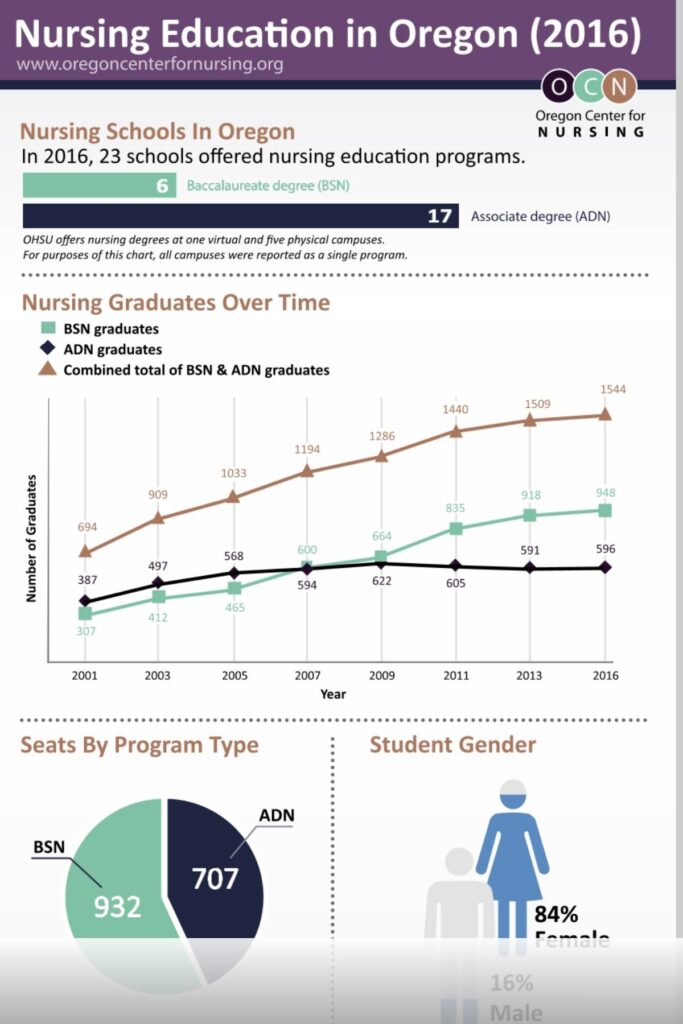
Explore the 2016 landscape of Oregon’s nursing education programs through a visual breakdown of graduates, gender ratios, and program distribution. This concise infographic helps illuminate workforce trends across ADN and BSN programs. It’s a valuable snapshot for educators, employers, and policymakers.
Oregon’s Licensed Practical Nurse Workforce
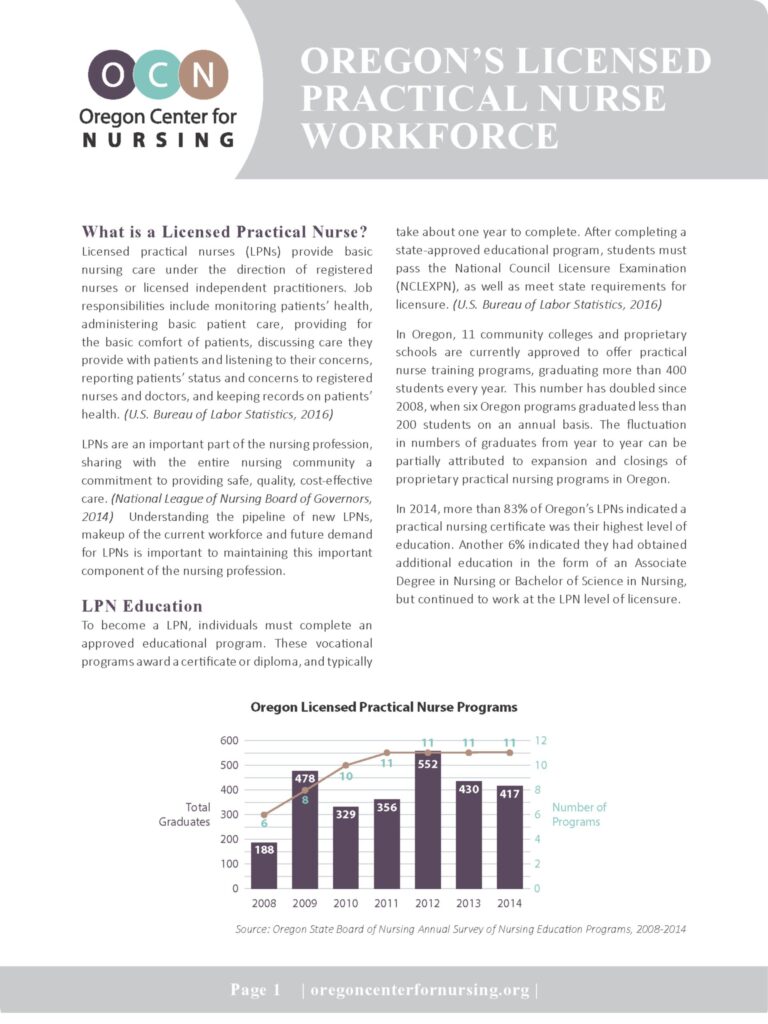
Licensed practical nurses play a vital role in Oregon’s health care system, yet their distribution and practice settings reveal important workforce dynamics. This report examines education, demographics, and employment patterns shaping the LPN pipeline. Findings also explore regional variation and projected supply and demand for LPNs.
Oregon’s Newly Licensed Nurse Workforce
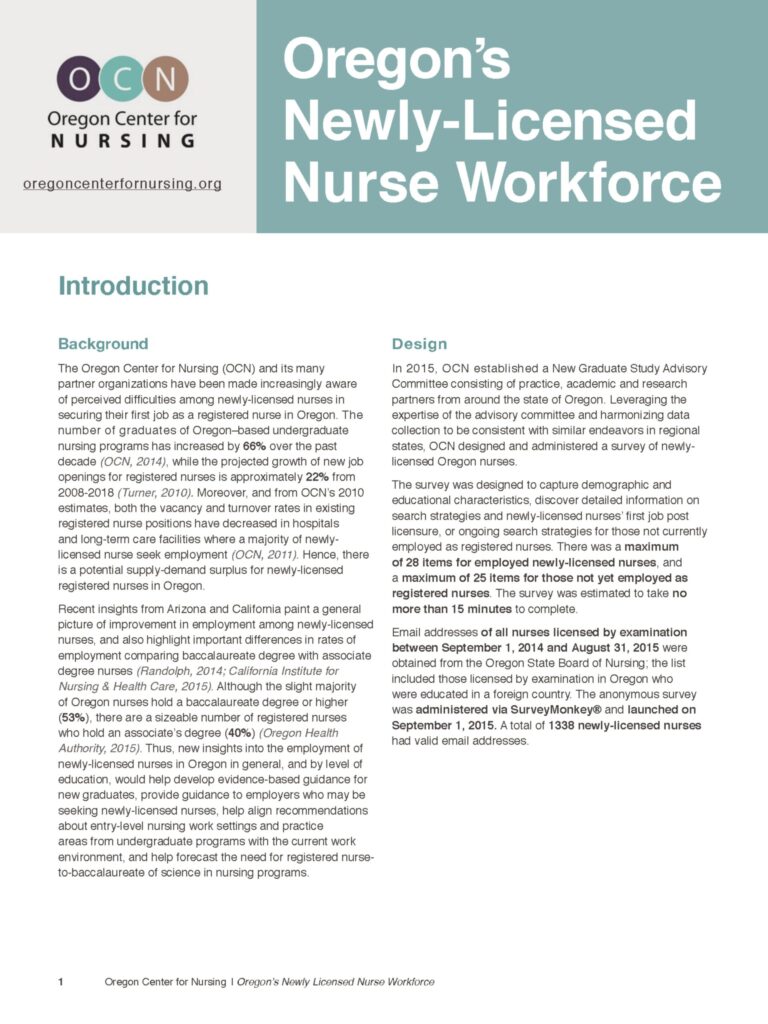
Newly licensed nurses in Oregon face a challenging entry into the profession as workforce growth lags behind graduation rates. This publication captures how location, degree type, and search strategies impact employment outcomes. Insights reveal where gaps exist and where opportunity lies for employers, educators, and policymakers.