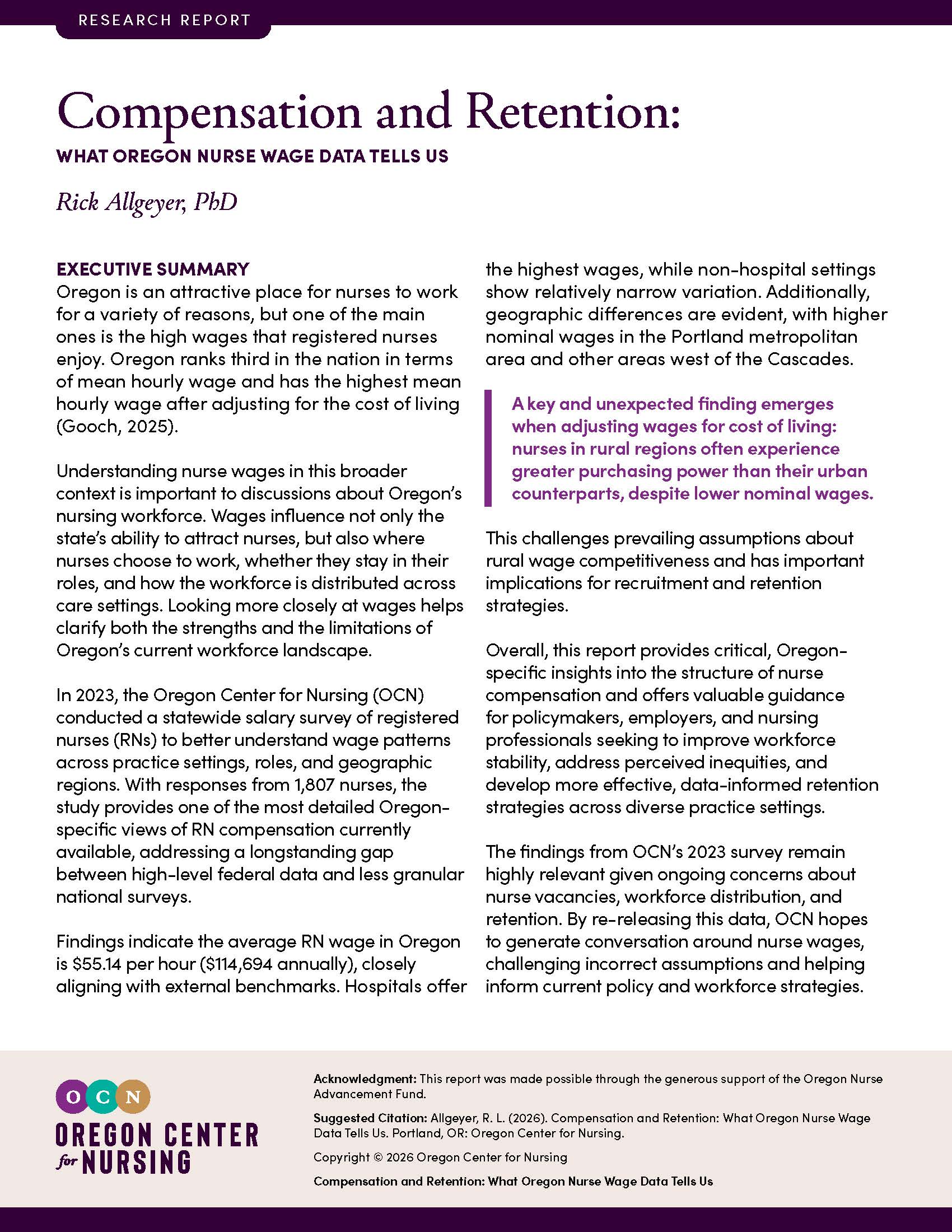
Compensation and Retention: What Oregon Nurse Wage Data Tells Us
Examining compensation patterns across Oregon’s nursing workforce provides a clearer picture of how economic factors influence career decisions and workforce stability. Using statewide survey data from registered nurses, the report explores compensation differences among practice settings, professional positions, educational attainment levels, and regions. The analysis fills a longstanding need for Oregon-specific wage information that extends beyond national datasets and broad labor statistics.
Comparisons across healthcare environments reveal meaningful distinctions in how compensation is structured throughout the profession. The report highlights variation among hospitals, ambulatory care settings, public health organizations, educational institutions, and long-term care environments while also examining how leadership roles, staff positions, and career progression relate to earnings. These findings help illuminate workforce dynamics that affect attraction and retention efforts across diverse practice settings.
A central contribution of the report is its examination of wage patterns alongside regional economic conditions. By evaluating compensation in relation to local living costs, the analysis provides a more nuanced understanding of workforce distribution across urban and rural communities. The findings offer valuable context for employers, policymakers, educators, and nursing leaders seeking data-informed approaches to workforce planning and retention.
What's Inside
61%
Survey respondents who worked as staff nurses
$58
Approximate average hourly wage reported for hospital-based registered nurses
24
Administrator/CNO respondents included in the survey
Better, But Not Well: Changes in Oregon Nurse Well-Being and Workplace Conditions from 2022 to 2025
Recovery across Oregon’s nursing workforce has begun, yet many workplace challenges continue to shape nurses’ daily experiences. Comparing survey findings across two time points, the report explores how emotional well-being,…