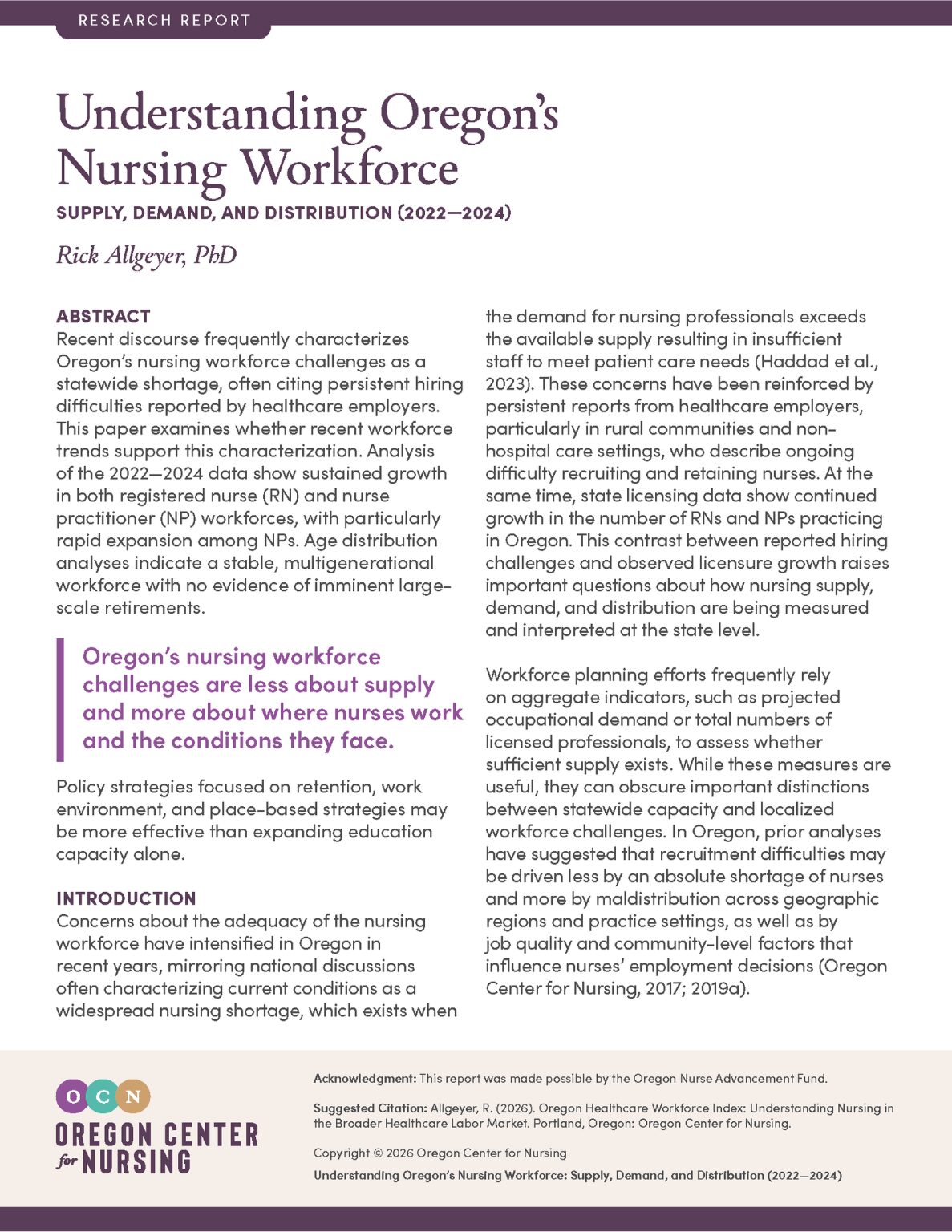
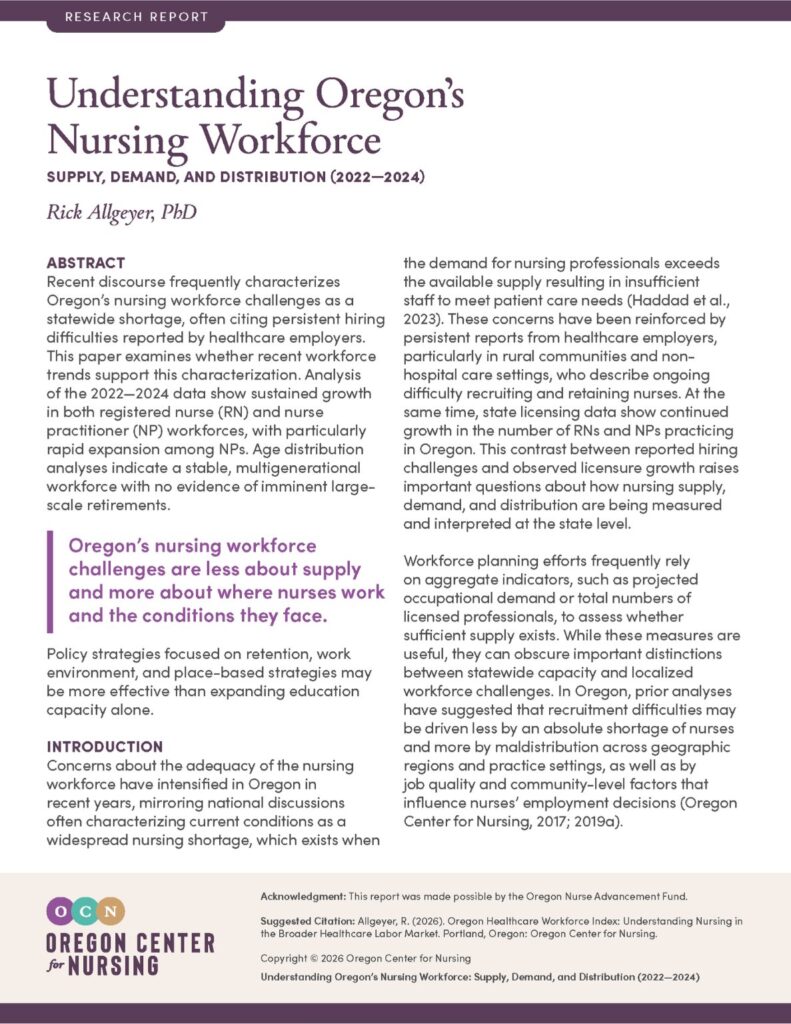
Understanding Oregon’s Nursing Workforce Supply, Demand and Distribution
Workforce trends across Oregon present a nuanced picture in which overall growth in licensed nurses coexists with ongoing hiring challenges in certain communities and practice environments. The analysis reframes common assumptions by examining how workforce capacity is measured and how statewide indicators can obscure localized strain. Attention is drawn to the structural factors that influence where nurses choose to work and how those decisions affect healthcare access.
Patterns in workforce composition suggest long-term stability rather than disruption. A balanced, multigenerational workforce supports continuity of care while enabling knowledge transfer across experience levels. At the same time, shifts in educational attainment signal ongoing professional advancement, aligning with broader goals related to care quality and system complexity.
Policy implications emphasize the importance of addressing workforce distribution and employment conditions rather than focusing solely on increasing supply. Practice environments, leadership structures, and community-level factors emerge as central influences on recruitment and retention. Strategies grounded in these realities offer a more targeted path toward strengthening workforce stability and improving access to care across diverse regions.
What's Inside
73%
Newly licensed nurses entering Oregon through endorsement
63%
Practicing RNs holding a BSN in 2024
26%
RNs with associate degrees as highest credential in 2024
Better, But Not Well: Changes in Oregon Nurse Well-Being and Workplace Conditions from 2022 to 2025
Recovery across Oregon’s nursing workforce has begun, yet many workplace challenges continue to shape nurses’ daily experiences. Comparing survey findings across two time points, the report explores how emotional well-being,…